


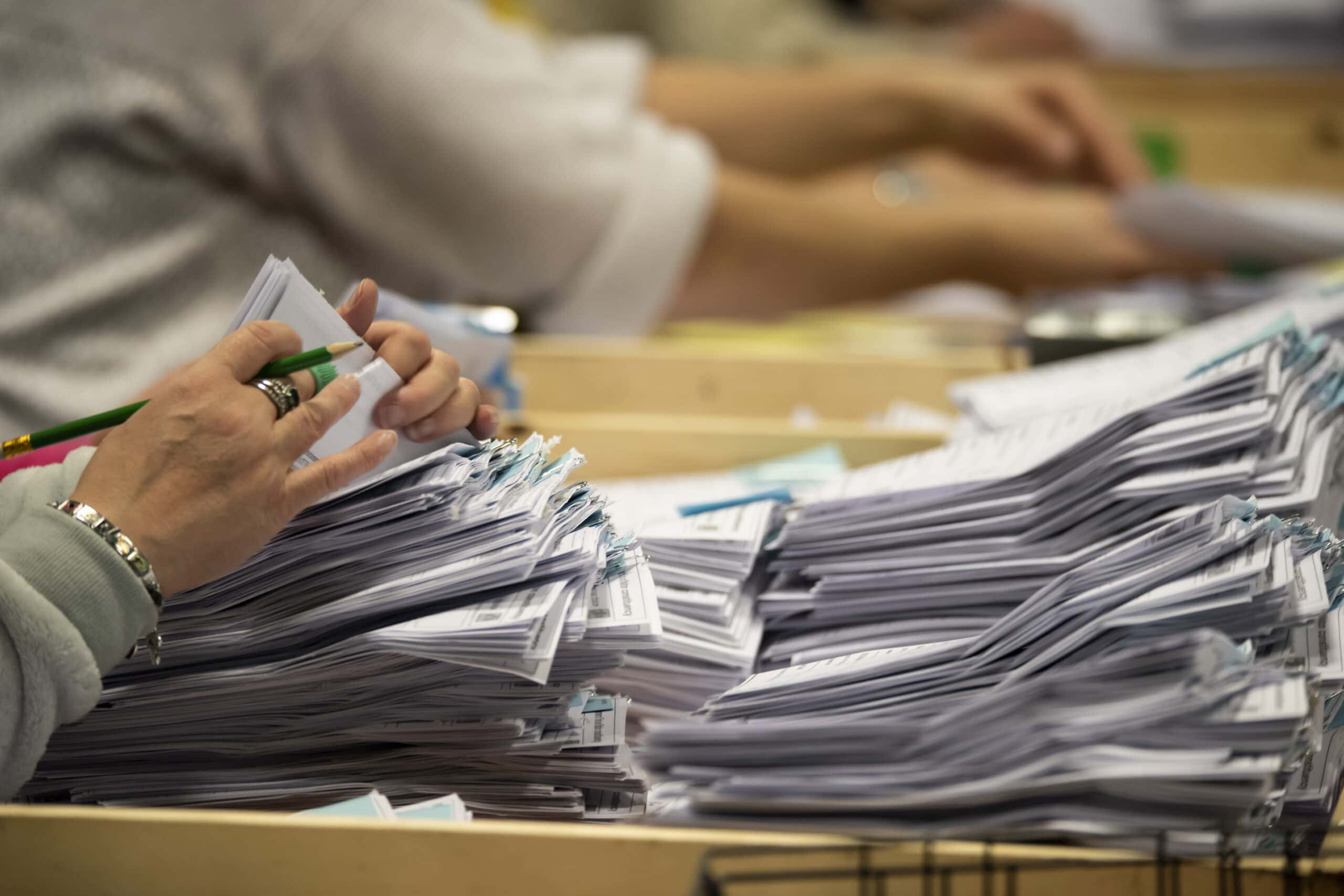
Milwaukee election officials acknowledged late Tuesday that human error delayed the reporting of roughly 28,000 absentee ballots after workers incorrectly downloaded audit data instead of actual vote totals onto five of nine memory sticks that were to be delivered to the Milwaukee County Election Commission.
City election workers had tabulated the absentee ballots at the central count facility and prepared to transfer the results via encrypted USB drives, a standard procedure required because the high-speed tabulators are not connected to the internet. Officials discovered the mistake only after the drives reached the county level, forcing workers to return to the tabulators, re-download the correct results and hand-deliver them again.
Milwaukee Election Commission officials described it as a simple mix-up in selecting the data files for export. No evidence of altered ballots or intentional misconduct has been cited, yet the episode adds another layer of delay and scrutiny to results in Wisconsin’s largest city.
The glitch comes during the state’s Democratic primary for governor, where Milwaukee’s heavy Democratic-leaning absentee totals often arrive late and can shift margins. Candidates including Milwaukee County Executive David Crowley and state Rep. Francesca Hong were closely watched as the remaining ballots awaited proper transfer.
This is not the first time procedural stumbles have marked Milwaukee’s central count operations. In 2020, a forgotten flash drive delayed results and fueled widespread distrust. In 2024, officials restarted the tabulation of more than 30,000 absentee ballots after observers noted that protective doors on machines covering power switches and USB ports had not been fully secured.
Each incident has been labeled human error and resolved without changing certified outcomes, yet the pattern continues to raise legitimate questions about competence in a jurisdiction that processes tens of thousands of absentee votes under tight state restrictions that prohibit early processing.
Wisconsin law requires absentee ballots to be counted on Election Day, concentrating the work in facilities like Milwaukee’s and making late-night reporting routine. Critics of the city’s long Democratic-dominated election administration argue that repeated mistakes erode public confidence precisely when transparency matters most. Officials maintain that bipartisan observers, seals, checklists and chain-of-custody protocols safeguard the process. Still, the latest failure to correctly export results on more than half the drives underscores ongoing vulnerabilities in a system that has repeatedly required do-overs.
As workers headed back to the tabulators early Wednesday, the remaining absentee ballots remained uncounted at the county level, prolonging uncertainty in a key battleground state’s primary.
