


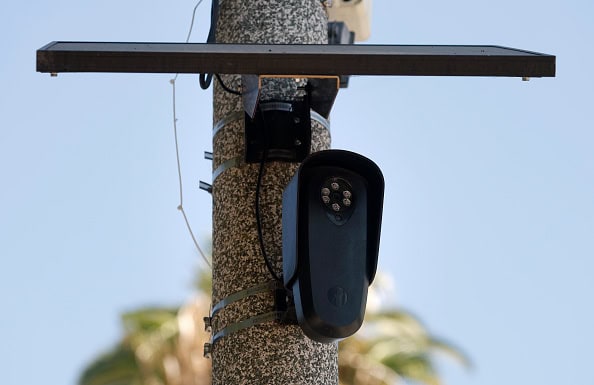
A former Kenosha County Sheriff’s deputy, Frank McGrath, was charged in August 2026 with two felony counts of misconduct in public office after using the agency’s Flock Safety automated license-plate reader (ALPR) system and other department tracking tools to surveil a fellow deputy with whom he had been romantically involved.
According to the criminal complaint and reporting from outlets including the Milwaukee Journal Sentinel, FOX6, and CBS 58, the conduct occurred primarily between July and October 2025. McGrath, then 45 and living in Salem, searched the coworker’s personal vehicle license plate roughly 16–17 times through Flock (notably in a concentrated off-duty session on or around September 30, 2025). He logged the searches as “suspicious” without providing a case number or legitimate law-enforcement purpose.
He also accessed the department’s Polaris system approximately 40 times while off-duty to monitor the woman’s live squad-car GPS and body-worn camera locations. On at least one occasion he contacted her, stated her exact location, named a coworker who was with her, and told her “I know everything.” Prosecutors further alleged he drove past her residence and directed a trainee deputy to leave his assigned sector and drive about 13 miles to confront her at an I-94 weigh station, where she was parked near a Wisconsin State Trooper.
The misuse was flagged during a routine October 2025 audit of Flock activity by a captain. An internal investigation followed; McGrath resigned (reports earlier indicated a severance arrangement was involved). The Kenosha County Sheriff’s Office referred the matter to the Racine County Sheriff’s Office for an independent criminal probe; that office’s findings went to the Kenosha County District Attorney Xavier Solis, who filed the charges. Text messages recovered by investigators showed McGrath acknowledging he had lied about his Flock use, saying he had “lost control” and that the searches made him “look really bad.” The victim later sought a restraining order.
After the incident, the Kenosha County Sheriff’s Office swiftly changed protocols — any sworn supervisor can now audit Flock activity, personnel must document a legitimate reason and case number before searching, camera data retention was shortened from 30 days to 7 days, and all sworn staff completed remedial training.
Other Cases of Flock misuse in Wisconsin
McGrath’s case is part of a documented series of Wisconsin law-enforcement abuses of Flock and similar ALPR systems, most often involving officers tracking current or former romantic partners (predominantly women).
In Milwaukee, Officer Josue Ayala was charged after allegedly running roughly 179 unauthorized Flock searches over about two months in 2025—tracking a woman he was dating and her ex-partner. Searches were logged under the vague reason “investigation.” He resigned and faced a misconduct charge; the department later sharply reduced the number of officers with Flock access and improved auditing.
In Menasha, Officer Cristian Morales was charged with misconduct in public office after using Flock to track his then-girlfriend (including checks related to whether she had visited a clinic). He later received a six-month sentence after a judge rejected a plea deal.
In Racine County, a detective (Emil Ortiz in contemporaneous local reporting) was demoted and given a 10-day unpaid suspension after investigators determined he repeatedly used Flock, CLEAR, and the Wisconsin TIME database to surveil a girlfriend’s ex-boyfriend. Separate Racine-area cases involving plate-reader misuse have also been reviewed by the district attorney’s office.
These incidents, along with others nationally, have fueled criticism that easily accessible, warrantless ALPR networks create opportunities for personal surveillance when internal audits or external complaints are the primary detection mechanisms. Some Wisconsin communities have since ended or restricted Flock contracts, citing privacy and accountability concerns. The Kenosha charges, filed in mid-August 2026, represent one of the more recent formal criminal responses in the state.
