


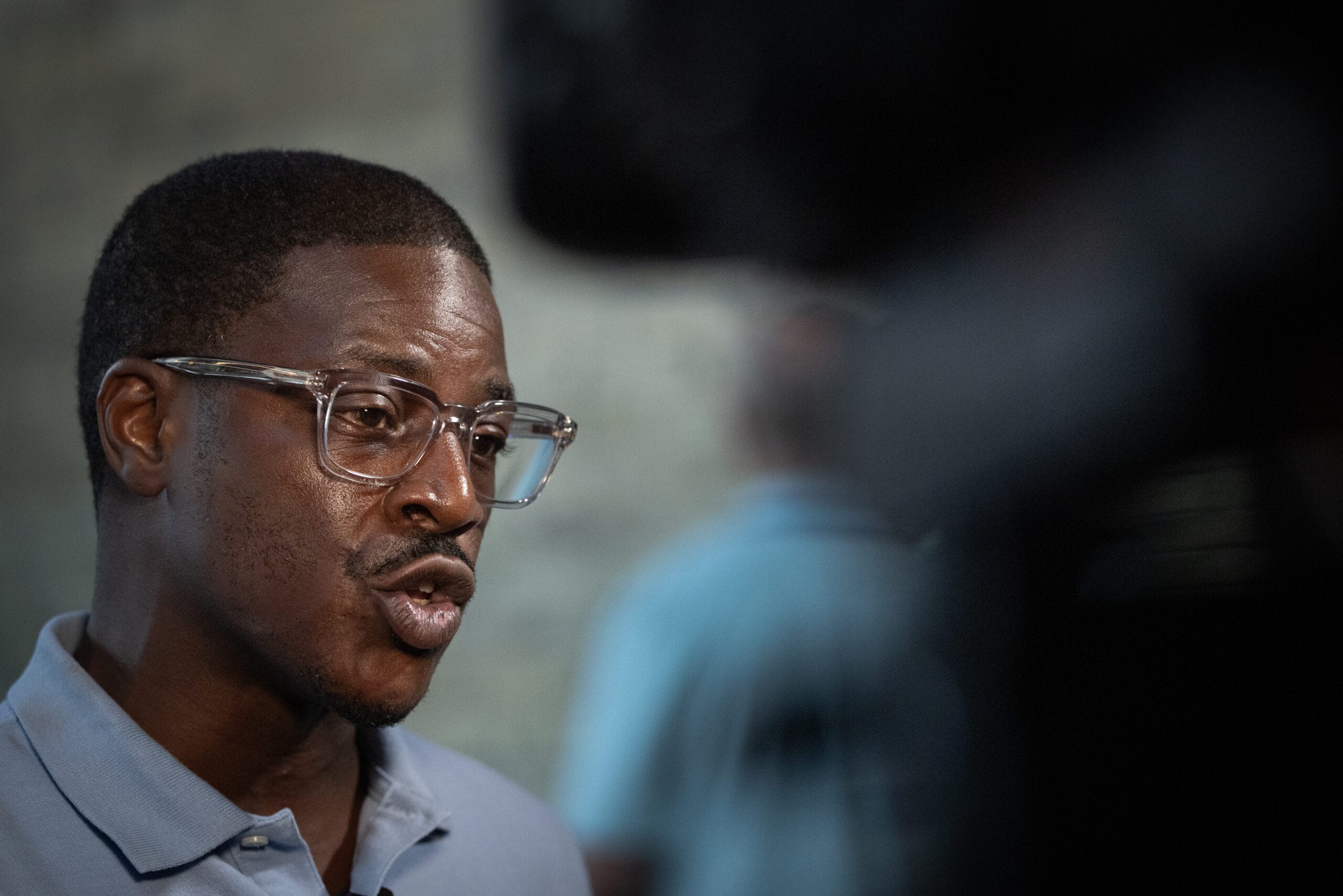
Democratic gubernatorial nominee David Crowley recently sat down for an interview with Spectrum News, only to flounder when asked to distinguish himself from the far-left challenger he barely edged out.
Pressed on whether he disagrees with any part of the Democratic Socialists of America’s wish list—abolishing police and prisons included—Crowley’s response was to laugh and regurgitate the usual bromides about party unity and fighting so-called ‘MAGA extremism.’ A straight answer? Not in sight. What we saw was a candidate utterly unprepared for the grown-up table of a real general election.
When asked whether he disagrees with any element of the Democratic Socialists of America platform, including its long-standing calls to abolish the police and prisons, Crowley’s response was to laugh and regurgitate the usual bromides about party unity and fighting so-called ‘MAGA extremism.’ He never gave a straight answer. The moment captured a candidate who appears utterly unprepared for the scrutiny of a real general election.
Crowley also stood by his record as Milwaukee County executive of raising property taxes in five of the last six years and nearly doubling the local sales tax, even as the county faces a substantial projected deficit. His assessment of that performance: “We’ve done incredible work.” On data centers, he identified the issue as his biggest disagreement with Francesca Hong. Yet earlier remarks showed him promoting Wisconsin as a potential global hub for the industry, which would require plowing under 100,000 or more acres of Wisconsin farmland for centers and green energy. The pivot looked less like a thoughtful shift and more like an uncomfortable scramble to stay inside his pre-packaged talking points.
These exchanges expose a fundamental flaw: Crowley is a creature of deep-blue Milwaukee politics, never once tested by a Republican opponent in a general election. He’s never had to persuade moderates, independents, or the working-class voters who actually decide Wisconsin’s fate. His default mode is bland progressive talking points, served up with a grin. Just ask Kamala Harris how well activist slogans with uncomfortable laughs play when voters want real answers on crime, the economy, and border security.
Hong, the socialist who finished just behind him, ran on an explicitly radical platform. Crowley won the nomination with help from establishment Democrats and a late endorsement from Gov. Tony Evers, then immediately pivoted to “unity” language that avoids hard choices. That strategy may work inside the party. It does not prepare a candidate for the general election against a Republican like Tom Tiffany, who has repeatedly won competitive races and speaks in concrete terms about taxes, energy, farmland, and local control.
Wisconsin voters have seen this before. Candidates who never leave the progressive comfort zone struggle when forced to explain themselves to people who do not already agree with them. Crowley’s laughter in the face of basic questions about the DSA agenda is not confidence; it’s a nervous tic. It is the reaction of someone who has never been forced to defend his positions outside a friendly audience.
The general election will not be decided by how well Crowley can talk about “bridge building” or “affordability” in the abstract. It will turn on whether he can look voters in the eye and clearly reject the most extreme elements of the left that now dominate his party. So far, he has shown little interest in doing so. That is avoidance, and Wisconsin voters should have little patience for candidates who treat big differences as a joke.
