


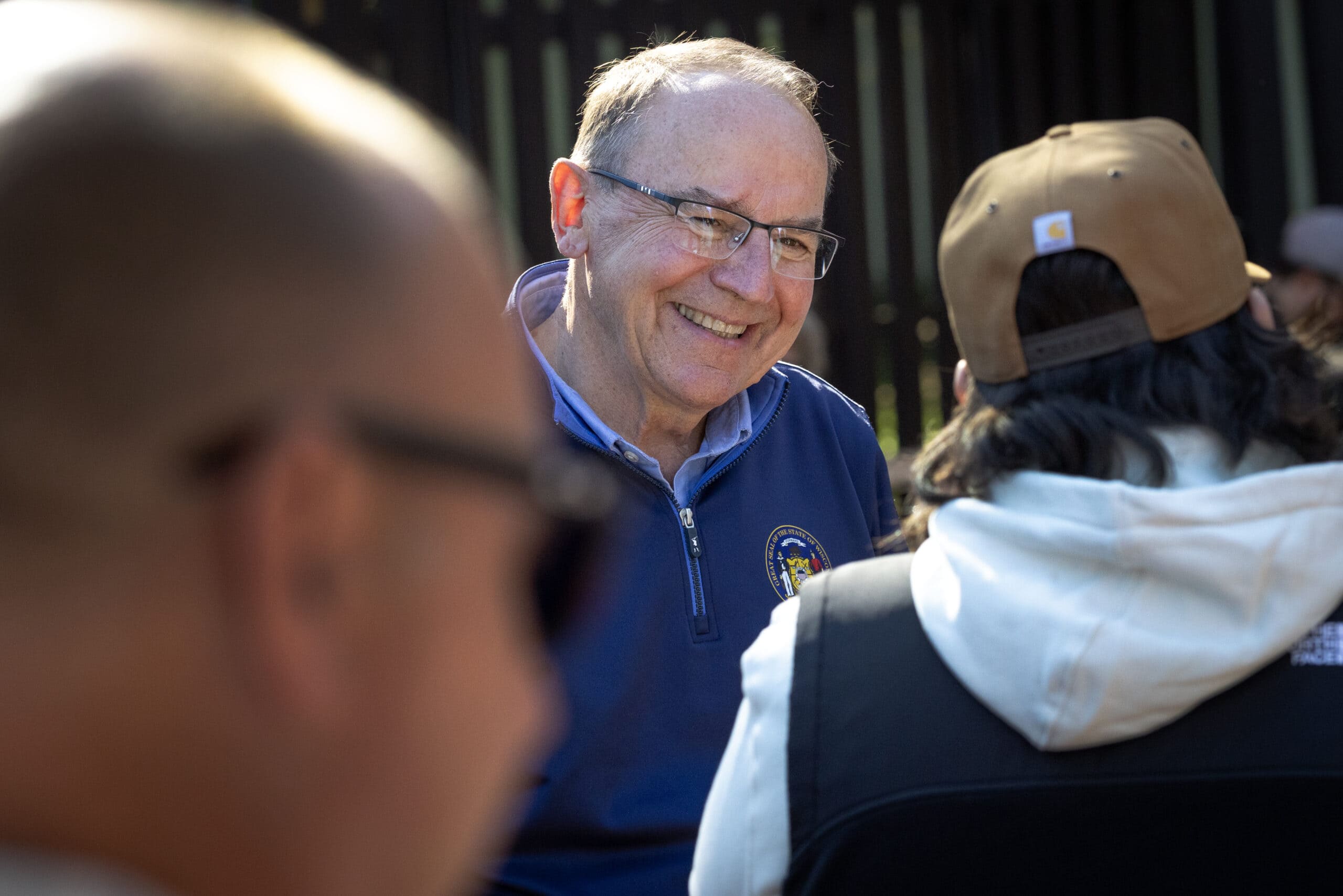
WKOW and the Wisconsin Democrats have been running around with “exclusive audio” of Tom Tiffany telling a voter he hopes to eliminate the state income tax. The reaction has been pure political theater dialed up to 11. They are trying to twist a standard Republican position into some scandal. Tiffany’s exact words were clear: “I will not be able to do it in the first budget, but, after that, we sure hope to be able to get it done.” He followed up by listing his actual first-budget priorities: end the 400-year property tax increase, return the nearly $3 billion surplus, and deliver a 10% income tax cut for working families making $150,000 or less. He also repeated his pledge not to raise taxes.
This is not some secret plan that needs to made into “news.” It is the same direction Republicans have talked about for years. Lower rates with broader bases resulting in fewer brackets. The goal is to let people keep more of what they earn instead of feeding a growing bureaucracy. Democrats act shocked because they need a counter-narrative. The entire 2026 election is about affordability. David Crowley’s record is on full display while voters already associate Republicans with lower taxes and lower spending. The left needs something, anything, that lets them claim Tiffany is the one who wants to raise taxes. Hilarious to even think about it.
Wisconsin is not Florida. Florida can lean on tourism, retirees, and visitors to fund government without a personal income tax. Northern tourism would have to explode to levels nobody is projecting before the state could fully walk away from the income tax under that structure. Plenty of Republicans are happy to start with a flat tax as the realistic intermediate step. A single rate is simpler, harder to game, and keeps the conversation focused on growth instead of class warfare.
Iowa runs a flat 3.8%. Michigan is at 4.25%. Indiana sits near 3%. Pennsylvania is at 3.07%. Illinois is locked in at a constitutional flat rate of 4.95%. Wisconsin’s top rate is still 7.65% and we sit next to Minnesota, which tops out at 9.85%, yikes. Outside of Minnesota, Wisconsin is the high-tax island in this part of the country.
The media’s favorite scare line is that eliminating the income tax would require jacking the sales tax to 12.69% for revenue neutrality. That number comes from a pure arithmetic exercise that assumes every dollar of income tax revenue must be replaced by sales tax with zero other changes. It is the kind of analysis that treats a state budget like a closed box with no efficiencies, no spending restraint, and no growth. Completely hypothetical and purely a mental exercise.
Nobody serious is proposing an overnight elimination that shocks the system and Tiffany said as much. The first budget is the practical one: the 10% cut for middle-class families, the surplus returned, and the property tax problem addressed. After that, additional relief becomes possible if spending is controlled and the economy grows.
Democrats are desperate for this to stick because their alternative is more spending. When the media frames Tiffany’s hope as a scheme that forces massive sales tax hikes or deep cuts to schools, they are not describing what he proposed. They are describing the worst-case scenario that assumes zero discipline in Madison.
Republicans have the clearer message here. Lower taxes are popular because people understand them. A flat tax is easier to explain than four brackets that climb to 7.65%. Working toward elimination, even if full elimination takes longer in Wisconsin than in a tourism-heavy state, is still a better direction than defending the status quo. The left’s attempt to turn a mainstream goal into a gotcha only works if voters forget who has been raising their property taxes and who wants to give the surplus back.
