


When most parents hear “trauma-informed care,” they picture sincere, gentle, and vulnerable situations requiring dedicated staff with specific training. A trained professional who understands that a child who has lived through abuse, loss or chaos needs patience and specialized interventions instead of punishment. All of that changed when I watched, with my own eyes, the training materials developed by Wisconsin’s Office of Children’s Mental Health (OCMH) and posted on its official state website.
In February 2022, the OCMH released a free video training series called “Exploring Race and Culture from a Trauma-Informed Lens.” The first segment is titled simply “White Privilege.” It has two parts: “Exploring Racism and Whiteness/Embracing Truth” and “Growing into Authentic Allyship and Racial Justice.” Each video runs a little over 30 minutes and comes with a “Training Tool Kit” containing discussion questions, a reading list and the office’s own written notes from the panel. All of it is still posted at https://children.wi.gov/Pages/TrainingsVideos/TICWorkshops.aspx today.
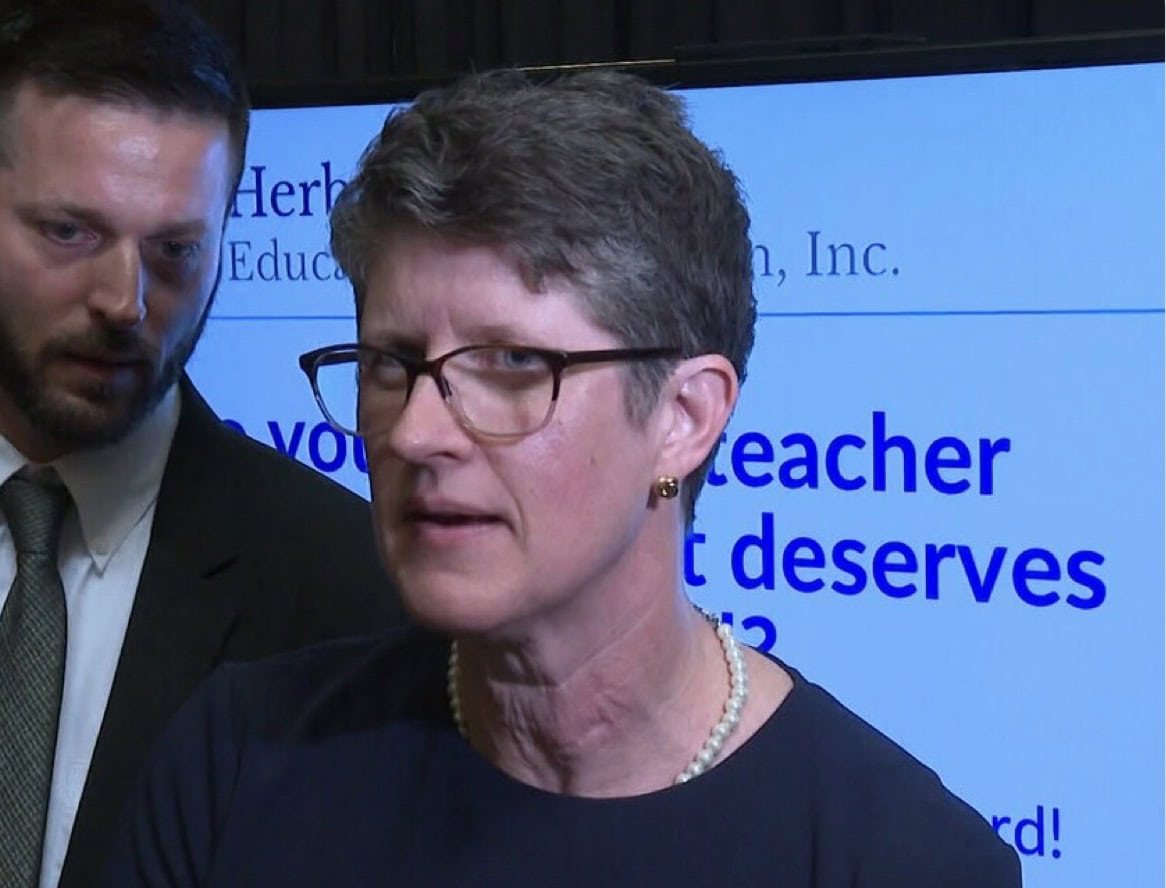
This is not a fringe nonprofit. The OCMH was created in the 2013-15 state budget. According to the Legislative Fiscal Bureau, it is housed within the Department of Health Services, but “it reports directly to the Governor,” and its director is “appointed by, and serving at the pleasure of, the Governor.” Gov. Tony Evers appointed the current director, Linda Hall, in June 2019. Hall moderated both “White Privilege” panels.
This office isn’t just a website. By law, its job is to “study and recommend ways, and coordinate initiatives, to improve the integration across state agencies of mental health services provided to children.” Its annual report says it “works in collaboration with the Wisconsin Departments of Health Services, Children and Families, Corrections, and Public Instruction,” which covers health services, child welfare, juvenile corrections and our schools. The law doesn’t give it power to order those agencies around, but training from the one office whose job is to connect them all can shape how workers across every one of those systems see our kids.
Target Audience
The office’s flyer says the series exists “to further the workforce’s learning in trauma-informed care,” and calls it “Ideal for staff training in one hour. View the video as a team and then discuss the questions in the Training Toolkit.” The training page adds: “These are great for staff/department group training!”
It didn’t stay inside the OCMH, either. On Feb. 22, 2022, the Department of Public Instruction published an announcement in DPI-ConnectEd, its news feed for educators, under State Superintendent Jill Underly. The item was submitted by the office. It told readers the series was “for the workforce,” described the first segment as “White Privilege,” and sent them to “the Office of Children’s Mental Health’s website for full videos and toolkits.”
Training Material
Part 1 opens with director Hall’s premise: “As we consider trauma sensitivity we need to consider race. That means we have to address white privilege and racism in our country and how it influences everything, including human services.”
From there, the panel defines race itself: “We can define race in historical context. It is a tool of white supremacy.” Later: “White people are racialized into a group. White supremacy did that.”
Then come the questions staff are supposed to answer together:
“What is your race? How do you identify? Have you taken the time to explore this?”
“What opportunities have you experienced because of your race/skin color? Has your skin color given you privilege that others didn’t have?”
“How does white fragility impact you verses [sic] showing empathy and being collaborative?”
Under a heading titled “Deconstructing Whiteness,” the toolkit says: “Need to deconstruct whiteness and the role that it plays in your life.” And: “Systems are fundamentally set up to put whiteness at the center of programs, stories, values, and policies. Allies remove themselves from the center and put other cultures there. Challenge white people to try to de-center themselves.”
The toolkit’s notes have one panelist telling participants: “You have been propagandized. It kind of is not your fault, but now that you have heard all this it is back on you.”
So where do children come in? Here: “Study found children of color experience micro-aggression 5 times per day and caused depression in school. If we are addressing trauma and children, need to pay attention to this.”
The quote the toolkit picked “to ground” its section on oppression comes from a book about schools. It ends: “we see the persistence of a racial hierarchy in everyday school life.”
The recommended reading list includes “White Privilege: Unpacking the Invisible Knapsack,” “Dear Nice White People,” an Education Week explainer on critical race theory, and The Atlantic’s “The Case for Reparations.”
Training Material Pt 2
Part 2 moves from awareness to action. “It isn’t ‘if’ whiteness is operating in the room but ‘how’ whiteness and racism are operating.” “It is particularly important to challenge racism when there are only white people in the room.” “Silence from white people is not OK.”
Then comes the line every Wisconsin parent should read twice. The panel describes “de-centered practice,” which asks: “whose voice is at the center, that we are prioritizing, whose values are most important? Whose story is preferred at the moment?” According to the toolkit, de-centered practice promotes:
“Giving space. Giving away power. Giving voice/preference to those historically oppressed and people of color – putting them at the center instead of yourself.”
It comes in the same breath as a question about “delivering services.” Discussion question 5 then asks staff to talk about “placing the voice of those historically oppressed or people of color at the center,” and then: “How could this change the work you do?”
A one-page handout, “3 Forms of Allyship,” finishes the lesson. It ranks “Performative Charity,” with a “Fixed & Deficit” mindset, below “Embodied Solidarity,” whose drive is “Sharing power & being de-centered.” Part 2’s reading list includes “From White Racist to White Anti-Racist – the life-long journey.”
The Timing
The OCMH was making this series at the same time the Legislature was debating whether training like it should happen at all. Its 2021 annual report said the series “will be completed in early 2022.”
In June 2021, lawmakers introduced two bills. Assembly Bill 411 would have limited race and sex instruction in schools and barred school boards from requiring staff to attend training on those topics. Assembly Bill 414 would have let the state withhold funding from any state or local agency that required employees to attend training on a list of race and sex concepts. Here’s how the next few months played out:
- Feb. 4, 2022: Gov. Evers vetoed AB 411, writing that he objected “to creating new censorship rules that restrict schools and educators from teaching honest, complete facts about important historical topics like the Civil War and civil rights.”
- Feb. 14-17: The OCMH created the toolkit files for the “White Privilege” segment.
- Feb. 22: Department of Public Instruction promoted the series to educators in DPI-ConnectEd. The same day, the state Senate passed AB 414.
- Mar. 18: Segment 2, “Implicit Bias,” followed.
- Apr. 8: Evers vetoed AB 414, objecting “to the Legislature attempting to infringe upon the executive branch of state government, especially under cover of politically motivated claims and erroneous assumptions.”
- Apr. 20: Segment 3, “Working with People with Different Racial and Cultural Backgrounds,” followed.
- May 17: The Assembly failed to override either veto.
Nothing I’ve found shows the timing was planned, but the record is simple: while lawmakers tried to rein in race-based training in schools and government, the Office of Children’s Mental Health, which reports directly to the governor, was producing it, and the governor vetoed the limits.
Missed Opportunity
Every minute that was spent developing, creating, and distributing these training materials is a minute children with real, life-changing trauma will never get back. Those minutes turn into hours and hours turn into days and days into years. The next governor of Wisconsin will decide the direction of OCMH.
Mental, behavioral and emotional disorders are pervasive among our adolescent youth — a serious issue that continues to disrupt student learning, overwhelm educators, and reshape daily classroom dynamics. We need a governor like Tom Tiffany who strongly believes our Office of Children’s Mental Health and DPI curricula must support our children to conquer real trauma by providing the tools to succeed as productive adults, rather than fuel the problem through grievance identity and race-based victimhood indoctrination masquerading as education.
