


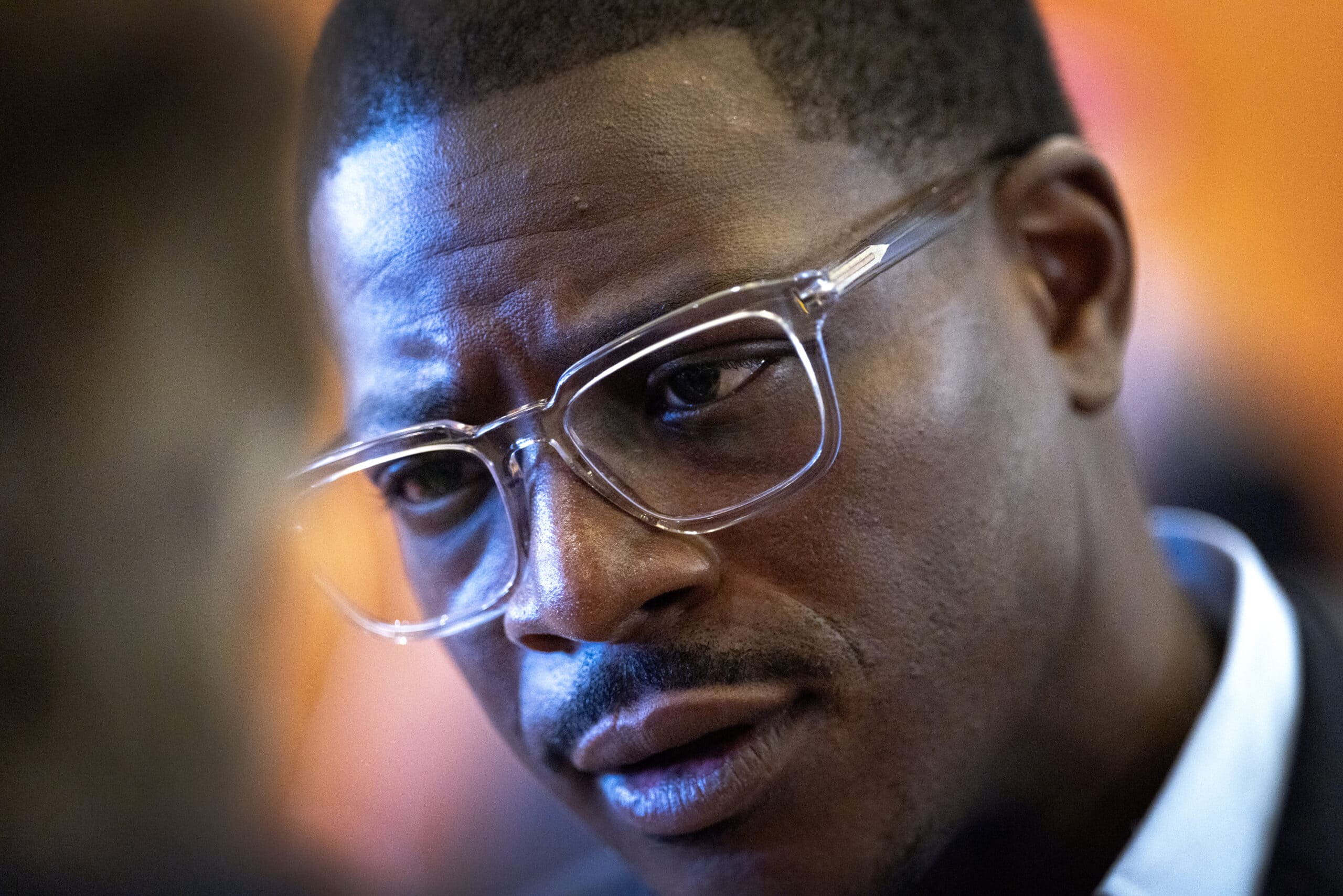
Milwaukee County Executive David Crowley did not specify a dollar amount or say where the money would come from when asked how he would fund universal pre-K, more housing assistance, and higher public school funding.
During an October 13 interview with WMTV reporter Vanessa Kjeldsen, Crowley was asked, “You’ve also talked about establishing universal pre-K, increasing funding for housing assistance and public schools. So where is all of the money coming from to support these initiatives?”
Crowley replied that Democrats “hopefully we get that trifecta” and “want to be bold,” but “we also can’t be stupid as far as where we are.” He said the plan is to “look at every nook and cranny, seeing where the Republicans have hid so much money over the past few years since they’ve had total control for the past 16 years.” He did not provide a cost estimate or mention any specific tax increase or spending cut.
When asked earlier about letting any Wisconsinite buy into BadgerCare, Crowley said the expansion would require “a greater partnership with the federal government.” After being told that the Trump administration had reduced Medicaid funding, he pointed to “tax breaks” for “large corporations” and “billionaires and billionaire companies” that U.S. Rep. Tom Tiffany supported. He still did not give a state dollar amount.
Crowley’s “Badger Basics” plan calls for a $20 minimum wage, universal child care with household costs capped at 7 percent of income, more school funding and special-education reimbursement, BadgerCare expansion, and making repeal of Act 10 a priority. Americans for Prosperity Wisconsin estimates the combined state and local cost of these proposals at over $6 billion a year. The Wisconsin Institute for Law and Liberty says fully restoring collective bargaining under Act 10 would cost school districts between $1.6 billion and $2.3 billion each year.
Crowley has refused to rule out raising taxes if he becomes governor. As Milwaukee County Executive, he approved nearly doubling the county sales tax from 0.5 percent to 0.9 percent, making it the highest in the state, and celebrated with cake. When asked if the increase would burden residents, he said, “No. I don’t think it would be a burden.” The county property tax levy has gone up in most years during his time in office. The county comptroller expects a $50.8 million structural deficit in 2027, rising to $168.7 million by 2031.
While serving in the Legislature, Crowley voted against a 10 percent middle-class income tax cut that Governor Tony Evers later signed into law. His most recent county budget proposal includes another levy increase of about 2.55 percent.
With three weeks left before Election Day, Crowley is still campaigning on these proposals without a clear funding plan, other than hoping for Democratic control of the Legislature and looking for money he claims Republicans have hidden.
