


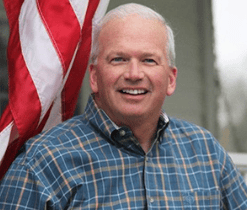
On October 8, Democrat Andy Beck, a candidate for the 5th congressional district, posted on X that Scott Fitzgerald took $872,100 from other political committees and about $486,500 from individual donors. “That’s nearly two-thirds of his contributions coming from political committees rather than individual donors,” the post said. The numbers check out. Fitzgerald’s October quarterly report shows $1,012,950 from other committees and $591,004 from individuals.
Beck could look those numbers up because Fitzgerald filled out the forms. That is the part Beck left out.
Federal law requires a House candidate’s committee to file regular reports. Beck’s committee, Andrew Beck for Congress, is missing two. The pre-primary report covering July 1 through July 22 was due July 30. On July 31, the FEC sent Beck, who serves as his own treasurer, a letter saying he “may have failed to file” the report and that “it is important that you file this report immediately.” The letter warned of civil penalties.
Beck answered on August 2 with a short note claiming his committee “has not raised or spent more than $5,000 by the ending coverage date of the 12-Day Pre-Primary Report.” That claim is hard to square with his own paperwork. Through June 30, his committee reported $14,612.26 in total receipts and $11,590.40 in spending. In the April through June quarter alone, he reported raising $8,292. Under federal law, a person becomes a candidate once he raises or spends more than $5,000, and Beck’s reports show he crossed that line well before July.
The second missing report is the October quarterly, due October 15 and covering activity through September 30. As of October 23, it does not appear on Beck’s FEC filings page. Fitzgerald filed his on deadline day. The last public look at Beck’s money ends June 30, when he reported $3,158.02 in the bank. The period when campaigns raise and spend the most is a blank page.
On October 19, the Republican Party of Wisconsin filed a complaint with the FEC asking it to investigate and order Beck to file. The agency’s own July letter and Beck’s empty filings page tell the story without any help from the GOP.
It is not the only disclosure in question. In a September 11 letter to the House Ethics Committee, the Campaign Legal Center listed Beck among 66 House candidates who appeared to qualify for a personal financial disclosure report but had none on file with the House Clerk. That report tells voters what a candidate owns and what he owes.
Beck also flagged crypto money coming into the district. A super PAC called Defend American Jobs, part of the crypto industry’s Fairshake network, reported spending about $74,750 on mail supporting Fitzgerald on October 5. Fitzgerald backed the CLARITY Act, saying in July 2025 that the bill “finally sets the ground rules, reins in regulatory overreach, and empowers the next generation of digital market builders.” Voters know where Fitzgerald stands and who is backing him because he and his supporters disclosed it. PAC contributions to a House candidate are capped at $5,000 per election, and each one is itemized in a public report.
Beck ends his post by telling Fitzgerald to come home and ask constituents what keeps them up at night. That is fair advice for any candidate. Here is one question those constituents might ask Beck: Who has been funding your campaign since June 30?
Beck’s next report, the pre-general, was due Oct. 22 and covers activity through October 14. A candidate who wants to attack the incumbent’s FEC report ought to turn in his own.
