


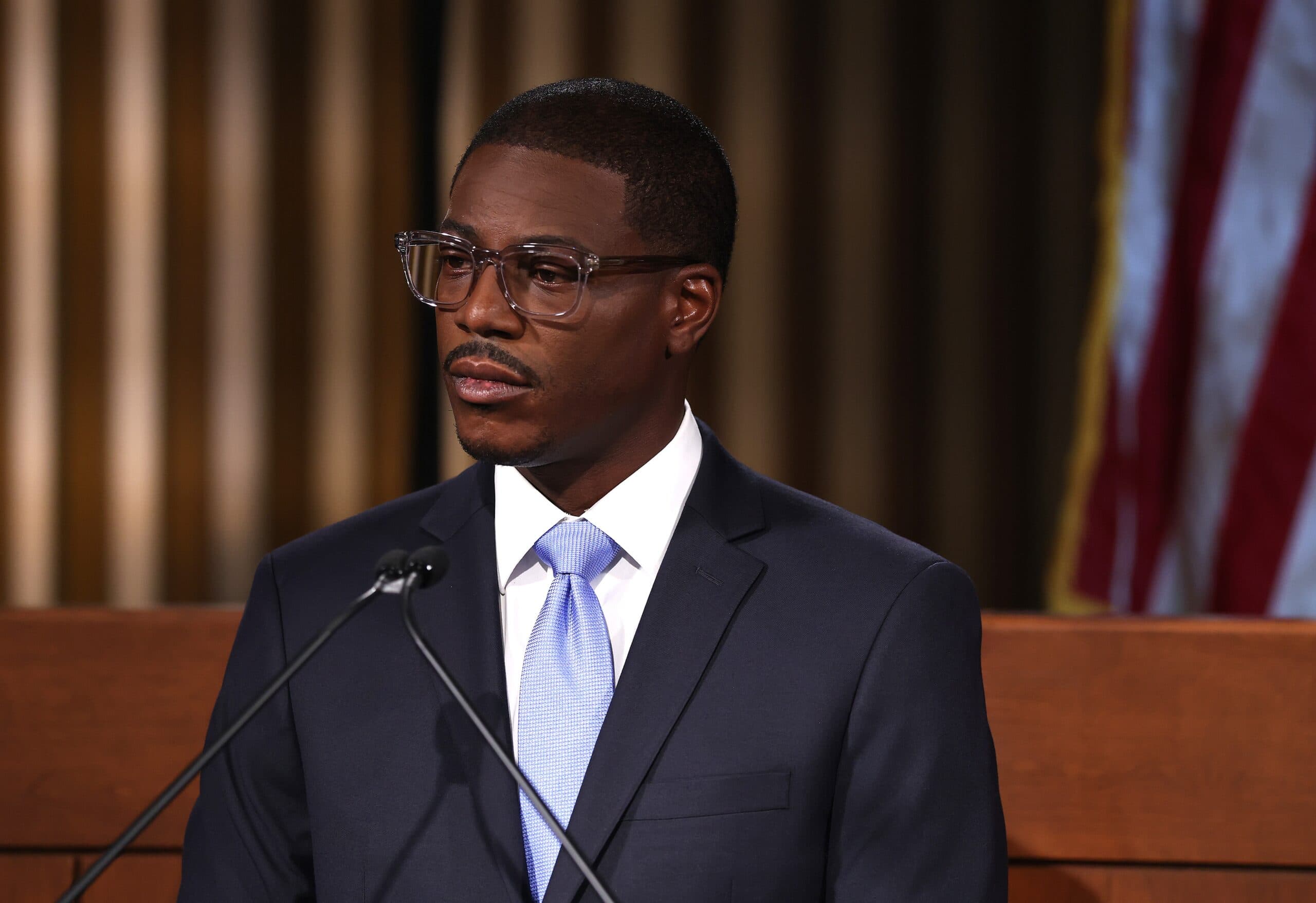
Governor-elect David Crowley used his first television interview since election night to put Act 10 and Wisconsin’s Right to Work law back on the chopping block.
On WISN 12’s UPFRONT, which aired Sunday, November 8, Crowley said he wants to repeal both.
“I wanna make sure that we’re working towards not just repealing Act 10 right to work for less, but making sure that we’re uplifting workers all across Wisconsin,” Crowley said.
That pledge carries real weight now. Crowley beat Republican Tom Tiffany on November 3, and Democrats won both legislative chambers, giving the party a full trifecta for the first time in 16 years. The new Legislature takes office in January.
Act 10 is the 2011 Walker-era law that limited collective bargaining for most public employees, capped base wage increases at inflation, and required those workers to contribute to their pensions and health insurance. The MacIver Institute estimates those reforms have saved taxpayers $35.6 billion since 2012, including $13.8 billion in employee pension contributions and $21.8 billion in health insurance savings.
Right to Work, signed in 2015, bars private-sector employers from forcing workers to join a union or pay union dues as a condition of keeping a job. Crowley has called it “right to work for less” throughout the campaign and repeated that he wants it gone.
On UPFRONT, reporter Gerron Jordan put the cost question to him. The Wisconsin Institute for Law and Liberty estimates a full Act 10 repeal could add more than $2 billion a year in new costs, including about $1.788 billion for school districts. If those school costs were shifted to property taxpayers, WILL says the owner of an average $300,000 home could see $624 or more in higher property taxes each year.
Manitowoc County supervisors heard a rough $5 million added cost estimate for that county alone if Act 10 falls, enough to blow past levy limits without layoffs, a referendum, or more state aid.
Crowley was not impressed.
“I’m not worried about what Will is putting out there as it relates to an analysis,” Crowley said. “What we need to be focusing on, what is that long-term fiscal sustainability looks like for the state of Wisconsin?”
On the same interview, he said he would “couple all of this with a blue ribbon commission bringing Democrats, Republicans, tax experts, local units of government, business leaders, as well as labor unions to the table to focus on that long-term fix.” Crowley says his administration would look at the tax impact and leave the legislative details to lawmakers.
The affordability line is the hard part to square. Crowley also told UPFRONT that voters want “their property taxes lower,” more investment in public schools, and affordable childcare and healthcare, and that he looks forward to “working with our Democratic trifecta in order to get it done.”
Local officials are already running the numbers the other way. Manitowoc County supervisors heard a rough $5 million added cost estimate for that county alone if Act 10 falls, enough to blow past levy limits without layoffs, a referendum, or more state aid. Rep. Shae Sortwell, R-Two Rivers, who also serves as a Manitowoc County supervisor, told The Center Square that without Act 10, labor fights often go to forced arbitration where “the union pretty much gets what it asks for.”
WILL Research Director Will Flanders put it bluntly: repeal “will lead to some dramatic negative consequences for Wisconsin education and for taxpayers.”
Crowley has not softened the goal. After a state appeals court upheld Act 10 on July 29 and overturned a 2024 Dane County ruling that had struck key parts of the law, Crowley said, “As governor, I will repeal Act 10 in full and finally restore the protections that working families have been denied for far too long.” Unions later asked the Wisconsin Supreme Court to take the case. That court now has a 5-2 liberal majority.
With Democrats controlling the governor’s office and both houses, Crowley does not have to wait on the justices. He can push a repeal bill through Madison, the commission, and all, and dare Republicans to stop him.
Taxpayers who just voted for lower costs now get to find out what Crowley’s version of affordability actually costs.
