


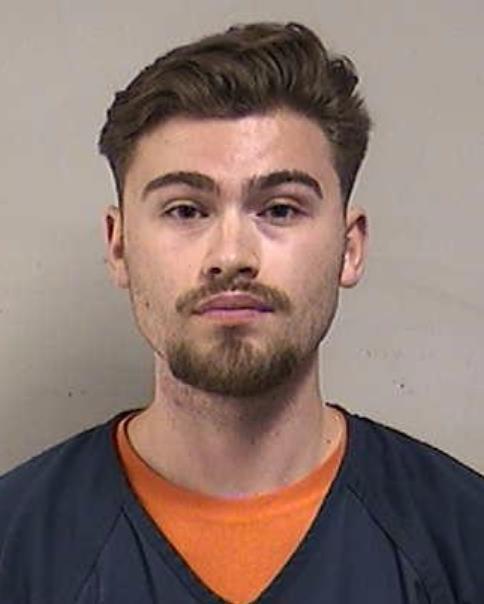
A 23-year-old Pleasant Prairie man has been charged with 12 felony counts under a recently enacted Wisconsin law that criminalizes the distribution of AI-generated sexually explicit images, in what legal experts describe as one of the state’s earliest prosecutions under the statute.
Tristan X. Preuss faces 12 counts of posting a synthetic intimate representation of an identifiable person, all Class I felonies, according to court records. Preuss was charged November 4 and his initial appearance is scheduled for December 2 before Kenosha County Court Commissioner Daniel Kellum. The case has been assigned to Circuit Judge David Hughes. Preuss was issued a summons and no bail was set.
According to the criminal complaint cited by CBS 58 and FOX6, Preuss allegedly created four fake social media accounts impersonating his ex-girlfriend beginning in August 2025. Investigators say he used artificial intelligence to manipulate ordinary photos of her and making it appear she was nude, and distributed the AI images and sexually explicit videos. He is also accused of offering the images in exchange for money, directing people to a phone number belonging to him. According to Kenosha County Eye, Preuss used Snapchat accounts and attempted to sell the fabricated images to people the couple knew.
When questioned by investigators, Preuss said he acted for “sexual gratification” or “his own satisfaction,” claimed there was “no ill intent,” stated he “did not know it was illegal,” and expressed that he was sorry, according to the complaint.
The charges fall under 2025 Wisconsin Act 34, signed by Gov. Tony Evers on October 3, 2025, and went into effect the following day. The bipartisan law, authored by Sen. André Jacque and Rep. Brent Jacobson, expands existing statutes on intimate representations to cover “synthetic intimate representations.”
These are defined as realistic, technologically generated images or videos that use a person’s face, likeness, or other distinguishing characteristics to depict them nude or in other intimate situations even if the underlying components are artificial or publicly available.
The statute makes it a Class I felony to post, publish, distribute, or exhibit such material with intent to coerce, harass, or intimidate the person depicted. Class I felonies carry a maximum penalty of 3½ years in prison and a $10,000 fine. The law does not criminalize the mere creation of such images, only their distribution under the specified intent.
Attorney Jonathan LaVoy of Kim and LaVoy S.C., commenting on the case said the legislation was designed to stop people from taking ordinary social-media photos and turning them into non-consensual pornography via AI. He noted that distribution and attempts to sell the material are key triggers, and predicted “an explosion in AI-related cases” as the technology becomes more accessible. He also observed that the evidence appears strong on its face but that the relatively new statute could face appellate challenges.
The case highlights a growing national trend of states updating revenge-porn and deepfake laws to keep pace with generative AI tools that can convincingly undress or sexualize people from ordinary photographs.
Studies cited by lawmakers during debate on Act 34 found that the vast majority of deepfake material online consists of non-consensual pornography, overwhelmingly targeting women.
Preuss, a Pleasant Prairie resident who previously attended Kenosha Tremper High School and competed in volleyball at Marian University, is presumed innocent until proven guilty. No further details about the victim’s identity have been publicly released.
