


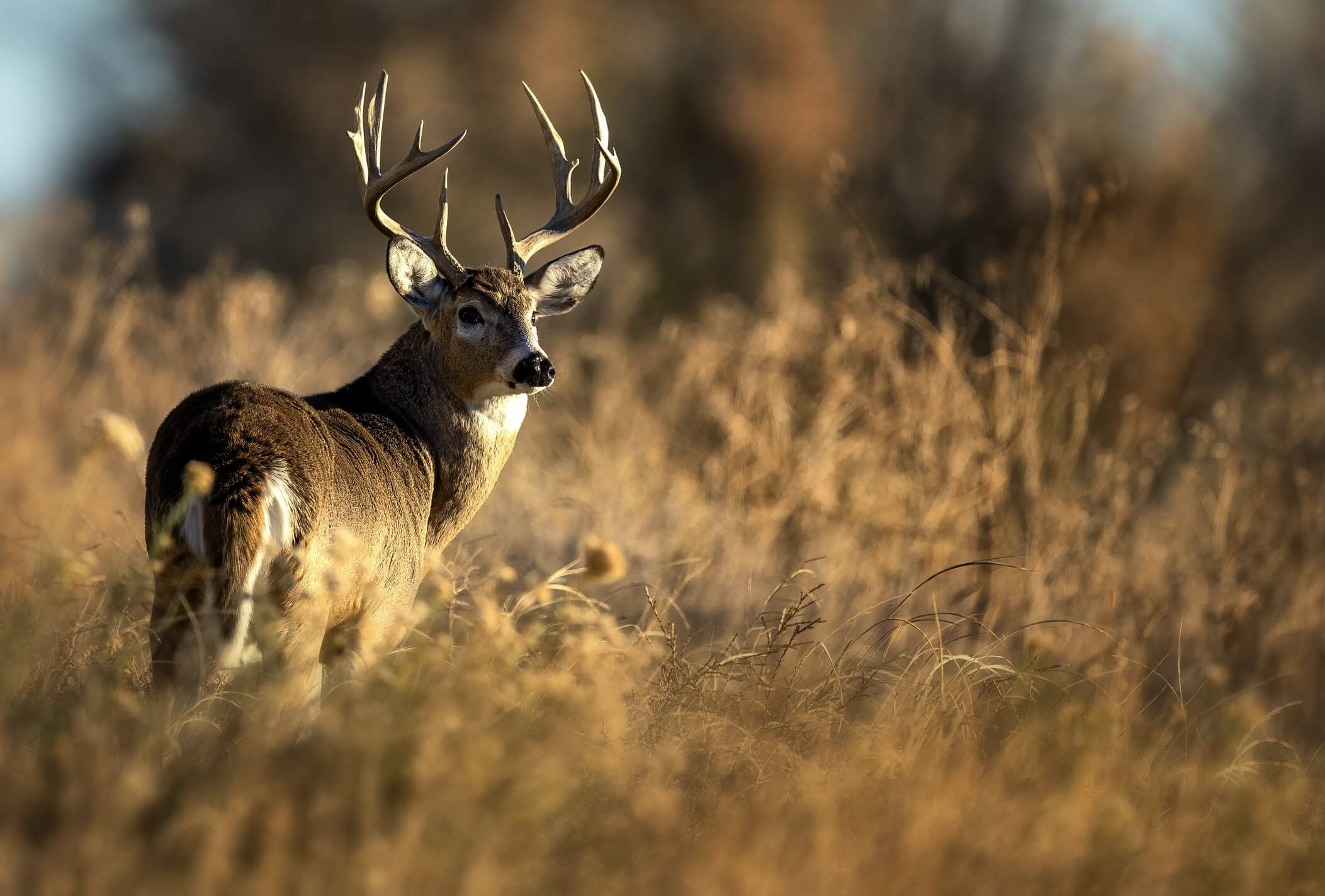
This Saturday, Wisconsin’s blaze orange army will once again take to the woods for the start of the nine-day gun deer season, a cherished Wisconsin tradition that runs through November 29.
For generations, gun deer season has been about more than just hunting. It’s about families heading north to deer camp, waking up before sunrise to brave the November cold, and passing down a love of the outdoors from one generation to the next. It’s a cherished part of Wisconsin’s sporting heritage and an important economic driver for local businesses, particularly in northern Wisconsin.
But while Wisconsin’s hunting tradition remains strong, participation has steadily declined. At its peak around 1990, Wisconsin sold approximately 700,000 gun deer licenses annually. Last year, that number had fallen to roughly 550,000, a decline of more than 20%.
As fewer Wisconsinites take to the woods each fall, preserving our state’s hunting heritage for future generations is more important than ever.
But with Democrats set to take complete control of state government for the first time in sixteen years, Wisconsin hunters could soon face a new set of challenges.
For years, Republican majorities have blocked numerous proposals from Democrat lawmakers that would impose new restrictions on firearms, ammunition, and gun owners, including measures that would directly impact Wisconsin’s deer hunters.
With a Democrat trifecta looming, gun deer season could look a lot different when Wisconsin’s blaze orange army returns to the woods in November 2027. Here’s a look at some of the proposals Wisconsin Democrats have introduced over the years that could change the way Wisconsinites hunt:
Your Hunting Rifle Could Make You a Felon
Let’s start with the obvious: it’s hard to hunt without a rifle. But if Wisconsin Democrats had their way, some of the most popular hunting rifles in the state could become illegal overnight.
In 2017, Democrats introduced a sweeping ban on semiautomatic firearms that would have outlawed several rifles, including some commonly used by Wisconsin hunters.
Under the guise of an “assault weapons ban,” Senate Bill 350, introduced by then-Sen. Lena Taylor and Rep. Leon Young, would have made purchasing, possessing, transporting, or transferring a semiautomatic firearm a felony punishable by up to six years in prison.
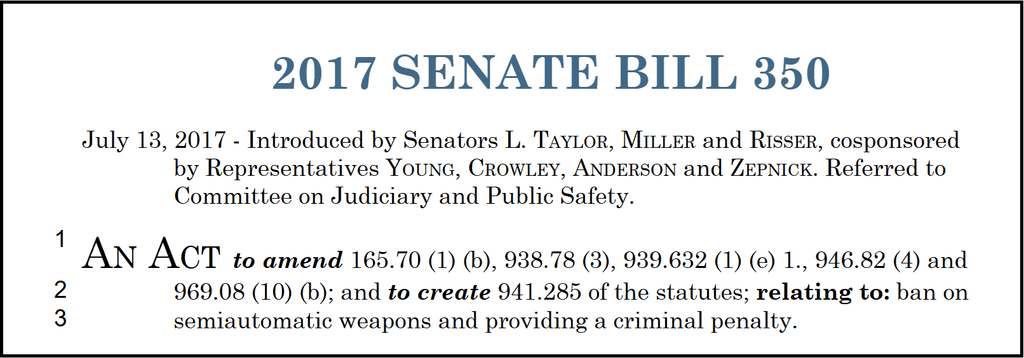
That’s right: Democrats wanted to turn law-abiding gun owners into felons, simply for buying or possessing a semiautomatic weapon. This includes popular hunting rifles like the Browning BAR, Remington 7400, Remington 742 Woodsmaster, and Ruger Mini-14, along with the AR-15.
And here’s the kicker: One of the lawmakers who cosponsored the legislation was none other than Wisconsin’s incoming governor, David Crowley–making the likelihood of this becoming law even higher.
But Democrats’ assault on responsible gun owners didn’t stop there.
That same year, Democrat lawmakers introduced Assembly Bill 1052, which would have prohibited the sale, purchase, transportation, manufacture, and possession of magazines capable of holding more than ten rounds of ammunition. Violators could face up to nine months in jail and a $10,000 fine.
Crowley supported this proposal, too.
It’s hard to hunt without a rifle. But if Wisconsin Democrats had their way, some of the most popular hunting rifles in the state could become illegal overnight.
A separate bill, AB 1042, went even further, threatening gun owners with up to six years in prison simply for possessing a magazine capable of holding more than ten rounds.
Think about that. Under these proposals, a Wisconsin hunter could face criminal charges–not for poaching, trespassing, or illegally using a firearm–but simply for possessing a rifle or magazine that had previously been legal.
And with lawmakers who supported these restrictions—including Wisconsin’s incoming governor—preparing to take control of state government, hunters have plenty of reason to pay attention.
After banning the gun and banning the magazine, what’s next? Banning the ammunition itself?
Democrats Proposed Ban On Hollow-Point Bullets
Yes, believe it or not, Wisconsin Democrats actually tried.
In 2013, Democrat lawmakers introduced legislation that would have banned the sale and possession of hollow-point bullets, along with “any bullet that expands or flattens easily in the human body” or “any bullet with a hard envelope that does not entirely cover the core of the bullet.”
In other words, Democrats wanted to ban almost every type of commonly used ammunition.
Under 2013 Assembly Bill 221, authored by Reps. Fred Kessler and Christine Sinicki and Sen. Fred Risser, possessing or purchasing prohibited ammunition could land you in prison for up to six years.
That’s right. You could become a felon without firing a single shot.
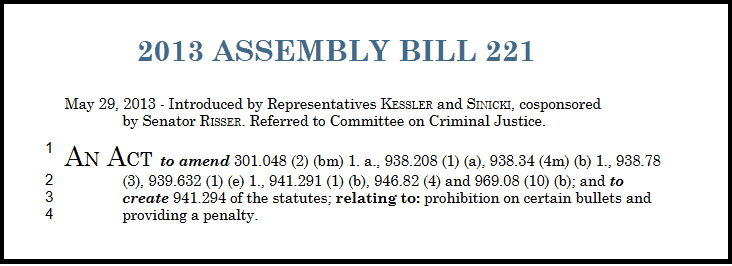
This legislation would have effectively killed gun-deer season in Wisconsin, as nearly all ammunition commonly used in deer hunting would fall under the bill’s prohibited definitions.
The legislation does include an exception for hunters, but there’s an important catch: It’s not a blanket exemption allowing hunters to purchase or possess otherwise prohibited ammunition simply because they intend to use it for hunting. Instead, the exception is tied to hunting conducted in accordance with the DNR’s rules and regulations. This means that hunters could only continue using hollow-point ammunition if the DNR determines they can do so.
One can’t imagine that waiting for the DNR’s permission will sit well with hunters.
While the bill gained little traction in 2013 and has not been reintroduced since, the idea of restricting ammunition hasn’t disappeared. In recent years, Democratic lawmakers in several other states with Democrat trifectas have introduced proposals targeting ammunition purchases, taxes, and hunting use, offering a glimpse at the types of restrictions that could resurface in Wisconsin.
2013 Assembly Bill 221, authored by Reps. Fred Kessler and Christine Sinicki and Sen. Fred Risser, would have effectively killed gun-deer season in Wisconsin, as nearly all ammunition commonly used in deer hunting would fall under the the bill’s prohibited definitions.
In Washington State, Democrat lawmakers introduced legislation that would have limited bulk purchases of firearms and ammunition within a 30-day period. Under the proposal, individuals would have been limited to purchasing one firearm and no more than 1,000 rounds of ammunition every 30 days.
Washington and Maryland lawmakers also sought to impose additional taxes on firearms, firearm parts, and ammunition. Washington proposed an 11% excise tax on these purchases, while a separate proposal in Maryland would have doubled the state’s existing sales tax on these products from 6% to 12%.
But Maryland didn’t stop there. Lawmakers also introduced legislation that would have phased out lead ammunition for hunting altogether by 2029, citing environmental concerns. The restrictions would have applied to hunting on both public and private land, affecting everything from small game and upland birds like turkey and pheasant to deer hunting. If enacted, the legislation could have significantly increased costs for hunters by forcing them to switch to more expensive alternatives to traditional lead ammunition.
Between restrictions on firearms, limits on ammunition purchases, and additional taxes, these proposals could make Wisconsin’s hunting traditions more expensive and difficult to maintain.
And even for hunters who can afford the added costs, there’s another concern: whether they’ll still have access to the public lands they’ve hunted for generations.
Public Land Would Be Off Limits to Hunters
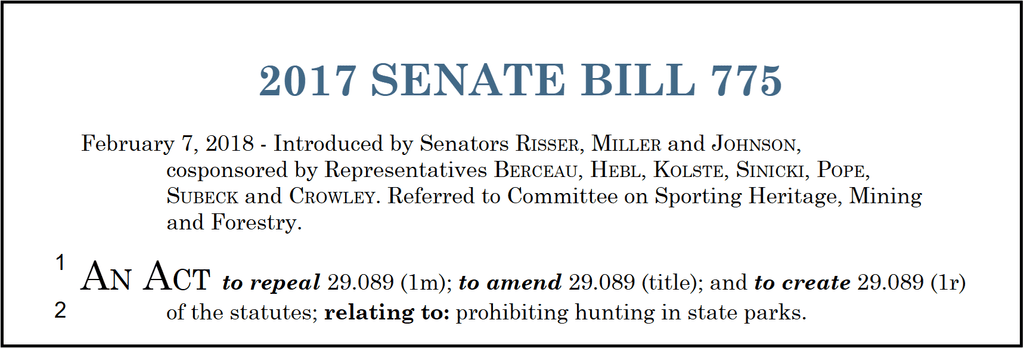
In 2017, Wisconsin Democrats, including Governor-elect David Crowley, backed legislation that would have prohibited hunting in Wisconsin’s state parks.
Under current law, licensed hunters can hunt in designated areas of state parks during established seasons, subject to DNR regulations. The agency can also restrict hunting near designated-use areas, for public safety, or to protect unique plant and animal communities.
But 2017 Senate Bill 775 would have gone further, replacing those limited restrictions with a statewide prohibition on hunting in state parks. That would mean losing access to public hunting opportunities on land supported by Wisconsin taxpayers, regardless of whether hunting could otherwise be conducted safely and legally.
And while the proposal specifically targeted state parks, it raises a much broader question about the future of public hunting land in Wisconsin.

Consider the Knowles-Nelson Stewardship Program.
For decades, the program has used public funding to acquire and protect land for conservation and outdoor recreation, including hunting and fishing. In total, the program has helped protect more than 750,000 acres statewide.
Under Wisconsin law, land purchased through Knowles-Nelson is required to remain open for hunting, fishing, trapping, hiking, and cross-country skiing. Exceptions are permitted only under specific circumstances, generally requiring approval from the Natural Resources Board.
With the program’s funding authorization having expired, lawmakers face decisions about whether to renew it and under what conditions.
In 2017, Wisconsin Democrats, including Governor-elect David Crowley, backed legislation that would have prohibited hunting in Wisconsin’s state parks.
Democrats have made restoring Knowles-Nelson funding a priority. But a renewed program could also reopen debate over the requirements attached to publicly funded conservation land, including whether hunting access must continue to be protected.
While SB 775 stopped short of targeting Knowles-Nelson, Democrats could revisit the program’s existing hunting-access protections when they take up its reauthorization next session. If lawmakers were to weaken or eliminate those requirements, the consequences could extend far beyond state parks, potentially restricting hunting access on 750,000+ acres of publicly funded conservation lands.
Restricting The Next Generation of Hunters
In 2023, Wisconsin Democrats, including incoming legislative leaders Rep. Greta Neubauer and Sen. Dianne Hesselbein, sponsored Assembly Bill 686, which proposed new restrictions on firearm possession by minors under the age of 18.
Under current law minors are generally prohibited from possessing firearms, but there are several exceptions, including supervised target practice, firearm safety instruction, certain military activities, and possession of qualifying rifles or shotguns in compliance with state hunting laws.
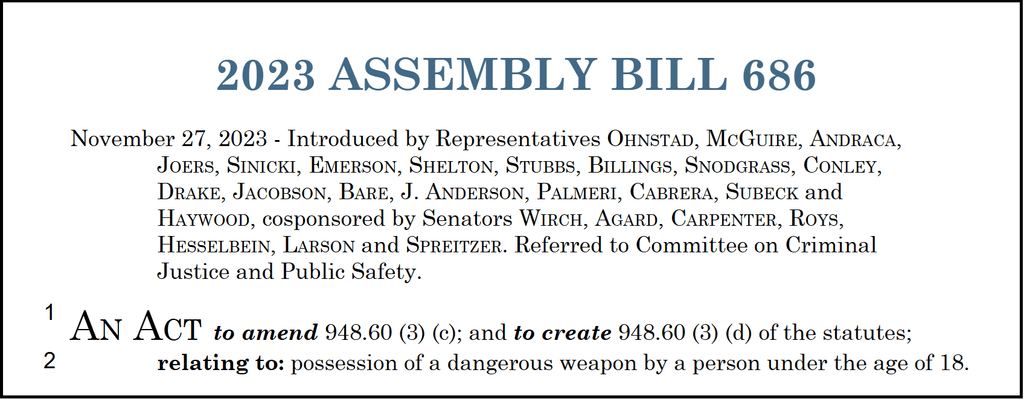
The Democrat-backed proposal would have narrowed that last exception, allowing minors to possess those firearms only while actively engaged in the act of hunting, rather than more broadly when complying with Wisconsin’s hunting laws.
That may sound like a minor wording change, but consider what it could mean for families preparing for gun-deer season.
Imagine your 17-year-old son driving separately to the family hunting cabin for opening weekend, with his unloaded hunting rifle secured in the trunk. He’s properly trained, has the necessary hunting authorization, and is simply bringing his firearm along for the weekend.
But he’s not actually hunting while driving to the cabin.
Under the proposed language, that distinction could matter. If no other statutory exception applied, possessing the rifle during the trip could expose him to a Class A misdemeanor, carrying up to nine months in jail and a $10,000 fine.
Or consider your 16-year-old daughter, who completed hunter safety training and is getting ready for her next deer season. She’s at home cleaning and maintaining her hunting rifle before opening weekend, with no target practice or safety course underway.
She’s not being careless, trespassing, or hunting illegally. She’s simply taking care of her equipment.
Yet because she’s not actively hunting, her possession of the rifle could fall outside the narrowed hunting exception, potentially exposing her to criminal penalties unless another exception applies.
These are the kinds of everyday situations that make the distinction between complying with hunting laws and actively hunting so important.
And at a time when Wisconsin is already confronting declining participation among young hunters, the possibility of additional criminal penalties for routine activities surrounding deer season raises serious questions about how the state encourages the next generation to take part in its hunting traditions.
Opening the Door to Local Gun Bans
Even if some of the more sweeping firearm restrictions proposed by Wisconsin Democrats never become law statewide, 2023 Assembly Bill 1199 proposed another approach: allowing local governments to impose firearm regulations stricter than those permitted under current state law.
Currently, Wisconsin’s firearm preemption law generally prohibits counties, cities, towns, and villages from enacting ordinances regulating the sale, purchase, ownership, possession, carrying, and transportation of firearms more stringently than state law. This helps establish a consistent legal framework across Wisconsin, rather than leaving each community to write its own rules.
For example, when Wisconsin legalized concealed carry in 2011, communities such as Madison could not simply establish their own citywide prohibition on otherwise lawful concealed carry.
But AB 1199, introduced by Rep. Shelia Stubbs and Sen. Chris Larson, proposed changing that statewide limitation on local authority. Under such a change, communities could potentially adopt restrictions that differ significantly from those in neighboring jurisdictions.
Consider what that could mean for someone traveling across Wisconsin during gun-deer season.
Even if some of the more sweeping firearm restrictions proposed by Wisconsin Democrats never become law statewide, 2023 Assembly Bill 1199 proposed another approach: allowing local governments to impose firearm regulations stricter than those permitted under current state law.
A hunter could leave home with a legally owned rifle, drive through several counties on the way to deer camp, and encounter different local requirements governing firearm transportation or possession. A firearm or magazine permitted under one community’s ordinance might be restricted under another’s. Even a routine trip to the family cabin could require checking multiple sets of local rules.
And consider the specific restrictions Democrats have already proposed at the state level. Dane County could consider a local version of the 2013 hollow-point ammunition ban, potentially restricting the ammunition a hunter purchases for deer season. Green Bay could adopt its own prohibition on magazines holding more than ten rounds, similar to the legislation introduced in 2017. Meanwhile, Milwaukee could consider additional concealed carry restrictions, meaning a Wisconsin resident with a valid state-issued license might be permitted to carry in one community but face different rules upon entering the city.
The result would be a patchwork of local firearm regulations, creating additional compliance burdens for gun owners, retailers, travelers, and hunters. Someone who understands and follows the rules at home could still need to learn a different set of requirements when crossing a municipal or county boundary.
Not only does this create massive confusion and inconsistency, it also raises a broader question about consistency in the exercise of Second Amendment rights. Constitutional protections would remain applicable statewide, but the regulations governing lawful firearm ownership and use could vary considerably depending on where someone lives or travels.
The proposal also attracted support from legislators who are now preparing to lead their respective chambers. Incoming Assembly Speaker Greta Neubauer and Senate Majority Leader Dianne Hesselbein were among its cosponsors, making their past support relevant as lawmakers consider which firearm policies to revisit in the upcoming session.
Whether they choose to advance a similar proposal remains to be seen. But unlike a bill targeting one particular firearm or type of ammunition, changes to preemption could open the door to numerous future local restrictions, each with its own requirements and potential consequences.
Don’t Let Democrats Take Aim At Your Hunting Rights
For generations, Wisconsin’s nine-day gun-deer season has been about more than filling a freezer. It’s about early mornings in the deer stand, weekends at the family cabin, and passing down a love of hunting and the outdoors to the next generation.
For hundreds of thousands of Wisconsinites, hunting isn’t just a hobby. It’s a cherished tradition deeply intertwined with our state’s history and identity.
But with Democrats preparing to take control of state government, the future of those traditions could be at stake.
The bills outlined above aren’t imaginary proposals. They’re real pieces of legislation introduced by Democrats over the past several sessions, many with the explicit support of incoming Governor David Crowley and the lawmakers preparing to lead the Legislature in 2028.
While there’s no guarantee that each of these proposals will become law, Democrat lawmakers have made it clear that they plan to make gun reform a priority with their newfound majorities. And these bills offer a glimpse into what could become reality under a Democrat trifecta.
According to Hunter Nation, Wisconsin has roughly 855,000 licensed hunters, yet fewer than half consistently vote. With the future of hunting and Second Amendment policy potentially on the legislative agenda, that leaves a substantial number of sportsmen and women whose voices are missing from the political process.
The decisions made in Madison over the next two years will help shape Wisconsin’s hunting traditions for generations to come. Whether it’s the rifles they carry, the ammunition they use, or the public lands they hunt, these policies have real consequences for Wisconsin families. What’s at stake isn’t just another nine-day deer season, but the future of a tradition that has helped define our state for generations.
