


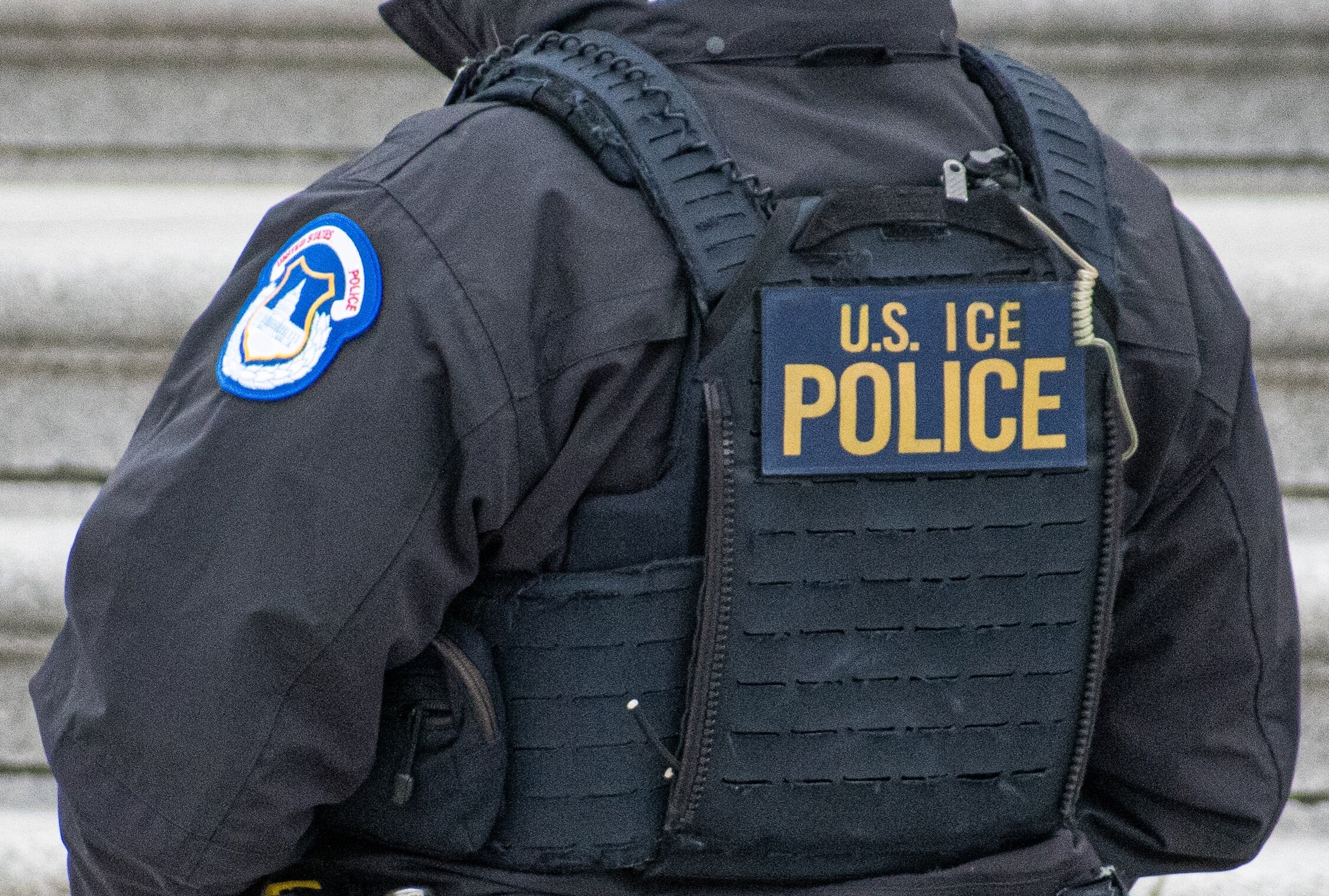
The Ninth Circuit Court of Appeals has blocked enforcement of a California law that would have prohibited federal agents from wearing masks. The ruling comes just a day after Milwaukee passed a nearly identical ordinance.
A federal appeals court on Wednesday permanently blocked enforcement of a California law that would have required federal law enforcement officers, including U.S. Immigration and Customs Enforcement agents, to remove face coverings and display visible agency identification or badges during operations.
A three-judge panel of the 9th U.S. Circuit Court of Appeals ruled that Section 10 of California’s “No Vigilantes Act” violates the Supremacy Clause of the U.S. Constitution. The court held that the provision “attempts to directly regulate the United States in its performance of governmental functions.”
“We conclude that § 10 of the No Vigilantes Act attempts to directly regulate the United States in its performance of governmental functions. The Supremacy Clause forbids States from enforcing such legislation,” the panel wrote in an opinion granting the federal government’s motion for an injunction pending appeal.
The ruling was announced shortly after First Assistant U.S. Attorney Bill Essayli for the Central District of California described it on social media as a “huge legal victory.”
The decision follows the Milwaukee Common Council’s approval of a nearly identical local ordinance as part of its “ICE Out Milwaukee” legislative package.
The council voted 13-0, with one abstention, to prohibit all law enforcement officers, including federal agents, from wearing masks or face coverings while interacting with the public. Exceptions are allowed for health, safety, or extreme weather. Officers must also display their agency name or initials, a badge, or an identification number on their uniforms or provide this information verbally upon request.
Milwaukee City Attorney Evan Goyke previously raised concerns about enforceability under the Supremacy Clause, prompting a delay in last month’s vote. The ordinance applies to federal employees authorized to carry firearms, make arrests, or enforce immigration laws, and restricts federal agents from staging operations on city property without a permit.
The Milwaukee measure is part of a broader package that includes two nonbinding resolutions: one calling for the abolition of ICE and another directing Milwaukee police to intervene if federal agents attempt arrests in the city.
Council members advanced the package in response to federal immigration enforcement actions in other cities, including recent operations in Minneapolis and Chicago, where agents wore masks and tactical gear.
The 9th Circuit’s decision is not binding in the 7th Circuit, which covers Wisconsin. However, legal experts and city officials note that similar local restrictions on federal officers have historically faced challenges under the Supremacy Clause and intergovernmental immunity doctrines.
