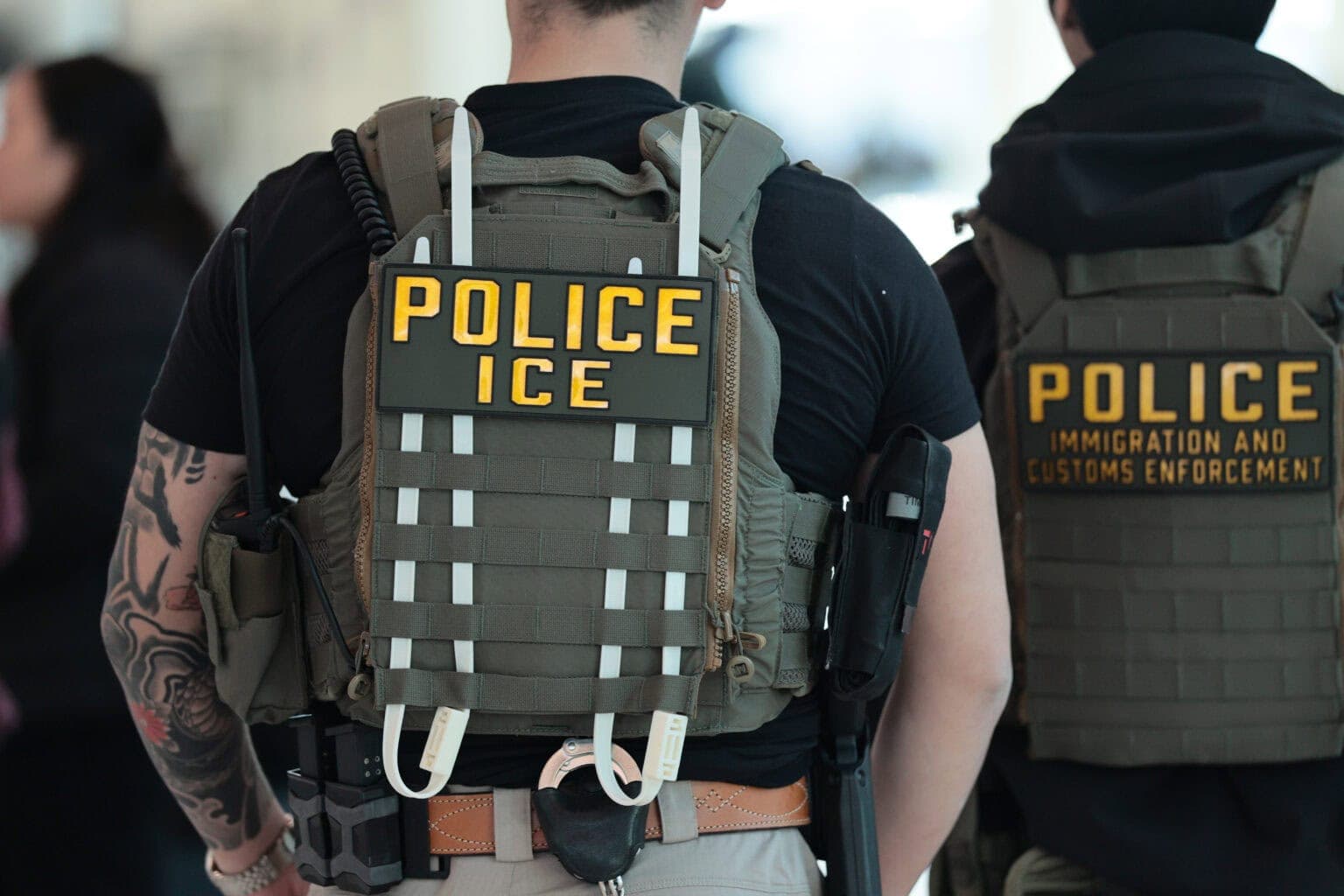


A federal judge has ruled that a high-profile lawsuit challenging Wisconsin sheriffs’ cooperation with federal immigration detainers will remain before the Wisconsin Supreme Court, setting the stage for a potentially significant ruling on the authority of local law enforcement in immigration matters.
The case, Voces de la Frontera, Inc. v. Dave Gerber, et al., was filed in September 2025 by the ACLU of Wisconsin on behalf of immigrant rights organization Voces de la Frontera. The lawsuit challenges the practice of county sheriffs honoring requests from U.S. Immigration and Customs Enforcement (ICE) to hold individuals in jail for up to 48 hours beyond their scheduled release dates.
The defendants in the case are Sheriffs Dave Gerber of Walworth County, Todd Delain of Brown County, Chad Billeb of Marathon County, David Zoerner of Kenosha County, and Chip Meister of Sauk County.
At the center of the dispute is whether Wisconsin sheriffs have the legal authority under state law to detain individuals solely based on a voluntary ICE detainer. The ACLU argues that local law enforcement officers cannot deprive someone of their liberty without a judge-signed warrant and that honoring an ICE detainer effectively amounts to a new arrest without legal authority under Wisconsin law or the Wisconsin Constitution.
Plaintiffs contend that civil immigration detainers do not provide the probable cause or warrant required for an arrest and therefore violate state statutes governing when and how long local law enforcement may detain individuals.
The sheriffs sought to move the lawsuit to federal court, arguing that the case fundamentally involves federal immigration law. However, U.S. District Judge William Conley rejected that request, ruling that the central issue concerns Wisconsin law governing when and how sheriffs may make arrests rather than federal immigration policy. His May 18 decision allows the case to proceed in the Wisconsin Supreme Court.
Sam Hall, an attorney with Crivello, Nichols & Hall, S.C., who represents the five sheriffs, said his clients disagree with the ruling and are considering an appeal.
“We are considering all options, including an appeal to the Seventh Circuit Court of Appeals,” Hall told the Milwaukee Journal Sentinel.
The Wisconsin Supreme Court agreed in December 2025 to hear the case directly, bypassing lower courts because of its statewide significance. If the court ultimately rules on the merits, the decision could establish whether—and under what circumstances—Wisconsin sheriffs may continue the long-standing practice of honoring ICE detainers.
Supporters of the sheriffs’ position argue that cooperation with ICE is an important public safety tool, particularly when dealing with repeat offenders or individuals with serious criminal histories.
Kenosha County District Attorney Xavier Solis said, “This is exactly why Wisconsin must stand with ICE and federal immigration enforcement. The Democratic Party of Wisconsin made abolishing ICE part of its convention agenda. That is not public safety. That is not common sense. That is a dangerous agenda that protects criminal illegal aliens instead of Wisconsin families.”
The lawsuit also comes as cooperation between Wisconsin law enforcement agencies and ICE has expanded. As of early 2026, at least 13 Wisconsin county sheriff’s departments had entered into formal 287(g) agreements with ICE, which authorize certain local officers to perform limited immigration enforcement functions.
Several forms of 287(g) agreements are currently used nationwide:
- Jail Enforcement Model (JEM): Authorizes trained local officers to identify, process, and issue detainers for removable individuals who have already been arrested and booked into local jails or correctional facilities.
- Warrant Service Officer (WSO) Program: Allows trained local officers to serve and execute ICE administrative warrants and detainers within their jail facilities.
- Task Force Model (TFM): Authorizes selected local officers to enforce certain immigration laws during routine law enforcement activities, including traffic stops, and to participate in joint operations led by ICE.
Among the five sheriffs named in the lawsuit, participation in the 287(g) program varies. Kenosha County Sheriff David Zoerner and Marathon County Sheriff Chad Billeb operate under the Jail Enforcement Model (JEM). Sauk County Sheriff Chip Meister participates through the Warrant Service Officer (WSO) Program. Brown County Sheriff Todd Delain also participates under the WSO Program, while Walworth County Sheriff Dave Gerber has signed a pending WSO agreement with ICE
As of now, no appeal has been publicly reported as having been filed with the 7th U.S. Circuit Court of Appeals regarding Judge William Conley’s decision to remand the case back to the Wisconsin Supreme Court.