


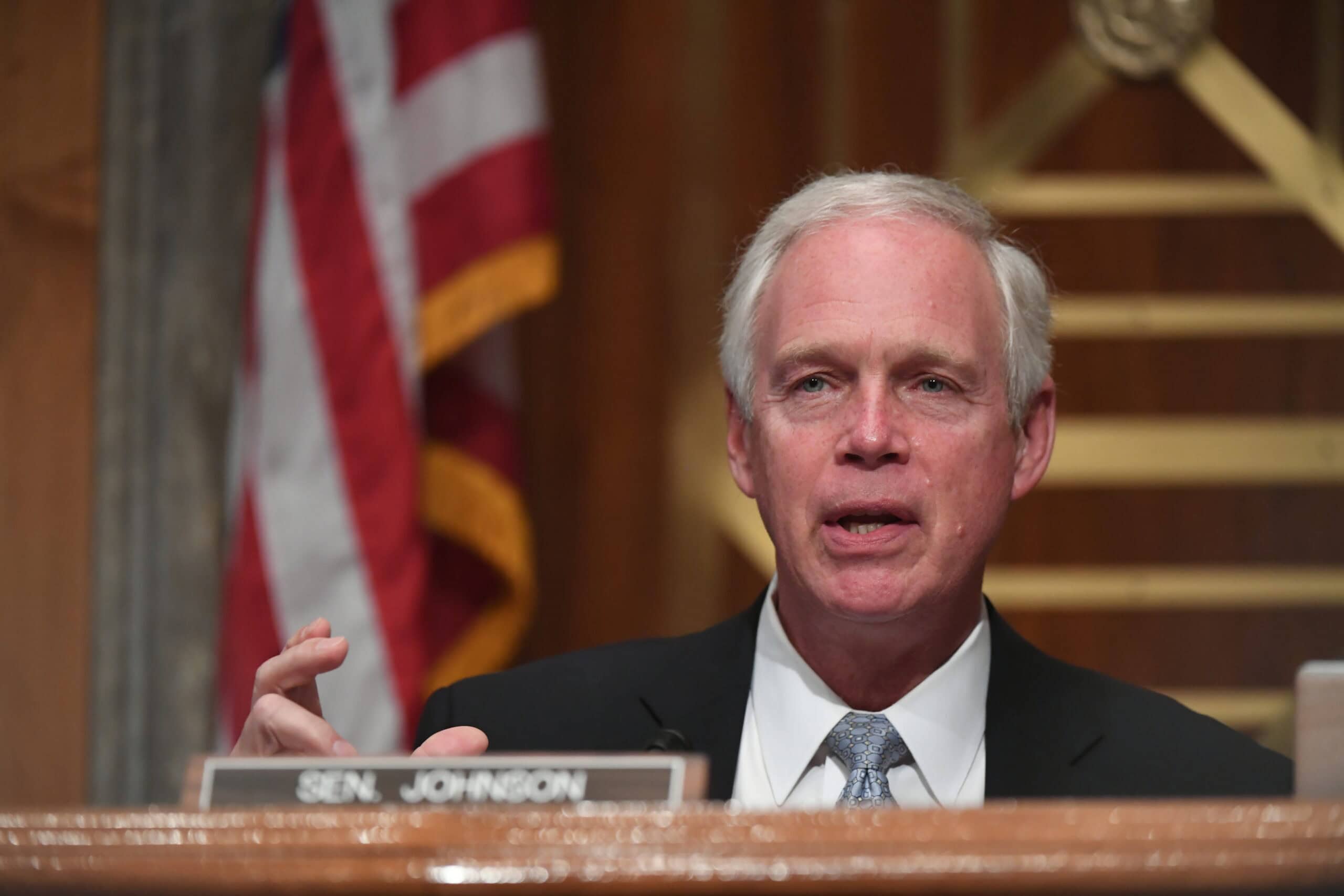
Wisconsin Sen. Ron Johnson has become one of Congress’s most clear-eyed critics of D.C. dysfunction.
Congress’s failure to manage the federal government responsibly has brought increasing stagflation, untold waste and theft of taxpayer money, the looming risk of a debt crisis, and rock-bottom trust from the American people. Johnson’s long-standing focus on fixing the budget process is more relevant than ever.
As the new chair of the Senate Budget Committee following the passing of Sen. Lindsey Graham, Johnson now has a rare opportunity to apply what he has learned as an accountant, a businessman, a member of Congress, and a hardworking Wisconsinite. He sees that bad results flow, almost inevitably, from a bad system. Now he has the chance to fix that system from the committee most responsible for guiding Congress’s review of the federal budget.
Johnson has spent his Senate career advancing structural reforms. For example, this fiscal year has been marred by costly government shutdowns. Johnson has long argued that shutdowns should be taken off the table. Under his leadership in 2019, the Homeland Security and Governmental Affairs Committee passed the Prevent Government Shutdowns Act with broad bipartisan support.
Johnson’s Eliminate Shutdowns Act came up for a vote last year but fell short amid Democrats’ demands for extending expanded Obamacare subsidies, which lapsed anyway. His bill helped build momentum for the ongoing push to replace unpopular shutdown politics with a more effective, less bloated, more bottom-up budget process.
Along with other members, he has repeatedly sought structural reforms and savings in debt limit deals. This is a critical opportunity to forge bipartisan consensus on systemic solutions before the next debt limit deal in late 2027 or early 2028.
Perhaps Johnson’s greatest opportunity to transform Congress is one that is familiar to anyone who has managed a business or nonprofit: build a real budget that puts everything on the table and invites everyone to participate at every stage. Only a complete budget can foster true fiscal democracy through the checks and balances of transparency, competition, cooperation, and accountability.
Many Americans assume Congress already budgets this way. It doesn’t. The 12-bill appropriations process covers only about one-quarter of spending and none of the revenue.
When policies compete outside of shutdown-driven omnibus negotiations, Congress can finally identify wasteful spending and make meaningful tradeoffs. Sorting out the tangled mess of federal health and welfare programs would become possible.
Members of Congress would finally have the means and motivation to trim the fat while preserving resources for worthwhile activities. Rolling back wasteful spending can be a political winner, especially becausereducing deficits and easing the debt burden lower Americans’ cost of living and expand prosperity.
Better budgeting can help Congress fulfill the federal government’s important roles more effectively, right-size activities in the context of everything else, and let senators and representatives apply all their talents to sound governance for the people.
Congress can be much better than it is, and getting there will require upgrading the way it does business. At the helm of the Budget Committee, Johnson has an outsized opportunity to help make that happen.
Johnson has been a passionate advocate for fiscal responsibility and spending restraint. He has worked with members of Congress on both sides of the aisle to try to fix the place.
With his background as a successful businessman and family man, we know he has the skills and the fortitude to take on actually balancing a budget, and for that, taxpayers should rejoice. As he steps into this new role, we look forward to working with him to protect taxpayers and help create an effective federal government.
Megan Novak is the state director for Americans for Prosperity Wisconsin. Kurt Couchman is senior fellow in fiscal policy at Americans for Prosperity and the author of Fiscal Democracy in America: How a Balanced Budget Amendment Can Restore Sound Governance.
