


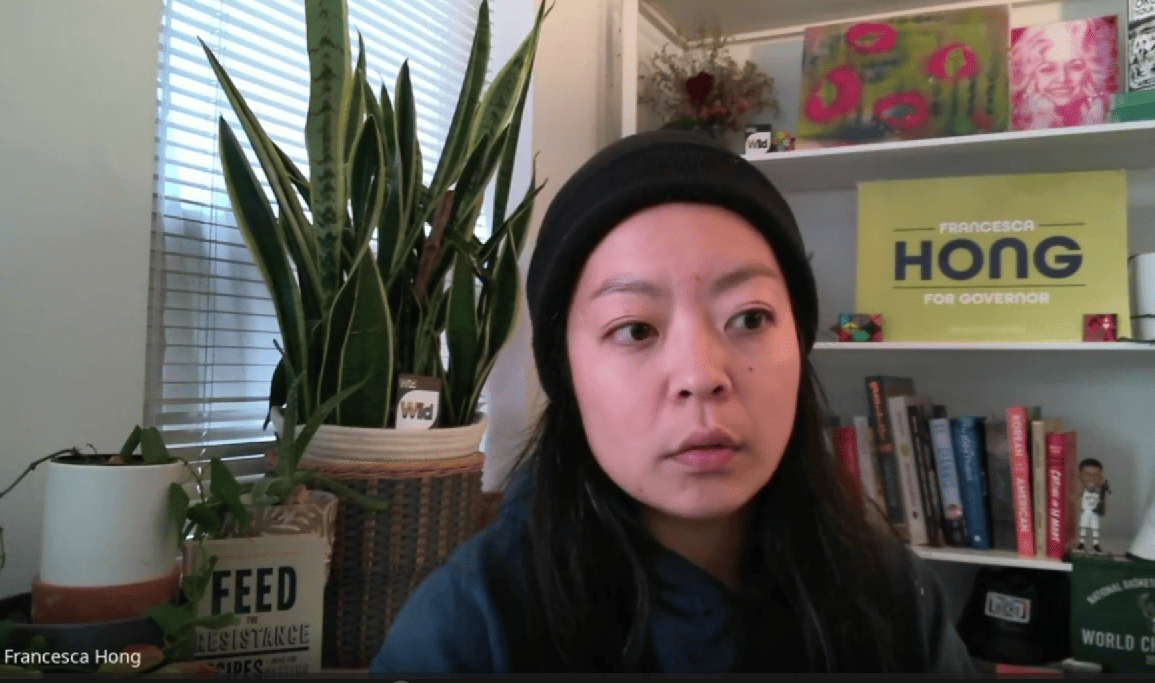
As the Wisconsin Democratic gubernatorial primary heads into its final chaotic weeks, one name continues to surge in internal polls and Marquette Law School surveys: state Rep. Francesca Hong. The progressive from Madison reflects the party’s sharp leftward tilt: a worldview that thrives on class warfare and the perennial slogan “tax the rich.” But behind the rhetoric lies a deeper cultural rot: the seething envy of highly educated, yet often low-earning, young professionals who seem more interested in tearing down success than building their own.
A recent analysis of the Cooperative Election Study shows that people with postgraduate degrees and household incomes between $30,000 and $60,000 stand out as one of the most reliably liberal (and by extension, redistributionist) voting blocs in America.
This group includes baristas with master’s degrees, nonprofit staffers buried in student loans, and public-sector employees who entered the workforce expecting six-figure salaries and instant influence.
Instead of adjusting course, many have embraced the politics of resentment. That this envy finds an audience even among some more affluent college-educated whites only underscores how thoroughly the politics of grievance has captured the professional class.
Hong’s base also skews younger. Many of her most enthusiastic supporters are college-aged or recently graduated, full of idealism but short on real-world experience. They’ve been steeped in campus messaging that frames wealth as inherently suspicious and success as something to be redistributed rather than earned. The result is a potent mix of envy and naivete:
Young people who have yet to build much of anything themselves, yet feel entitled to lecture the rest of Wisconsin on how the economy should work. They chant “tax the rich” without grappling with the consequences of punishing the risk-takers who create the jobs, technologies, and opportunities the next generation will need. (No, this is not geared at all young people. I have plenty of conservative friends who won’t fall for the left’s cheap appeals to emotion. There’s just no denying the trend.)
Wisconsin Democrats, including frontrunner Hong and supporters of candidates like Milwaukee County Executive David Crowley, love to chant “tax the rich.” It’s a simple, emotionally satisfying slogan that papers over hard realities. They rarely pause to ask: Who exactly are these “rich” people and how did they achieve their success?
Consider Elon Musk. While the left often vilifies him and dismisses achievers as evil exploiters of their employees, he is a technological pioneer who has poured his own capital, sweat, and reputation into companies that advance humanity. He didn’t inherit his wealth; he bet big, faced near-bankruptcy multiple times, and delivered innovations that are reshaping energy, transportation, and even space exploration. Wisconsinites benefit indirectly every time a battery plant expands, or satellite internet reaches rural corners of our state. These are the risks and long hours most critics have never taken.
Yet instead of admiring this drive or learning from it, some young postgraduates with stagnant salaries express their frustration by calling for higher taxes on successful people. Rather than considering options like entering high-demand trades, starting a business, moving to a more affordable area, or working their way up over time, they focus on taxing those who have succeeded. This approach is often described as compassion, but it can sometimes be more about envy than justice. Personal responsibility is sometimes labeled as “systemic oppression,” and creating wealth is sometimes seen as exploitation.
This mindset doesn’t just fuel bad campaign rhetoric. It leads to policies that have failed everywhere they’ve been tried. Is capitalism perfect? No. No form of government is. But capitalism raises living standards over time, creates the resources needed for schools and infrastructure, and gives ordinary people the opportunity to improve life for their families.
Look at the exodus from high-tax progressive strongholds like Illinois and California. Wisconsin families already shoulder some of the highest property taxes in the Midwest, partly due to decisions such as Governor Evers’ infamous 400-year school funding veto. Doubling down on “tax the rich” (who are not hurting anyone) will only accelerate that pain, driving talent and capital elsewhere while shrinking the pie for everyone.
The upcoming primary may result in Francesca Hong or another big-government champion. But Wisconsin voters (especially in the heartland and suburbs) should see it for what it is: a contest between those who want to punish success and those who want to reward it. Hard work, innovation, and opportunity have shaped the state.
Envy politics — whether from the downwardly mobile postgrad or the idealistic but inexperienced young activist — will only tear it down.
