


When the final out landed in St. Petersburg on Wednesday night, October 28, about 31,000 people were sitting inside the Brewers’ home ballpark in Milwaukee, watching a road game on the scoreboard 1,200 miles away. The Brewers beat the Tampa Bay Rays 4-1 in Game 5 and won the first World Series in franchise history. The city celebrates Friday.
That crowd gathered in a building that almost never happened. It exists because a Republican state senator from Racine stood up in the Capitol a little before 5 a.m. on an October morning in 1995 and changed his vote, knowing exactly what it would cost him.
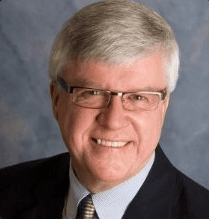
His name was George Petak. He did not live to see this. He died on Christmas Eve 2024. But if Wisconsin is going to throw a parade, his name belongs somewhere on the route.
George Anthony Petak Jr. was born November 6, 1949, in Warren, Ohio. Friends called him “Sonny.” He married his high school sweetheart, Nancy Farrell, while studying political science at Kent State. Ametek Lamb Electric transferred him to Racine in 1976. The Petaks joined Calvary Memorial Church and stayed more than 30 years.
He won a seat on the Racine Unified board in 1983 and served as its president until 1990. That year Republicans recruited him for the 21st Senate District, and he upset Senate Majority Leader Joseph Strohl. He won reelection in 1994, chaired the Senate Republican caucus and earned a seat on the Joint Finance Committee. He was a rising name in Tommy Thompson’s Wisconsin.
By 1995, County Stadium was a relic. Built in 1953, it could not produce the luxury boxes, club seats and concessions a modern franchise needed to survive in baseball’s smallest market. A statewide sports lottery had failed at the polls that April. The Brewers made it plain they would leave without a new park.
The plan that reached the Senate created a stadium district and paid for it with a 0.1% sales tax in five counties: Milwaukee, Ozaukee, Racine, Washington and Waukesha. Racine County hated it. A week before the Senate vote, the Racine County Board voted 28-0 against the tax. Petak had told his constituents he would oppose putting Racine on the hook, and he spent the night trying to get Racine County out of the bill.
The Senate journal shows nearly 18 hours of drama beginning shortly before noon on October 5. Around midnight, the bill failed twice, each time by one vote, with Petak voting no. Bud Selig, then acting commissioner of baseball and the man who brought the Brewers to Milwaukee, was in the building. Thompson was pushing hard. Senate Majority Leader Mike Ellis, a fellow Republican, was against it. Milwaukee Democrats, including Gary George and Gwen Moore, were against it too.
Petak later explained the math he faced during the long recess. “We weren’t gonna get any more Democratic votes. We had a limited number of Republican votes,” he told CBS 58. “And it was time to stand up and do the right thing for Milwaukee, for Southeast Wisconsin and for the State of Wisconsin.”
Years later he put it even more bluntly. “The reality I faced was, either I change my vote; convince somebody else to, which was highly unlikely; or the Brewers are gone, frankly,” he told the Journal Sentinel.
On the third roll call, shortly before 5 a.m. on Friday, October 6, he voted yes. The bill passed 16-15. “It’s a tough vote, but the right vote,” Petak said that morning.
Selig, who had been ready to concede, told reporters he had written a very different speech. “You’ll never know how grateful I am I don’t have to make it,” he said.
Thompson was just as direct. “George Petak is probably what is best in a public servant,” the governor said. “He really strongly believed in his heart and his mind and very fiber of his body that professional major league baseball is important for Wisconsin.”
The bill made Petak a hero in Milwaukee and a target at home. Then-Rep. Kimberly Plache, a Racine Democrat, said she had never seen voters so intense on an issue. “George Petak is lucky he’s got three years before he’s up for re-election,” she said.
He did not get three years. Opponents gathered the signatures in the winter, adopted the slogan “No More Petax,” and the State Elections Board ordered a recall election in March 1996 over the objections of the state Republican Party. Senate Democratic Leader Chuck Chvala saw what was at stake: Republicans held the Senate by a single seat. Petak himself later said Chvala “played the game better than everybody,” in a talk to the Waunakee Rotary Club.
Plache ran against him and, as The New York Times reported, called the stadium package “the Republican rape of Racine.” On June 4, 1996, she won 21,045 to 19,318. Petak became the first Wisconsin legislator ever removed by recall, and Republicans lost control of the Senate.
He did not blame anyone. “We have nothing to be ashamed of, nothing to be displeased with, but the voters have spoken,” he said. “I’m surprised by the outcome but not discouraged. We’re going to move forward.” He told the Times his vote was “a difficult one, but a proper one.”
The best story of the whole saga came two weeks after he lost.
For five straight years, Petak had thrown out the first pitch on Racine Night at County Stadium. In June 1996, freshly recalled, he showed up and did it again. His wife, Nancy, sang the national anthem. Their son Brian, then 26, played the keyboard.
Petak remembered how Brewers fans received him. “In the stadium, I had a standing ovation of 35,000 people, and that was pretty exciting,” he told OnMilwaukee in 2001.
Petak recovered from what he called the shock of sudden unemployment, went to work for the Wisconsin Housing and Economic Development Authority, then lobbying and public relations. He considered a run for Congress in 1998 and instead backed a young Republican named Paul Ryan.
In March 2001, a week before Miller Park’s first exhibition game, he threw a charity tailgate party for a New Berlin foster care and adoption agency. Miller Park was visible from his downtown office window. “I was convinced in 1995 that my vote was the right one for the greater good of the State of Wisconsin and I’m still convinced of that,” he said then. “I’ve never had a sense of bitterness because I knew politics can be very nasty and very personal.”
He also said, “There is life after politics.”
When Gov. Tony Evers signed the law ending the stadium tax in November 2019, Petak told CBS 58, “It was worth it, frankly. I wouldn’t wish a recall election on anyone, but we went through that because we cast the right vote.” He added that he was confident the Brewers would soon raise a World Series trophy in the park he helped build.
Racine paid its share. The tax started January 1, 1996, and ran until the stadium district shut it off on March 31, 2020, after collecting roughly $605 million. Racine leaders never warmed to it. “It’s gone. Hallelujah!” said Sen. Van Wanggaard, R-Racine. County Executive Jonathan Delagrave said residents “should not have to pay for a sports stadium in Milwaukee.”
When the Legislature took up the next stadium fight in 2023, Petak told CBS 58 he wanted the team kept in Wisconsin but favored a different way to pay. “At this point, I would say anybody but the taxpayers,” he said. The deal that passed that fall, 2023 Wisconsin Act 40, put $500.8 million in public money into the ballpark and kept the Brewers through 2050. Plenty of politicians have since lined up to claim credit for keeping the team. As The Heartland Post has argued, the original credit belongs to Petak, who made the hard vote first and paid for it with his job.
Petak and Nancy later moved to Colorado. He was diagnosed with glioblastoma in April 2024 and died in Colorado Springs on the morning of Christmas Eve, around 4:50 a.m. He was 75.
Selig said he had spoken with him a couple of weeks before. “As so often happens, heroes have to pay a tough price, but he was willing to do so,” Selig said. “So in the coming years when you enter American Family Field and think of the Brewers, remember George played a vital and very important part of keeping the Brewers in Wisconsin.”
Tim Sheehy of the Metropolitan Milwaukee Association of Commerce said it plainly: “without senator Petak’s courageous vote at 4:45 in the morning, I doubt very much that we would have baseball in Wisconsin.”
During this October’s run, his son, now Pastor Brian Petak, told Spectrum News the family calls the ballpark something else. “I think about him all the time, especially when the Brewers are winning games in what we like to call ‘Petak Park,'” he said. “I guarantee you there are a lot of people who voted against him in 1996 that have been enjoying Brewers games at AmFam Field over these last 25 years.”
Politicians today poll everything and risk nothing. George Petak looked at a vote he knew could end his career, decided the state’s future was worth more than his seat, and cast it. Wisconsin took his job. He kept his word to himself. And on Friday, when the trophy rolls through Milwaukee, it will be heading home to the park his vote built.
