


Crowley’s Plan Doesn’t Say How He’ll Pay For Policies
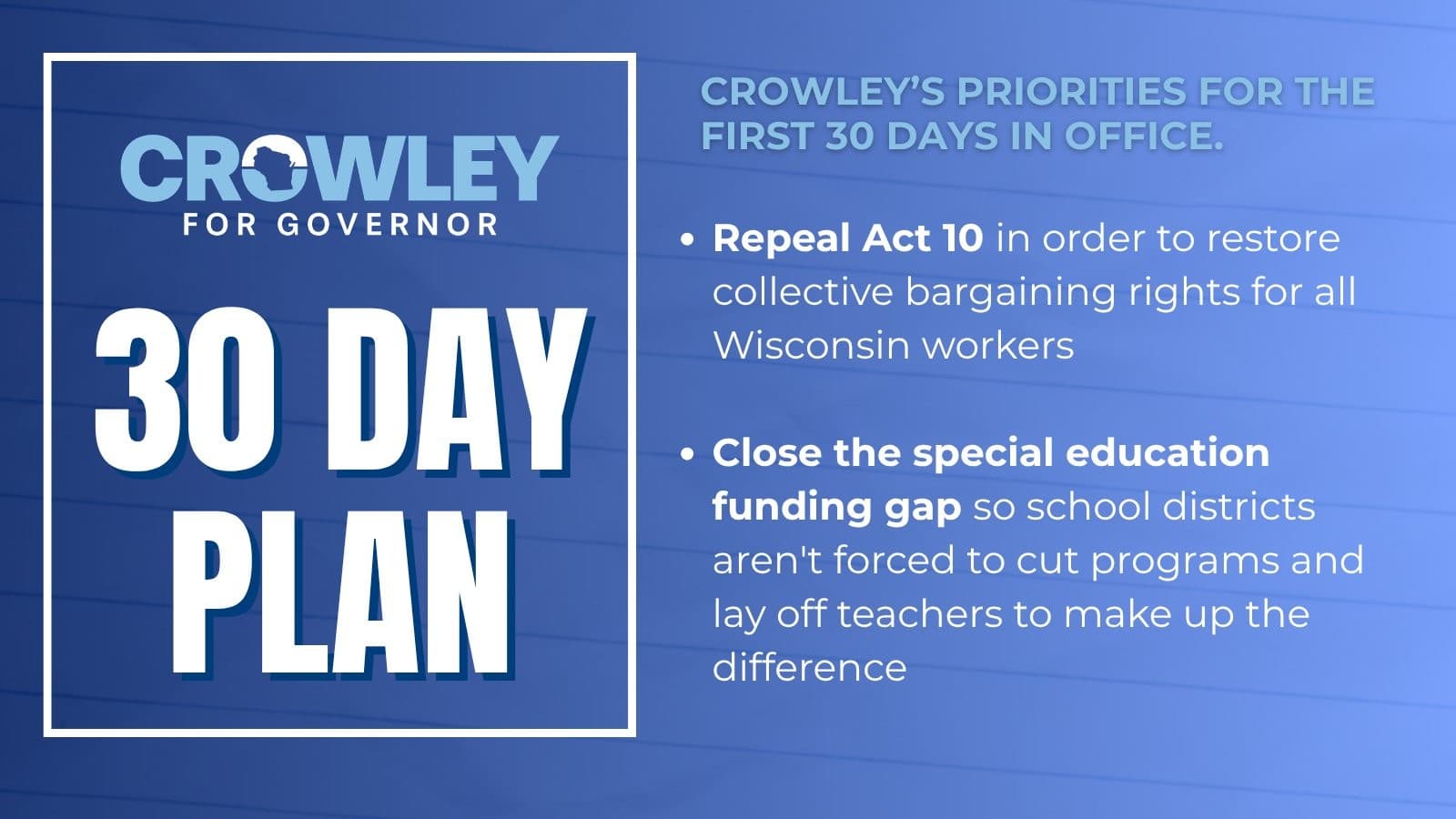
Milwaukee County Executive David Crowley is making the repeal of Act 10 the centerpiece of his campaign for governor, unveiling a “First 30 Days” agenda outlining his initial priorities if elected.
The plan emphasizes rolling back the 2011 collective bargaining law, which limited public-sector union powers and required government employees to contribute more toward pensions and healthcare. Since its enactment, Act 10 has been credited with saving Wisconsin taxpayers more than $35 billion, while also reshaping how local governments and school districts manage their budgets.
Crowley is one of several Democratic candidates focusing on repealing the law. Former Lieutenant Governor Mandela Barnes has also called for ending Act 10, a position that has recently drawn scrutiny as candidates debate the fiscal and policy implications of reversing the reforms.
Policy analysts have raised questions about the potential costs associated with repeal. Will Flanders of the Wisconsin Institute for Law & Liberty wrote in a recent social media post:
“You think school districts are struggling for funding now, wait until they have to pick up the entire tab for healthcare and retirement for employees again. The 400-year tax increase of Evers will pale in comparison to what restoring public union power will cost Wisconsinites.”
Flanders’ 2024 report, “Back To The Past: The Fiscal Threat of Reversing Act 10 in Public Education,” estimates that repealing the law could increase school district costs by approximately $1.6 billion annually. The report also notes that districts could face tradeoffs such as larger class sizes, program reductions, or staffing adjustments to absorb those costs.
Alongside repealing Act 10, Crowley’s plan calls for closing the state’s special education funding gap “so school districts aren’t forced to cut programs and lay off teachers” to make up for the shortfall.
This comes as Crowley faces scrutiny related to recent administrative decisions. His office hired former Milwaukee Public Schools budget official Nick Sinram, who served during a period when auditors identified a $46 million deficit in MPS. The district subsequently implemented layoffs affecting more than 200 employees as part of its effort to address the shortfall.
Healthcare policy is another component of Crowley’s platform, including a proposal to expand BadgerCare into a public option. That proposal has drawn attention following a recent controversy over a lapse in a county healthcare contract, which temporarily put employees’ and retirees’ benefits at risk. Democratic candidate Sara Rodriguez described the situation as “a breakdown in leadership.”
A recent Marquette Law School Poll showed David Crowley and Sara Rodriguez each at 3%, tied for third place.
