


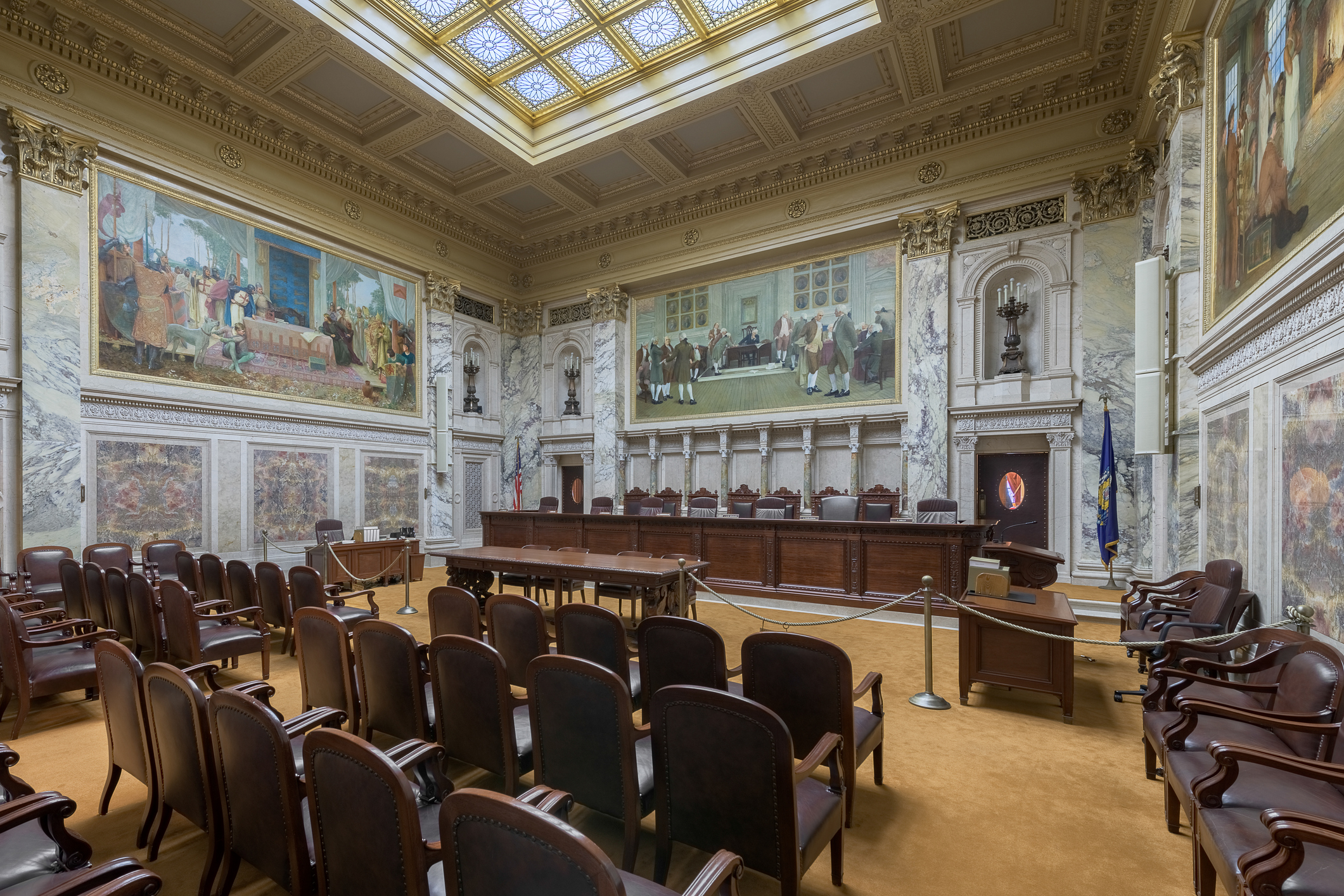
Dan O’Donnell blasts Governor Evers’ calls to ‘end partisan gerrymandering’ after two straight years of partisan gerrymandering by Democrats.
Wisconsin Governor Tony Evers called Tuesday for a special session of the Wisconsin Legislature to “end partisan gerrymandering” in what just may be the most disingenuous move of his seven years in office (and that’s saying something).
Democrats don’t want an end to gerrymandering; they’ve been doing nothing but gerrymandering since retaking control of the Wisconsin Supreme Court three years ago! Evers himself recognized this when he admitted last week that he “heard through the grapevine” that legislative Dems opposed his push for a constitutional amendment banning gerrymandering.
“Can you elaborate on that?” a reporter followed up.
“No I can’t,” Evers answered. “Democrats and Republicans, I know they want to have a partisan advantage [in redistricting]. Everybody does.”
Democrats don’t just want that advantage, they’ve had it and exploited it for years now–even going so far as to challenge the congressional map drawn by…Tony Evers. Yes, to take Democrats at face value is to believe that a Democrat governor deliberately drew a congressional map to give an unfair advantage to Republicans.
As ridiculous as it sounds, this theory forms the basis of two lawsuits challenging Evers’ map that are now before the Wisconsin Supreme Court. After refusing to take up prior challenges (even after liberals regained a majority on the Court in 2023), the Court assigned two panels of circuit court judges to hear the two cases.
This is unconstitutional on its face, as the Supreme Court of Wisconsin is by definition the court of last resort in the state and lower-court judges cannot overturn its opinions. The Court’s liberal majority doesn’t seem to care, however, as it overturned the state legislative map on a legally and constitutionally dubious theory regarding “municipal islands” (non-contiguous portions of a city or town that are almost always landfills or otherwise uninhabited areas).
Despite the fact that three of the court’s four liberals had a year earlier all voted to implement a congressional map that included municipal islands (Evers’ map), municipal islands in the state legislative map (drawn by Republicans) had to go.
The decision, of course, was not based on the law or a genuine desire for nonpartisan redistricting; it was pretext for a Democrat gerrymander. If that wasn’t obvious from the ruling, it should have been from the date the plaintiffs picked to file their challenge: The day after Justice Janet Protasiewicz was sworn in, formally giving liberals a majority on the Court.
In a truly unprecedented ruling a few months later, the majority actually named potential members of a redistricting commission the Court would appoint to simply redraw the state legislative boundaries itself. Realizing that this would be an even more egregious gerrymander than Evers’ was, Republicans agreed to implement the governor’s map.
The following year, when President Trump won Wisconsin en route to re-election, Democrats picked up 10 seats in the State Assembly and four in the Senate. Even in ayear in which the top of the ticket produced a Republican victory and every Republican congressional incumbent won easily, Democrats somehow dominated in state legislative races.
According to arguments Democrats themselves had been making for more than a decade, this was clear evidence of a partisan gerrymander designed to deliver as many state legislative seats as possible to the Dems.
And now the Supreme Court is poised to do it again by gerrymandering the congressional map. Is it any wonder Democrats in the Legislature are suddenly skittish about Governor Evers taking the power to gerrymander away from their Court?
