



District 21 is an open, newly competitive Racine–Milwaukee County seat that both parties treat as essential to control of the chamber. The choice is not between two interchangeable “affordability” candidates. It is between a Franklin businessman who built a private-sector career and a Racine city official whose rise runs through Mayor Cory Mason’s City Hall.
The seat opened after Sen. Van Wanggaard (R-Racine) announced in March 2026 that he would not seek a fifth term, citing health and family. Wanggaard, a former Racine police officer first elected in 2010, recalled in 2012, and returned in 2014, is the only Republican ever elected to four terms in the district. He authored constitutional amendments on victims’ rights, bail, and voter ID.
Jim Croft of Franklin announced in April 2026 and advanced unopposed from the August 11 Republican primary. He faces Democrat Trevor Jung, Racine’s Transit and Mobility Director and a former city alder, on November 3.
A Redrawn Battleground
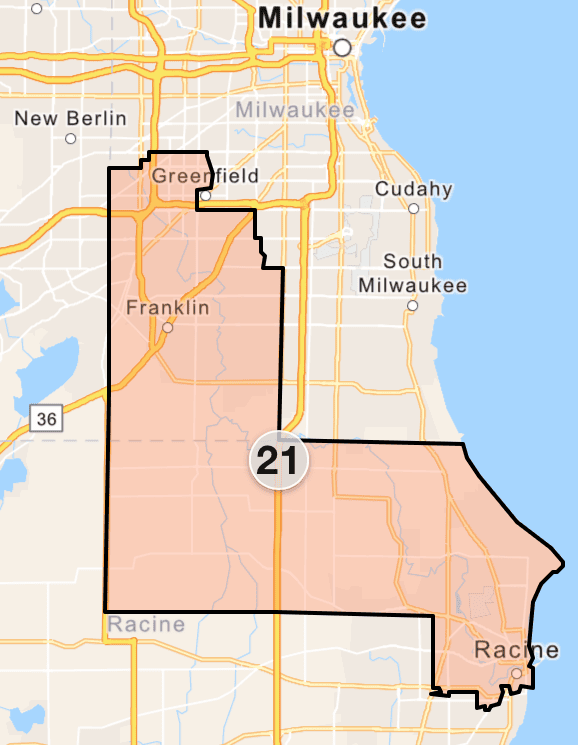
Gov. Tony Evers’ 2024 maps transformed the 21st. It no longer includes Kenosha County or most of rural Racine County. The new lines take in much of Racine’s north side, the villages of Caledonia and Raymond, and Milwaukee County suburbs including Franklin, Greenfield, and Hales Corners. Kamala Harris carried the redrawn district in 2024 by a narrow margin (about D+1.2). Analysts have rated it Lean Democratic; Democrats identified it early as one of their best pickup chances.
Republicans hold an 18–15 Senate majority. They can lose only one net seat and still keep control. Democrats flipped four Senate seats in 2024 under the new maps and need two more for a majority—the first since 2009–11. District 21 sits among a small group of toss-up or lean-D seats, alongside Districts 5 and 17 among others, that will decide whether the GOP retains the chamber. Governor Tony Evers is not running again, which raises the stakes for legislative control in 2027.
Jung’s Path runs through Mason
Jung launched in September 2025. His personal story is well known: adopted from Russia, raised in Racine, Case High School, UW-Milwaukee, youngest alder in more than a century. The professional politician path that followed is the part voters need to consider.
In August 2021 Mason announced that Alderman Jung would leave the Common Council and become the city’s Transit Manager, filling the vacancy created by Michael Maierle’s retirement. Jung resigned the council and started the staff job within days. The title later became Director of Transit and Mobility. He still holds that city position while running for the Senate. Mason, a former Democratic assemblyman and mayor since a 2017 special election, is the executive who put him on the payroll. Gov. Evers later appointed Jung to the Southeastern Wisconsin Regional Planning Commission. That is not a coincidence of résumés. It is a strategic Cory Mason pipeline — Mason’s council, Mason’s city job, Evers’ regional appointment, then a statewide Democratic campaign.
Jung’s endorsement list includes Racine Mayor Cory Mason and Sen. Tammy Baldwin, State Sen. Tim Carpenter and State Sen. Bob Wirch; Assembly Democrats including Greta Neubauer and Angelina Cruz; former Sens. John Lehman and Kim Plache; Sens. Kelda Roys and Dora Drake at his launch; the State Senate Democratic Committee; major unions; Wisconsin Conservation Voters; the group Run for Something; and the Wisconsin Working Families Party. Jung is not an independent civic volunteer who happened to catch a wave. He is the candidate the Democratic establishment selected to flip a Republican-held seat.
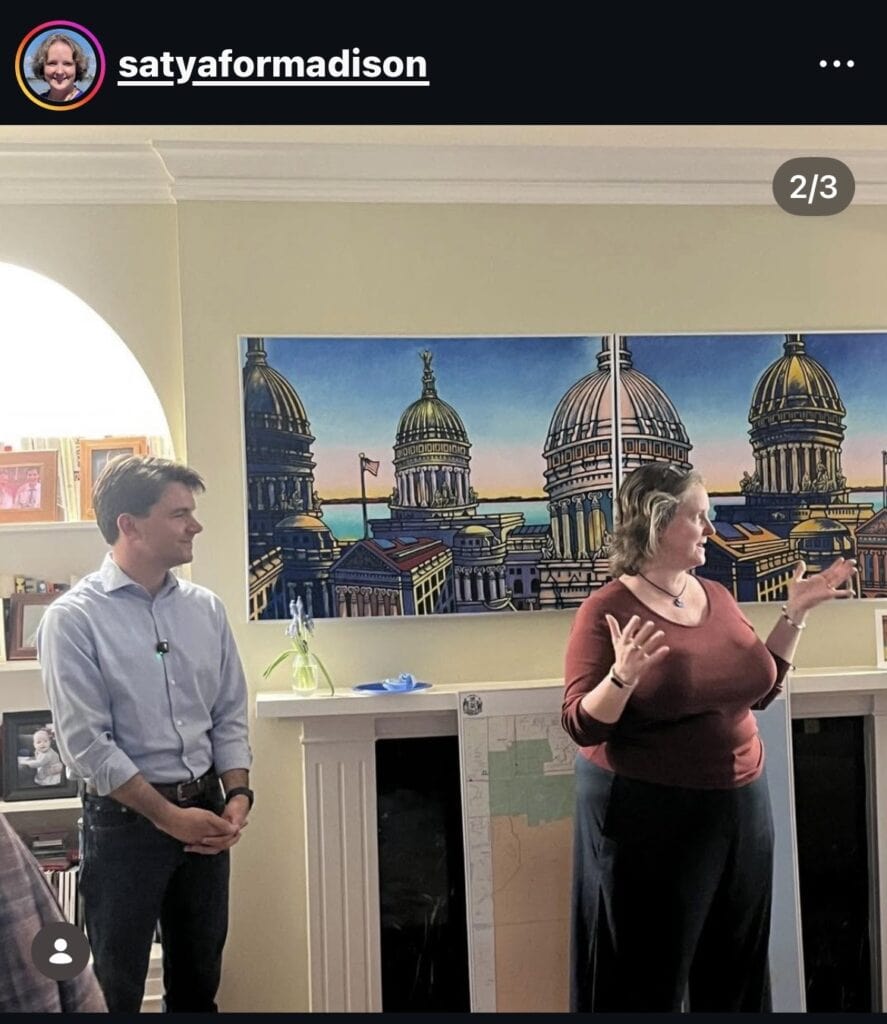
Here is Jung in Madison earlier this year raising money with Madison’s ultra liberal Mayor Rhodes-Conway.
Mason is a polarizing figure in Racine County, not a unifying local brand. In a September 2026 Heartland Post report, a source alleged that election administration in the city has become more centralized under Mason. The source alleges the counting moved away from neighborhood precint polling places, early and absentee voting grew, Mason’s appointed clerk Tara McMenamin took on a larger role, ballots and clerk materials were easier for insiders to reach, many poll workers also work for the city, and a city voting van was used mainly on Racine’s Democratic east side.
The same source pointed to former Aldermen John Tate and Trevor Jung as examples of Mason allies who left the council for city jobs and had also worked elections. Tate later faced a felony charge over negotiating a city violence-prevention job while still in office; that charge was dismissed. None of this is a court finding against Jung. It is the City Hall he came from, and Mason is the mayor who hired him. Voters outside downtown Racine can fairly ask whether they want that same network speaking for them in Madison.
Croft’s Pitch: High Costs are a “Nonpartisan Crisis”
Croft grew up in small-town Wisconsin, earned a bachelor’s degree from UW-Whitewater and an MBA from Marquette while working full time, and built a career in transportation compliance and later IT and data analysis in the fuel-distribution industry. He and his wife Marina are raising two children in Franklin. He describes Wisconsin’s identity as family, community, and the idea that hard work should produce opportunity—values he ties to his grandparents’ dairy farm.
His announcement treated inflation as a “nonpartisan crisis”:
“Rising costs — especially for healthcare, housing, gas, and groceries — are putting real pressure on Wisconsin families. Working hard and playing by the rules should open doors, not close them. Families don’t experience rising costs as a partisan issue — they just know it’s getting harder to get ahead.”
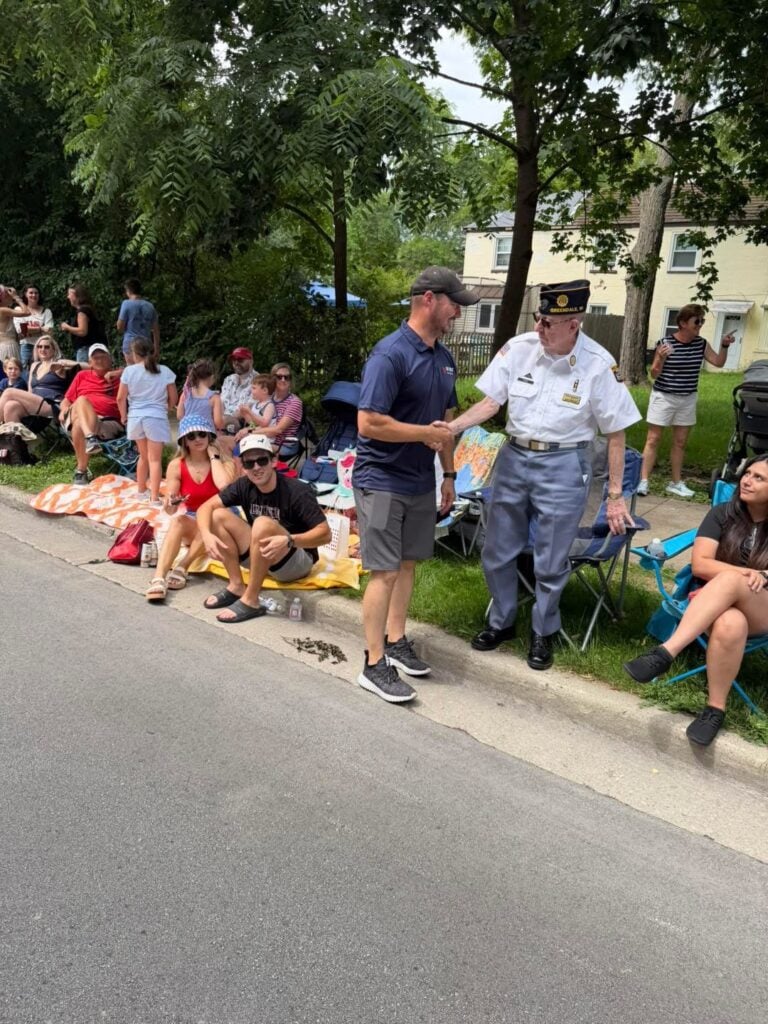
His priorities are property-tax relief, lower healthcare costs through more options and price transparency, and expanding opportunity by cutting regulatory burdens. In a WUWM questionnaire he said property-tax increases and inflation have made it harder for families like his to get ahead, and he wants his children to have the same chances he did. He favors cutting taxes “across the board,” holding the line on state spending growth, and using competition to bring down healthcare costs. He has been endorsed by Americans for Prosperity–Wisconsin and the Milwaukee Police Association.
Both men talk about costs, but they do not offer the same tools. Croft’s answer is tax cuts, government spending restraint, and deregulation. Jung’s answer is increased spending on childcare and affordable housing, public-school funding, and “fair share from Madison.” Croft’s approach shrinks what government takes from taxpayers. Jung’s expands what government spends and increases what it regulates. Jung’s “5 Ts”—talent, training, transportation, technology, and tourism—are a growth slogan from someone whose current job is running a city transit system funded by taxpayers.
Money and Outside Support
By mid-August 2026 Jung had raised roughly $416,500 to Croft’s $142,000. The Committee to Elect a Republican Senate had put more than $113,000 behind Croft; the State Senate Democratic Committee had given Jung about $82,000. Democrats call Jung’s donor list broader and more grassroots. That claim sits uneasily next to Baldwin, Mason’s city government, Evers’ appointment, labor PACs, and the party campaign committee. Republicans and conservative groups argue the simpler point: Croft is the candidate who will vote to cut taxes and government spending.
State Sen. Patrick Testin, who leads the GOP Senate campaign committee, called the cycle critical and said candidates like Croft who “understand the challenges families in his district are facing” give Republicans a path to hold the majority. Democrats call District 21 the most competitive Senate race in the state and argue Jung is the only candidate with the resources and message to win it. Resources are not the same thing as the right message for Franklin, Hales Corners, Caledonia, or Racine families staring at property-tax and grocery bills.
Why the Seat Matters So Much
A Democratic pickup here would move the Senate to 17–16 and, with other flips, could produce a Democratic majority. The winner will help set the agenda on taxes, school funding, healthcare, housing, and how Wisconsin handles data-center and energy-demand growth.
Croft entered later and trails in cash. The district’s suburban mix, Wanggaard’s long tenure, and heavy party investment still make this a real contest. The question for voters on Racine’s north side and in the southwest Milwaukee suburbs — do they want to succeed one of the Senate’s most durable conservative voices with a first-time Republican businessman whose living never depended on Cory Mason? Or elect a local Democratic official hired by Cory Mason, worked for City Hall, endorsed by Tammy Baldwin and the rest of the party structure, and now asking the rest of the district to trust City Hall’s preferred candidate with statewide power?
