


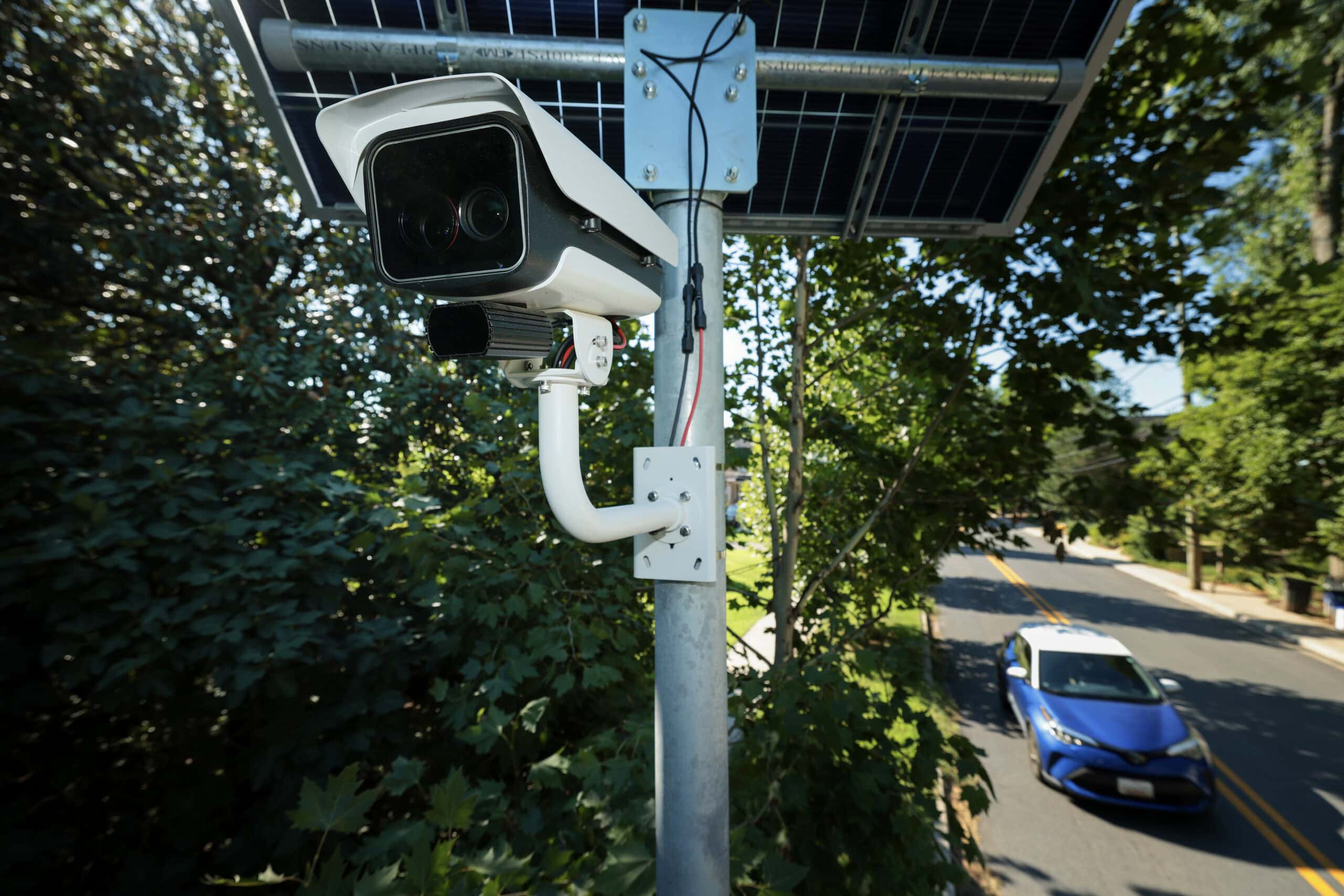
Kenosha is leaving Flock Safety’s license-plate reader system and switching to Axon technology, Mayor David Bogdala and Police Chief Patrick Patton said in a joint statement released Thursday.
City officials said the transition began in January 2026 after a review of emerging surveillance tools. They described automated license plate readers as useful for locating stolen vehicles, identifying cars tied to serious crimes, and supporting investigations — while arguing that any system that records vehicles on public streets must come with tight rules, oversight, and privacy protections.
“The people of Kenosha deserve both: a police department equipped with the tools it needs to keep them safe and strong safeguards to ensure those tools are used responsibly,” the statement said.
Officials said Kenosha adopted access restrictions early, not as an afterthought. Under the city’s current rules:
- Restricted access to ALPR information.
Access to ALPR data is limited to authorized personnel and is not available to every member of the department. ALPR inquiries will only be conducted by detectives and specialized unit members working on an assigned case or a supervisor after a request is made by an officer. This ensures that the inquiries serve a legitimate law enforcement purpose.
- A case number and an approved search criteria explanation is required.
ALPR searches must be connected to a legitimate law-enforcement purpose and require a case number for tracking and auditing. This creates an identifiable record of why information was accessed and allows that use to be reviewed.
- Supervisor review and accountability.
ALPR activity is subject to supervisory audits and oversight, providing an additional layer of accountability over how and why information is accessed.
- Data must serve a legitimate public-safety purpose.
ALPR is an investigative tool, not a license to conduct unrestricted searches of residents’ movements. Its use must be connected to legitimate law-enforcement responsibilities.
- Continued evaluation of technology and policy.
The transition from Flock to Axon is part of the City’s commitment to continually evaluate the technology available to our police department and the policies governing its use. As with any technology changes, our policies must change with it.
City leaders also said Axon data can be viewed or shared with outside agencies only with Kenosha’s approval, which they presented as an added privacy control compared with more open data-sharing arrangements.
Bogdala and Patton said public safety and privacy as complementary, not competing, goals. They said new technology raises fair questions about data access and accountability and that Kenosha’s answer is to set rules before problems arise.
The statement listed four investigations in which ALPR data played a role:
March 2024 (Serial Sexual Assault Investigation): Following the sexual assault of a student in a local college locker room by an unidentified male, ALPR technology helped investigators identify and arrest the suspect. He was subsequently linked to multiple other sexual assaults on college campuses across the Midwest.
November 2024 (Sexual Assault Investigation): ALPR data successfully upgraded a person of interest to a prime suspect in a sexual assault investigation. This individual was ultimately connected to a broader pattern of criminal activity, including several additional sexual assault
November 2025 (Homicide Investigation): Following a homicide on Kenosha’s north side, investigators utilized ALPR technology to link the suspect vehicle’s movements after the incident. This critical intelligence enabled detectives to secure evidence and conduct targeted interviews, ultimately leading to the identification and arrest of both the shooter and their accomplices.
August 2026 (Online Elder Fraud & Scam): A victim reported losing over $60,000 to an online computer hacking scam. Utilizing ALPR data, investigators successfully identified the suspects. Further investigation revealed that these individuals are linked to a broader network of similar elder fraud schemes across Southeast Wisconsin. This investigation remains ongoing.
The Kenosha announcement comes as other Wisconsin communities have ended or limited Flock contracts over privacy, misuse, and data-sharing concerns, while many agencies still defend plate-reader networks as a core investigative tool. City officials said they will keep reviewing ALPR policy as the Axon system is put in place.
Full Statement: https://www.kenosha.org/news_detail_T6_R402.php
