


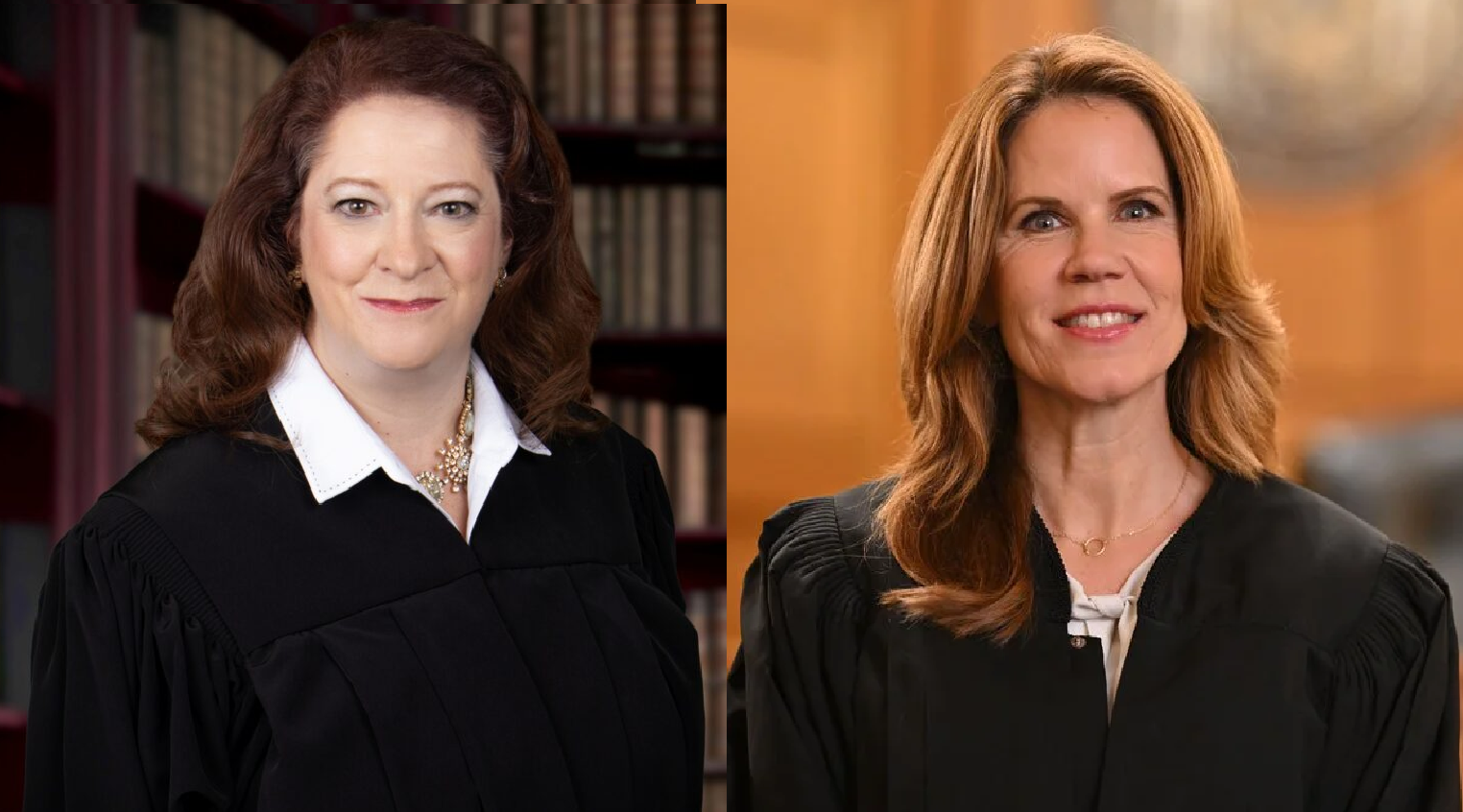
Latest Poll Shows Large Number of Undecideds, Enthusiasm Gap in the Supreme Court Race
Tuesday’s Marquette University Law School Poll indicates that Wisconsin voters are increasingly attentive to the upcoming April 7 Supreme Court election; however, a majority remain undecided with less than two weeks until the vote.
The poll, conducted from March 11 to 18, surveyed 850 registered voters with a margin of error of plus or minus 4.4 percentage points. For the 597 likely voters, the margin of error was plus or minus 5.3 points.
Among all registered voters, 23% supported Chris Taylor, 17% supported Maria Lazar, 53% were undecided, and 7% indicated they would not vote. In February, 66% were undecided, while Taylor and Lazar received 17% and 12% support, respectively.
Among likely voters, Taylor led Lazar by 30% to 22%, with 46% remaining undecided. In February, 62% of likely voters were undecided, while Taylor and Lazar had 22% and 15% support, respectively.
Among registered voters, a greater proportion of Republicans than Democrats remained undecided. Republicans predominantly preferred Lazar, Democrats favored Taylor, and independents leaned toward Taylor, although a significant portion of independents indicated they would not vote.
Among likely voters, the proportion of undecided individuals in each partisan group decreased, although half of the independents remained undecided. Republicans and Democrats demonstrated stronger alignment with their preferred candidates among likely voters compared to registered voters overall.
Democrats exhibited substantially higher engagement with the Supreme Court election than Republicans or independents across multiple measures. Among registered voters, 77% of Democrats reported being certain to vote, compared to 59% of Republicans and 53% of independents.
Democrats also reported greater enthusiasm for voting, with 51% indicating they were very enthusiastic about the April election, compared to 32% of Republicans and 19% of independents.
Additionally, 65% of Democrats said the outcome of the Supreme Court election was very important to them, while 46% of Republicans and 24% of independents said the same.
Registered voters have become somewhat more familiar with both candidates since October, but more than 60% still said they had not heard enough to form a favorable or unfavorable opinion of either.
Twelve percent of registered voters said they had heard a lot about the Supreme Court race, up from 6% in February. By contrast, 39% had heard a lot about the Supreme Court race in February 2025.
The findings were released Tuesday by the Marquette University Law School Poll on X.
