


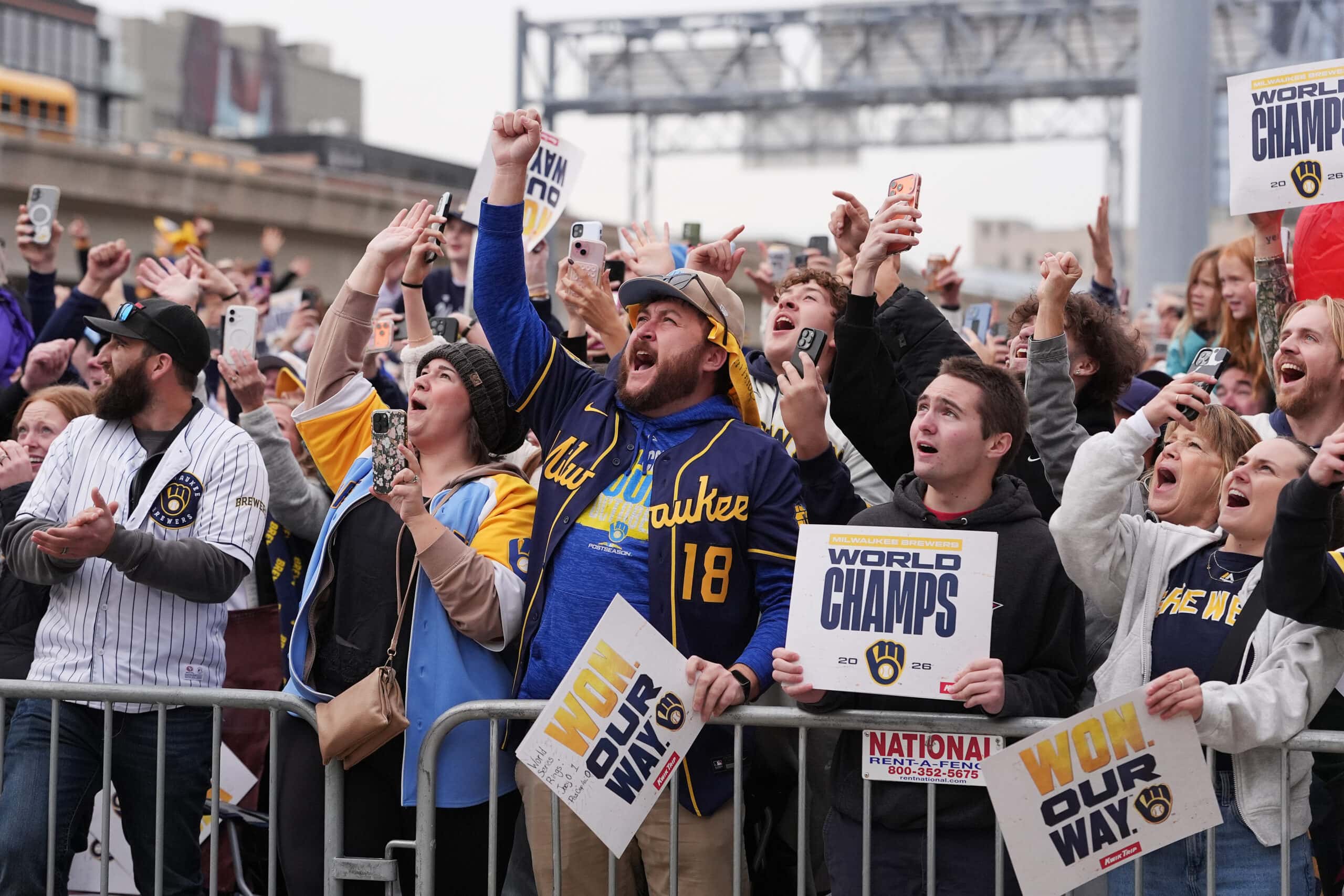
On Friday, October 30, Milwaukee celebrated the Brewers’ World Series championship with an estimated 750,000 people, about 188,000 more than the city’s entire population. It was overwhelmingly peaceful. Then came Friday night: a few hundred people on Brady Street, some of them fighting, scrambling and drawing police into chaos. Something is seriously wrong with that picture.
I spent 25 years as a Milwaukee police officer. I also frequented Water Street as a young man in the 1990s, when the typical crowd, at least from what I saw, was mostly young white adults, many of them college students, out drinking and socializing. Fights occasionally broke out, but they were generally isolated. Bar security often handled them without police. Sometimes fellow patrons stepped in and separated the combatants. People nearby often tried to end the violence.
That’s not what I see today. Some bystanders encourage fighting, pull out phones and turn it into entertainment. Others take the disorder further, antagonizing police, ridiculing them, dancing and twerking in the roadway, and engaging in antics calculated to provoke. Some openly defy lawful orders, refusing to clear the street while officers try to restore order.
Dancing or criticizing an officer isn’t inherently criminal, but obstructing traffic, interfering with police operations and refusing lawful orders can make a volatile situation more dangerous. What should be a straightforward response to a handful of violent offenders becomes a wider public-safety problem because others choose to contribute to the chaos.
That brings us to an uncomfortable subject Milwaukee needs to discuss openly. During my career, I repeatedly encountered a particular element of young Black men and women from Milwaukee’s inner-city neighborhoods. These were individuals involved in violence, intimidation and disregard for public order. I’m not talking about the average young Black person going about their life, working, attending school or enjoying a night out. I’m talking about a criminal and brutal element I encountered while policing some of Milwaukee’s toughest neighborhoods.
That distinction is important, but it should not prevent Milwaukee from holding those responsible for violence and disorder accountable. My experience raises a question the city’s political leaders should answer: Has concern about racial controversy made them reluctant to enforce the law decisively?
Milwaukee has experienced racial conflict and intense controversy surrounding policing. Politicians and police administrators remember those events. Has that history created hesitation when those involved are predominantly Black? I cannot establish that this fear is driving current enforcement decisions, but the possibility deserves serious examination. The law doesn’t change according to someone’s race, and neither should the willingness to enforce it. Nobody should receive preferential treatment, favorable or unfavorable, because of race.
There’s another uncomfortable issue: the role of family structure and parental involvement. Throughout my career, I encountered young offenders who lacked an involved father, consistent supervision or adults willing to set boundaries. Race alone doesn’t explain criminal behavior, and neither does growing up in the inner city. Plenty of young people from those neighborhoods, including those raised in single-parent households, grow up to be responsible and productive. Some even serve as police officers, firefighters and other public servants.
But we cannot ignore the importance of two parents who teach respect, discipline and accountability. A difficult upbringing may help explain someone’s circumstances, but it does not excuse violence, intimidation or disregard for the law. Responsibility begins with people who choose to break the law, and it continues with the institutions that enforce consequences.
If repeat offenders return to the streets without meaningful consequences, the public deserves an explanation. And if officers are repeatedly sent into predictable disturbances without sufficient direction, police leadership needs to answer for that as well.
On Friday night, I personally saw barricades along Water Street as part of what appeared to be a coordinated MPD operation known as “Code Red”. That operation also focuses on the entertainment district along Old World Third Street, now Martin Luther King Jr. Drive, and it suggested MPD had anticipated potential problems there.
But an MPD sergeant who spoke to me on the condition of anonymity described a different situation on Brady Street. He was assigned to another district and responded after officers on scene requested more assistance. According to his account, a couple of squads initially responded, with more officers and supervisors arriving as the situation escalated. But when the sergeant arrived, he told me there was “absolutely no direction.”
Those five words should concern every Milwaukee resident. Importantly, he was responding from another district to assist with an unfolding situation. He was not the supervisor responsible for planning or coordinating operations on Brady Street that evening. His account raises a serious question about command: Who was directing the operation, and why wasn’t that direction apparent to a responding supervisor? His account doesn’t prove MPD had no operational plan, but it raises legitimate questions about whether one existed and was effectively communicated.
This isn’t a criticism of the patrol officers or supervisors called in to help. I’ve been in their position. They deserve clear operational direction, adequate resources and coordinated leadership. Police command staff should explain what operational plan existed for Brady Street that night, what resources were assigned and who was responsible. When disturbances become predictable, inadequate preparation becomes a question of leadership and accountability.
And the consequences extend beyond one weekend. Both Brady Street and Water Street fall within District One, which covers much of Milwaukee’s downtown entertainment and commercial activity. That makes District One particularly important to the city’s economic health. When businesses close, Milwaukee loses jobs, commercial activity and tax revenue. Vacant storefronts discourage investment, reduce property values and create a cycle of further decline. As Wisconsin’s largest city, Milwaukee’s financial health matters beyond its borders. When downtown struggles, the effects reach across southeastern Wisconsin and beyond. That’s why maintaining order in District One isn’t merely a policing concern; it’s an economic responsibility.
Milwaukee cannot afford to ignore the individuals responsible for disorder, the circumstances contributing to their behavior or the failures of public officials entrusted with maintaining law and order. Accountability must begin with those committing the offenses, but it cannot end there. City leaders, police command staff, prosecutors and the courts all have responsibilities. Residents and business owners deserve a government willing to enforce the law consistently, regardless of race, neighborhood or political pressure.
Milwaukee’s leaders need to answer two uncomfortable questions. Are they adequately preparing officers to maintain order in places where disturbances have become predictable? And are concerns about racial controversy influencing their willingness to confront those responsible? Those are questions about public safety, equal treatment under the law and government accountability.
Milwaukee demonstrated Friday that it can manage a celebration attended by more people than live in the entire city. Now its leaders need to demonstrate they can maintain order on a few blocks of Brady Street. The law-abiding people of Milwaukee deserve nothing less.
Michael S. Murphy is a retired Milwaukee police officer who served 26 years in law enforcement. He currently serves as the President of the Wisconsin Fraternal Order of Police, Cream City Lodge #8.
