


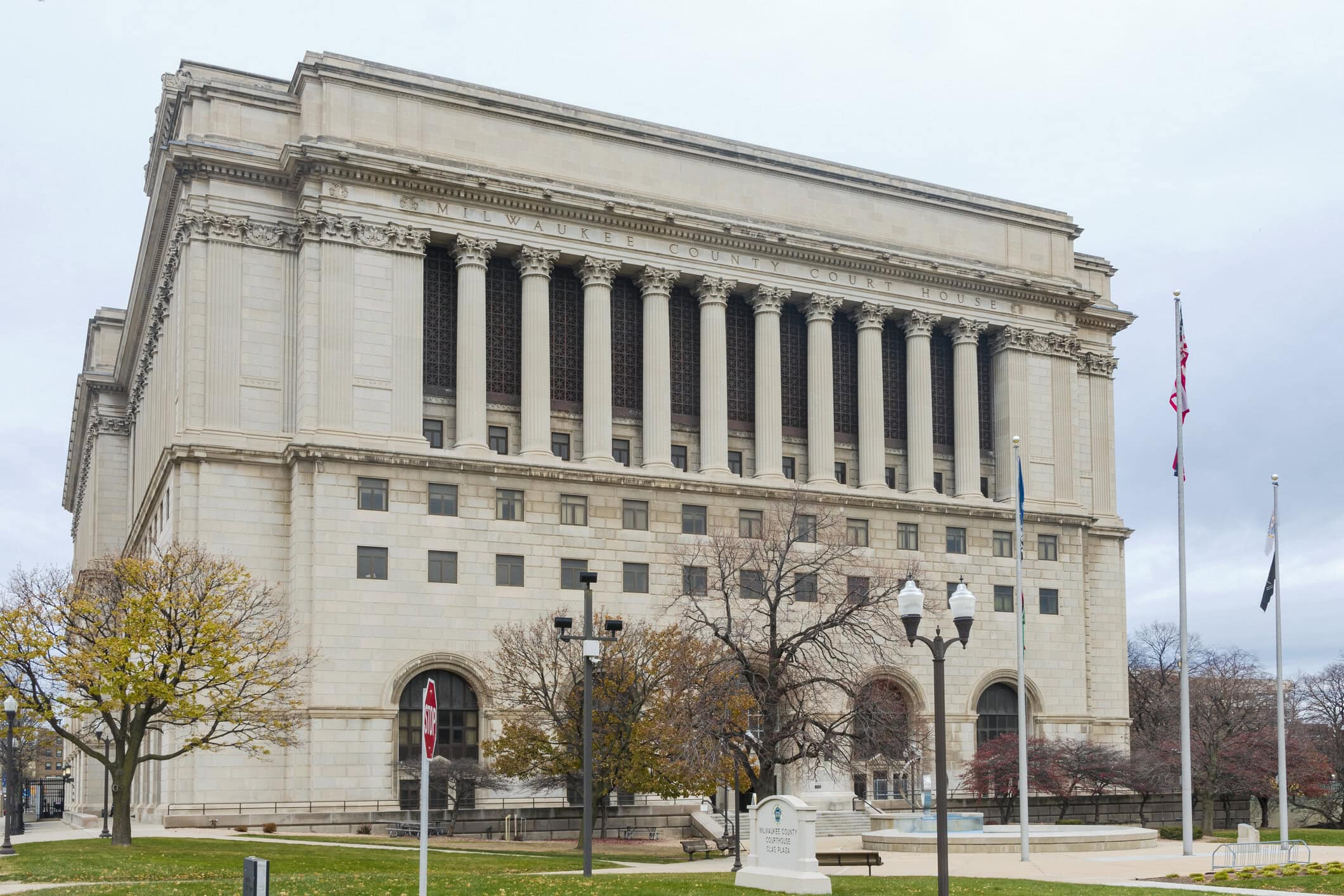
If Milwaukee County Executive and Democratic gubernatorial candidate David Crowley gets his way, the new “Investing in Justice Courthouse Complex (IJCC)” will further shift Milwaukee County away from traditional punitive justice and toward an expanded problem-solving court model, but critics question whether the results justify the growing cost and court resources.
According to the National Alliance on Mental Illness (NAMI), problem-solving courts are specialized courts that use multidisciplinary, therapeutic approaches to address root causes of criminal behavior rather than relying solely on traditional punishment.
Examples of problem-solving courts include drug treatment courts, mental health courts, domestic violence courts, and OWI/DUI courts.
Wisconsin already operates a variety of these courts across the state. Milwaukee County leaders now want to expand their reach, making them a central feature of the new IJCC courthouse.
Supporters argue that problem-solving courts can reduce recidivism and connect offenders with needed treatment and services. Critics, however, question whether the outcomes justify the investment. Some members of the legal community argue that the evidence supporting long term rehabilitation remains mixed and that the programs often produce underwhelming results while expanding the footprint of the court system.
These courts require extensive coordination among judges, prosecutors, defense attorneys, probation officers, and mental health or social service providers. Critics contend that such a model places additional strain on an already overwhelmed justice system that struggles with staffing shortages, case backlogs, and limited resources.
Despite those concerns, Milwaukee County Chief Judge Carl Ashley believes the future of the justice system lies in these alternatives.
“Problem-solving courts, evidence-based, it’s the future,” Ashley said.
Many of Wisconsin’s problem-solving court programs receive funding through the Treatment Alternatives and Diversion (TAD) Grant Program, administered by the Wisconsin Department of Justice.
The TAD program was established under 2005 Wisconsin Act 25 to provide treatment and diversion opportunities for nonviolent adult offenders whose criminal activity was linked to substance abuse. According to the Wisconsin Department of Justice, the 2025 TAD grant cycle will fund 61 treatment courts and 30 diversion programs across the state.
As Milwaukee County moves forward with its new courthouse project, taxpayers and policymakers will ultimately have to decide whether expanding problem-solving courts represents a worthwhile investment in public safety or another costly experiment that promises more than it delivers.
