


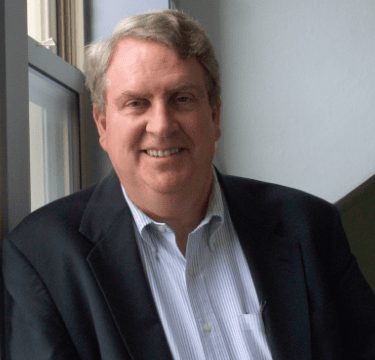
In the fall of 2014, John McAdams sat at the keyboard in his office in the political science department and did what he had always done on his blog, Marquette Warrior: he called out what he thought was nonsense.
This time, the nonsense was a graduate instructor who told a student that opposition to gay marriage was not allowed in her classroom. She called it “homophobic” and said the issue was settled. McAdams posted the audio that the student had secretly recorded. He named the instructor, Cheryl Abbate, but not the undergraduate. He wrote his thoughts as always: blunt, unsparing, unafraid.
The university told him to take it down.
McAdams refused.
They told him to apologize.
McAdams refused again.
Marquette finally believed it had cause to fire its one outspoken conservative professor.
This sparked a long, quiet conflict that eventually reached the Wisconsin Supreme Court and, for a time, made McAdams the most well-known tenured conservative in America.
The graduate student instructor, whose verbal attack on the student was criticized by McAdams, told others via email that she believed McAdams is a “flaming bigot, sexist, and homophobic idiot” who “wants to insert his ugly face into my class business to try to scare me into silence.” But the university wanted to magnify McAdams’ post into harassment.
No one who knew him was surprised. Colleagues in the department, including some liberals who disagreed with almost everything he believed, said the same thing over the years: John was not someone who apologized. He had taught at Marquette since 1981, arriving just after Marquette’s basketball team reached its peak and staying long enough to see the campus culture and athletic mascot change around him. McAdams’ reputation among students, especially conservatives, was larger than life, even venerated.
Long before the Marquette fight, McAdams had carved out a quieter reputation as one of the country’s most relentless debunkers of JFK assassination conspiracies. He spent entire semesters teaching a popular class on the JFK assassination, where his mission, he said, was to debunk conspiracy theories with the same calm ferocity he brought to campus politics. His still-active website became a sprawling archive of documents, medical evidence, and point-by-point takedowns of wilder claims that have clung to Dealey Plaza and the Texas School Book Depository for decades. He moderated the old alt.assassination.jfk Usenet newsgroup, matching buffs in intensity but always from the lone-gunman side of the argument. “I’m in the business of knowing how so much of what is said here is nonsense,” he once told a reporter.
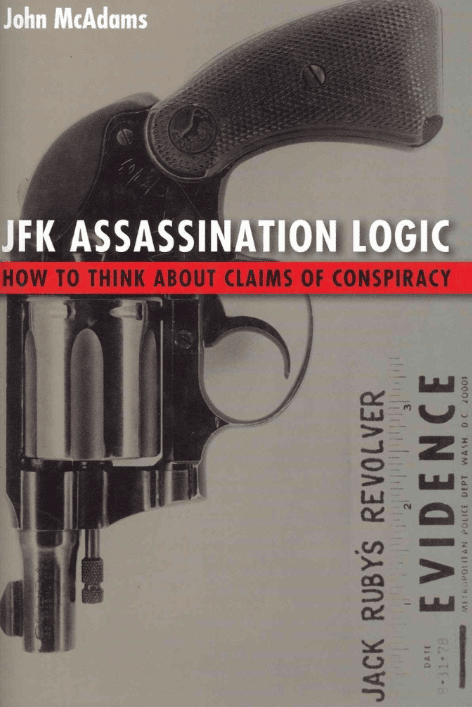
In 2011, he published JFK Assassination Logic: How to Think About Claims of Conspiracy. The book was more than a defense of the Warren Commission. It was a guide to clear thinking, showing readers how to spot cherry-picked quotes, false memories, witnesses who seemed “just too good,” and tricks that make coincidences look like conspiracies. The book offered a plan to avoid getting lost in conspiracy theories. No matter their political beliefs, McAdams taught students to constantly question the world, emphasizing critical thinking skills.
Nearly five years after McAdams died, the assassination of conservative commentator Charlie Kirk sent the internet spinning into the same familiar frenzy. Deep-state plots involving Mossad and Israel, multiple shooters, palm guns, and every theory once tied to Dallas resurfaced around Kirk. Like the Zapruder film of old, every frame and angle of every iPhone video of Kirk’s assassination was analyzed, scrutinized, and far-fetched conclusions drawn. If you look hard enough, Kirk conspiracy theorists say, the evidence is everywhere, hiding in plain sight, replete with its own magic bullet theory. Those who remember McAdams found themselves recalling his lectures on the likelihood of a single shooter, Lee Harvey Oswald, in the JFK assassination, using the critical-thinking skills he had impressed on his students, ready to debunk these new wild claims. It would have been exactly the sort of moment he dedicated his academic life to: not shouting theorists down, but giving them tools and logic to reason back to daylight.
When the administration suspended McAdams without pay in 2015 and began the process to remove his tenure, the move was framed as a matter of civility. The instructor had received angry and sometimes ugly emails. The university claimed McAdams created a hostile environment. Never mind that he had not told anyone to harass her. Never mind that the student who recorded the exchange did so on his own. The blog post was the offense. The refusal to bend to the new university president’s will was the real crime. According to the Wisconsin Institute for Law and Liberty, in McAdams vs Marquette, the university convened a “faculty hearing committee” that failed to provide McAdams his contractual due process rights, including the right to unbiased members and access to all of the university’s evidence and witnesses. After a weeklong hearing, the committee issued a convoluted report that created new rules it then claimed McAdams violated.
For three years, the case moved slowly through the courts. McAdams kept writing on his blog about the JFK case and new examples of administrative overreach. He took a sabbatical and waited. In July 2018, the Wisconsin Supreme Court, in a 4-2 decision, ruled Marquette had broken its own contract. Academic freedom, the court ruled, still meant something. McAdams was reinstated with back pay and returned to teaching in 2019 after seven semesters away. Today, a conservative professor in a similar position would face a much more hostile Supreme Court, with liberals controlling the majority for the foreseeable future after a series of conservative losses.
People who saw him after the ruling said he had not changed. He still wore the same rumpled sport coat, suspenders, and perfectly disheveled hair, like President Trump’s or Boris Johnson’s. He kept his dry wit and never pretended the fight was about anything else.
McAdams never wrote a victory-lap memoir. He never went on the national conservative media circuit. He simply went back to teaching. His blog continued, but more quietly. The campus moved on, and the culture war shifted elsewhere. And on April 15th, 2021, McAdams passed away.
John McAdams never apologized.
He never had to.
