



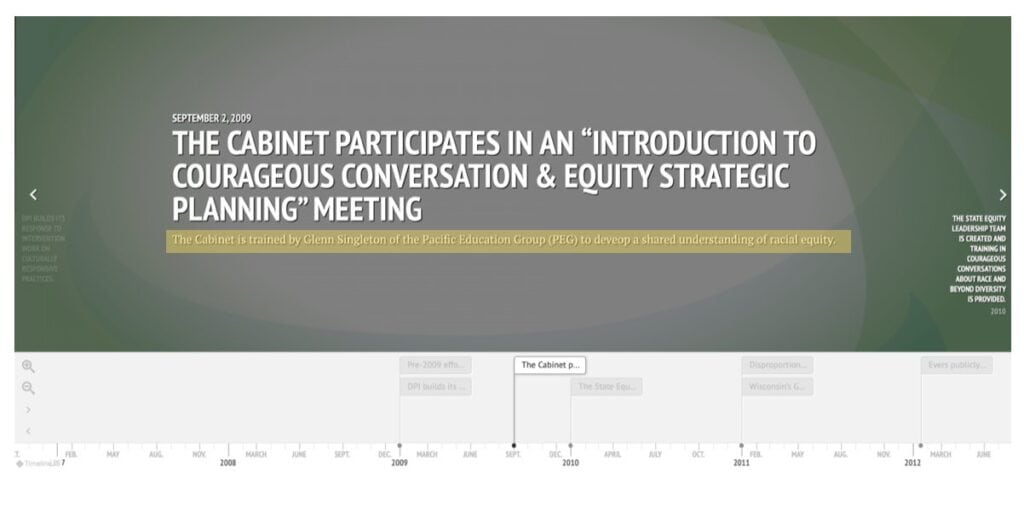
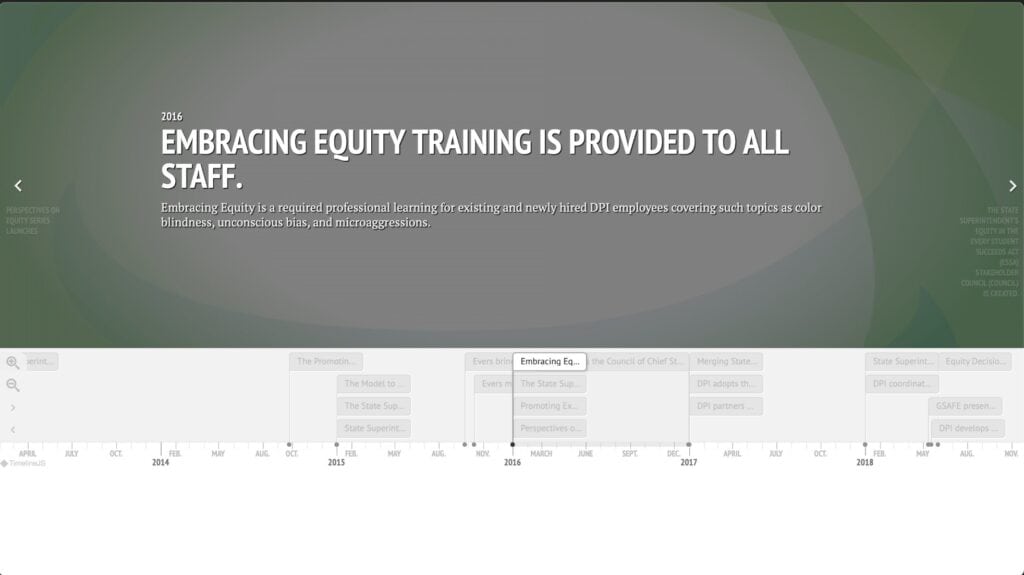
Wisconsin parents send their children to public schools expecting them to learn to read, write, do math, and build real academic skills. Instead, the Wisconsin Department of Public Instruction (DPI) is quietly embedding a statewide ideological machine that trains coaches—who in turn train teachers—to view every classroom decision through the lens of race, power, and “oppression.”
The documents are not hidden: the 2022 User Guide for Coaches and Evaluators, the Coaching Competency Practice Profile, the Professional Growth Portfolio Excel rubric, and the Coaching and Leadership for Equitable Outcomes paper lay it all out in black and white. What DPI calls “professional development” is actually a mandatory equity-first re-education program that affects every child in Wisconsin’s public schools. Here are the six most shocking aspects of this system that every parent and taxpayer must understand.
1. “Equity Mindset” Is Literally Domain 1 — The Foundation of the Entire Rubric (Much like DPI’s mission statement)
Every coach in the state is formally evaluated first and foremost on their “Equity Mindset.” This is not a side topic or optional workshop. It is Domain 1 of the official rubric that rates coaches Unsatisfactory through Distinguished. Coaches must demonstrate “critical consciousness: the willingness and ability to see and speak to how their power and privilege are at work to systematically advantage some while simultaneously disadvantage others.” Those rated Distinguished go further—they actively coach other educators to adopt the same worldview and model “self-awareness through transparency, vulnerability, and compassion” about how their own racial and personal identities supposedly “uphold inequities.”
This ideological test comes before any discussion of actual teaching effectiveness or student learning.
2. The Official State Rubric Explicitly Requires Coaches to “Disrupt and Dismantle” “White Supremacy” and “the History of Whiteness”
Component 1c— “Examines and challenges oppressive policies and practices within the systems”—could not be clearer:
- Proficient coaches must “surface the impact of white supremacy and the history of whiteness on systems” and “work to disrupt and dismantle the effects of white supremacy.”
- They are required to facilitate “action planning to build a more equitable system of education.”
- Distinguished coaches push this at “all levels of the system” and train others to do the same.
This language is not from a fringe activist handout. It is the official scoring rubric DPI uses to evaluate the people shaping instruction across Wisconsin.
3. Coaches Are Graded on Hunting Down and Dismantling Teachers’ “Deficit Mindsets” and “Biases”
Component 1b— demands that coaches “notice, disrupt, and dismantle deficit mindsets and biases in others that uphold oppression.” They must “surface the core values, emotions, biases, and beliefs” of the teachers they coach and guide them to see how those thoughts and actions “may negatively impact marginalized students, staff, families, and communities.”
At the same time, coaches are expected to “elevate the strengths of marginalized students” while interrupting any perceived “deficit mindsets.” The Coaching and Leadership for Equitable Outcomes document singles out Black students as experiencing the “greatest marginalization” and declares advancing equity the primary goal of coaching.
The result? Teachers are pressured to filter every instructional decision through race rather than individual student need.
4. The Cynical “Not Evaluative” Lie
The Coaching Competency Practice Profile (page 3) claims the tool is “not intended to be used in an evaluative manner for individual coaches.” It is supposedly only for “informing practices” and “coaching coaches.”
Yet the Professional Growth Portfolio—the actual working document used by coaches and evaluators statewide—is built entirely around this rubric. It tracks self-reviews, professional conversations, artifacts, goals, mid-year reviews, and end-of-year summaries explicitly against these equity-mindset descriptors. The User Guide spells out the full evaluation cycle tied to it. This is deliberate deception: label it “not evaluative” on paper while making it the operating system for the entire coaching infrastructure.
5. This Ideology Directly Harms Every Wisconsin Child
When coaches are rewarded for prioritizing “marginalized” groups and dismantling anything labeled “oppressive,” the inevitable outcome is race-based allocation of resources and attention. Academic support, interventions, gifted programs, and classroom focus shift away from individual student needs toward demographic checkboxes.
Children who need help with reading, math, or behavior—regardless of their background—can be deprioritized if they do not fit the preferred equity categories. Meanwhile, the relentless focus on “power and privilege,” “white supremacy,” and “deficit mindsets” diverts precious instructional time away from core skills. Teachers spend energy on ideological self-examination instead of mastering phonics, data-driven instruction, or high-quality curriculum. The result is lower expectations for all students, widened achievement gaps, and an entire generation shortchanged on the education they deserve.
6. This Is the Official Operating System for Wisconsin Schools
The Coaching Competency Practice Profile describes itself as the “foundational document” for building “comprehensive coaching systems” across the state. Its goal is to “promote consistency across practitioners” so every coach internalizes and spreads the same equity-first ideology. DPI’s network statewide, district, and school-level coaches ensures this framework reaches into every classroom. Wisconsin must end this program now. Every child in the state—Black, White, Hispanic, Asian, or any other background—deserves schools focused on literacy, numeracy, critical thinking, and individual potential. They do not deserve to be pawns in DPI’s racial re-education experiment. Taxpayers should not be forced to fund coaches whose primary job is to push “disrupt and dismantle” ideology instead of helping teachers improve actual instruction.
