


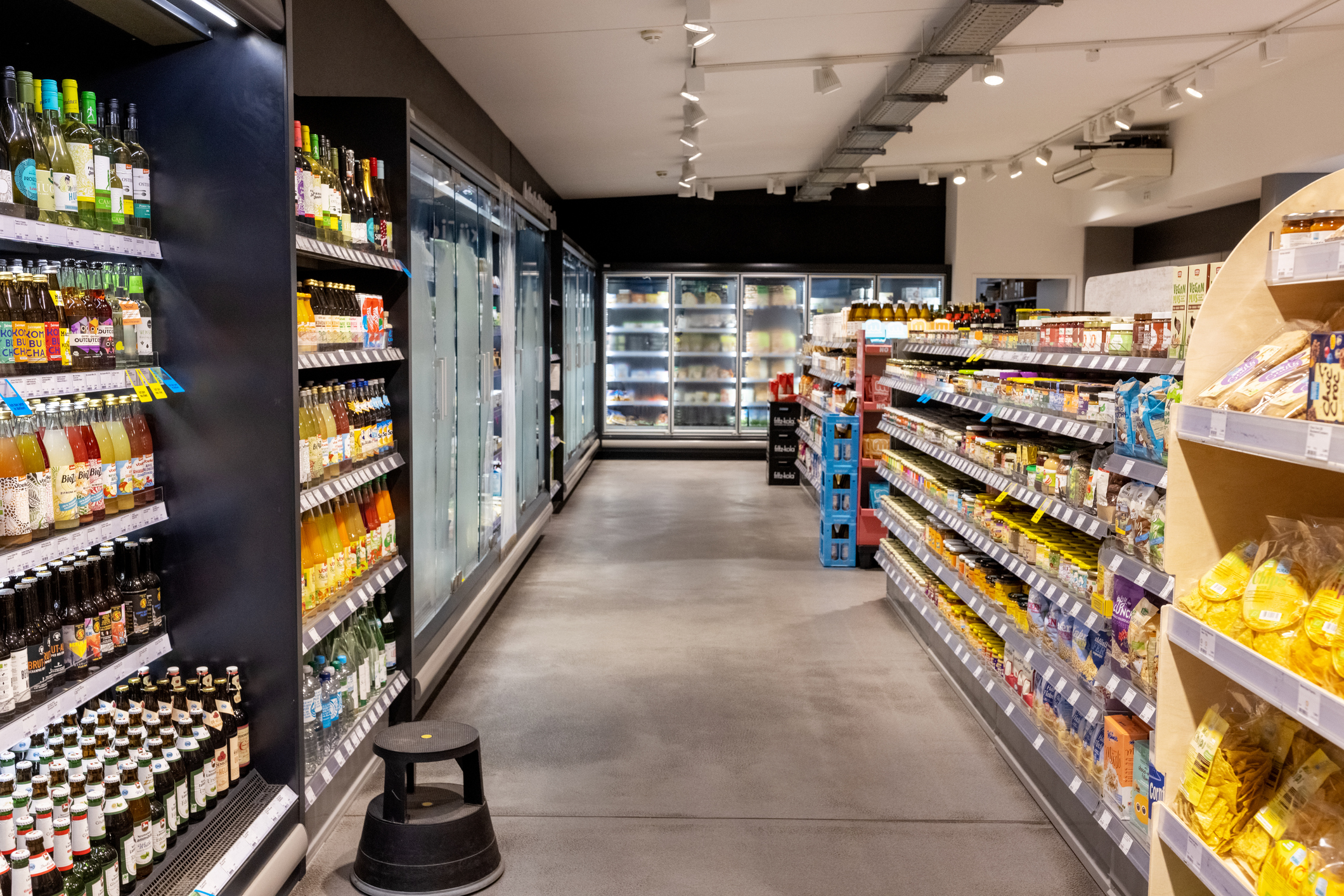
Socialists in the Wisconsin Legislature have introduced a bill that would spend $100 million to fund state-run grocery stores.
The Wisconsin Democratic Socialists Caucus has proposed legislation to establish a statewide network of publicly operated grocery stores, funded by $100 million in taxpayer money. They argue this initiative would reduce food costs and address food deserts in both urban and rural areas.
The Wisconsin Public Grocery Store Act would create a new bureaucratic agency: Wisconsin Public Food Administration. Its mission is to ensure universal access to affordable, nutritious food by supporting local governments in opening public stores and operating a statewide distribution network. The authority would oversee bulk purchasing from local farmers, price negotiations, shipping, and operational support for public stores, cooperatives, and schools.
Supporters cite ongoing hunger in Wisconsin. Since 2021, private retailers have closed 9 stores in Milwaukee, 5 on the north side, worsening food deserts, according to the Milwaukee Journal Sentinel. Feeding America estimates a $463 million annual gap in meeting residents’ food needs, as private companies prioritize profits.
The bill designates $30 million for the distribution network and $70 million in grants for stores. Local governments could apply for funding for stores of various sizes, including features such as pharmacies, community centers, childcare, or housing. The bill would require public grocery stores, to accept benefits under the Supplemental Nutrition Assistance Programand the Special Supplemental Nutrition Program for Women, Infants, and Children (the WIC program); to provide customers with wireless Internet access, high quality food, a fresh food section, medication and medical supplies, and free high-quality, nontoxic menstrual products; and to compensate employees with prevailing or collectively bargained wages, implying that any workers of the store would be unionized.
The proposal is modeled after federal military commissaries, which sell goods up to 30% below commercial prices and save eligible families hundreds of dollars each month through taxpayer-supported operations.
Critics call the plan unfair competition and cite repeated failures of government-run grocery models elsewhere. On X, Kyle Koenen, policy director at the Wisconsin Institute for Law & Liberty, posted: “Wisconsin’s Legislative Socialist Caucus introduced a bill that would spend $100 million of state money to establish a network of government-run grocery stores. Using tax dollars to prop up government grocery stores that compete with small businesses is inherently unfair.”
Government-operated grocery systems have struggled in multiple countries. In Venezuela, nationalized supermarkets under Hugo Chávez and Nicolás Maduro led to widespread shortages, with more than 80% of staple foods vanishing from shelves at times, prompting black markets, long lines, and police raids on private warehouses. Price controls contributed to hyperinflation and empty stores. The Soviet Union relied on state-run outlets marked by rationing, chronic shortages, and poor variety. Cuba’s state monopoly has operated for decades with persistent ration books and limited selection.
Smaller U.S. experiments have also faltered. A city-owned grocery in Baldwin, Florida, opened in 2019 to fill a food desert but closed in 2024 after struggling with costs and competition. Erie, Kansas, took over a store that later shut down. In Kansas City, Missouri, a municipally supported Sun Fresh market closed despite $18 million in city investment. A Vanderbilt University analysis of public grocery efforts noted thin margins, weak purchasing power against chains like Walmart and Kroger, and frequent reliance on ongoing subsidies as common pitfalls.
The bill does not have a path forward this session as both chambers of the legislature have adjourned, but it does provide insight into the priorities of legislative socialists should they gain majorities in the state house
