


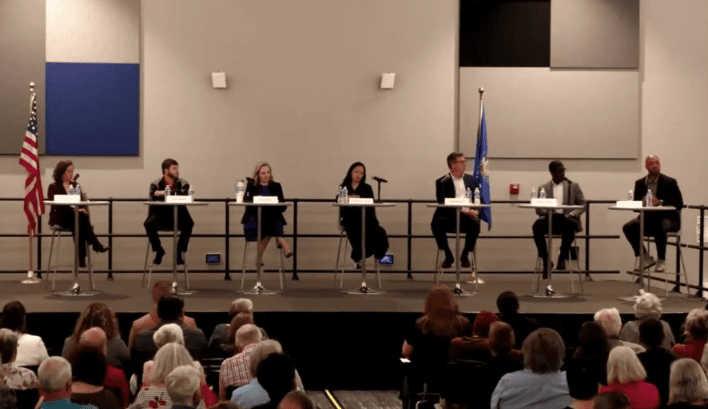
The WISDOM Wisconsin Gubernatorial Candidate Forum gave voters a clear look at what progressive leadership in Madison would look like.
It was not subtle.
The two-hour forum included the six remaining Democratic candidates for governor and one Republican candidate. But the conversation was dominated by a familiar set of progressive priorities: weaker immigration enforcement, more benefits regardless of legal status, more spending, attacks on wealth creation, and national political grievances that often seemed far removed from the day-to-day concerns of Wisconsin families.
That is what made the forum useful. The candidates were speaking to a friendly audience, with room to say what they really believe. What they chose to emphasize should concern voters who are more worried about public safety, schools, taxes, housing, and the cost of living than about checking every box on a progressive wish list.
State Rep. Francesca Hong offered one of the clearest moments of the night when she called for abolishing ICE, describing the agency in extreme terms and tying it to fascism. That kind of rhetoric may work with activist audiences, but it is not where most Wisconsinites are. Voters can support a humane immigration system while still expecting the law to be enforced. They can believe in due process while also expecting government to protect citizens, families, and communities.
Hong also argued that no young person should serve a life sentence. That may sound compassionate at first, until you remember what life sentences are usually reserved for. Some crimes permanently destroy lives. Some victims never get a second chance. A governor has to think not only about offenders, but also about victims, families, and public safety.
The candidates also embraced benefits for people in the country illegally, including driver’s licenses and tuition-free college. That is a revealing priority at a time when Wisconsin families are already stretched thin. Parents are trying to pay their own bills, keep their kids in school, and help them afford a future. They should not be asked to subsidize new benefits for people who are in the country unlawfully while their own communities compete for limited resources.
Former Lt. Gov. Mandela Barnes offered another revealing moment when he singled out Elon Musk as “the source of a lot of our problems,” citing his status as an immigrant. Whatever someone thinks of Musk personally, that is a strange target for a candidate for governor. Musk is an immigrant entrepreneur whose companies have helped reshape electric vehicles, space technology, communications, and advanced manufacturing. Turning that record into a warning sign says a lot about how today’s progressive politics views success.
Hong’s call to “tax the frickin’ billionaires” came from the same place. It is a good applause line, but not a serious plan for Wisconsin. “Tax the rich” politics rarely stops with cartoon billionaires. It often reaches small businesses, family farms, contractors, restaurants, manufacturers, and local employers whose income shows up on an owner’s personal tax return. For them, that money is not excess. It is payroll, equipment, inventory, wages, and the cushion that keeps the doors open during a slow season.
Wisconsin does not become more affordable by punishing the people who build, hire, and take risks in their communities. The state’s challenges, from housing costs to stagnant wages in some sectors to families leaving for better opportunities elsewhere, will not be solved by class resentment. They will be solved by making it easier to build homes, grow businesses, hire workers, and keep families here.
The education discussion showed the same problem. Milwaukee County Executive David Crowley pushed for a “progressive trifecta” and called for still more school funding. But Wisconsin voters have already been asked, again and again, to put more money into the system. In 2024, voters approved a record number of school referenda.
Meanwhile, student performance remains deeply troubling. The most recent National Assessment of Educational Progress showed only 31 percent of Wisconsin fourth-graders proficient in reading. Nearly seven in ten are not meeting that standard.
That should be a five-alarm fire. Instead, too many politicians treat poor results as just another reason to spend more money with too little accountability. Families deserve transparency, measurable improvement, and a school system that puts students ahead of the interests of the adults running it.
Sen. Kelda Roys and other candidates also leaned heavily into national political rhetoric, warning about a “dangerous authoritarian regime” under President Trump and predicting that Republican frontrunner Tom Tiffany would act as a “rubber stamp” for it. That may excite the Democratic base, but Wisconsin has real problems that need a governor’s attention.
Border security has consequences here. Crime has consequences here. Bad schools have consequences here. High taxes and rising costs have consequences here. The next governor should be focused on those issues, not just recycling the loudest talking points from national progressive politics.
That is why the WISDOM forum matters.
It was not just another campaign event. It was a preview. The candidates showed what they are willing to defend when they are speaking to an audience that shares their assumptions: more spending, less enforcement, more benefits for those here illegally, and a politics built around grievance.
The forum underscored a clear divide. One side is focused on shielding illegal immigration from enforcement, vilifying achievement, and demanding more spending regardless of results. The other is offering a contrast centered on citizen safety, measurable school improvement, and policies that reward work and innovation rather than punish it.
Wisconsin voters should take them seriously.
This is what they are promising. The question is whether Wisconsin wants to live under it.
