


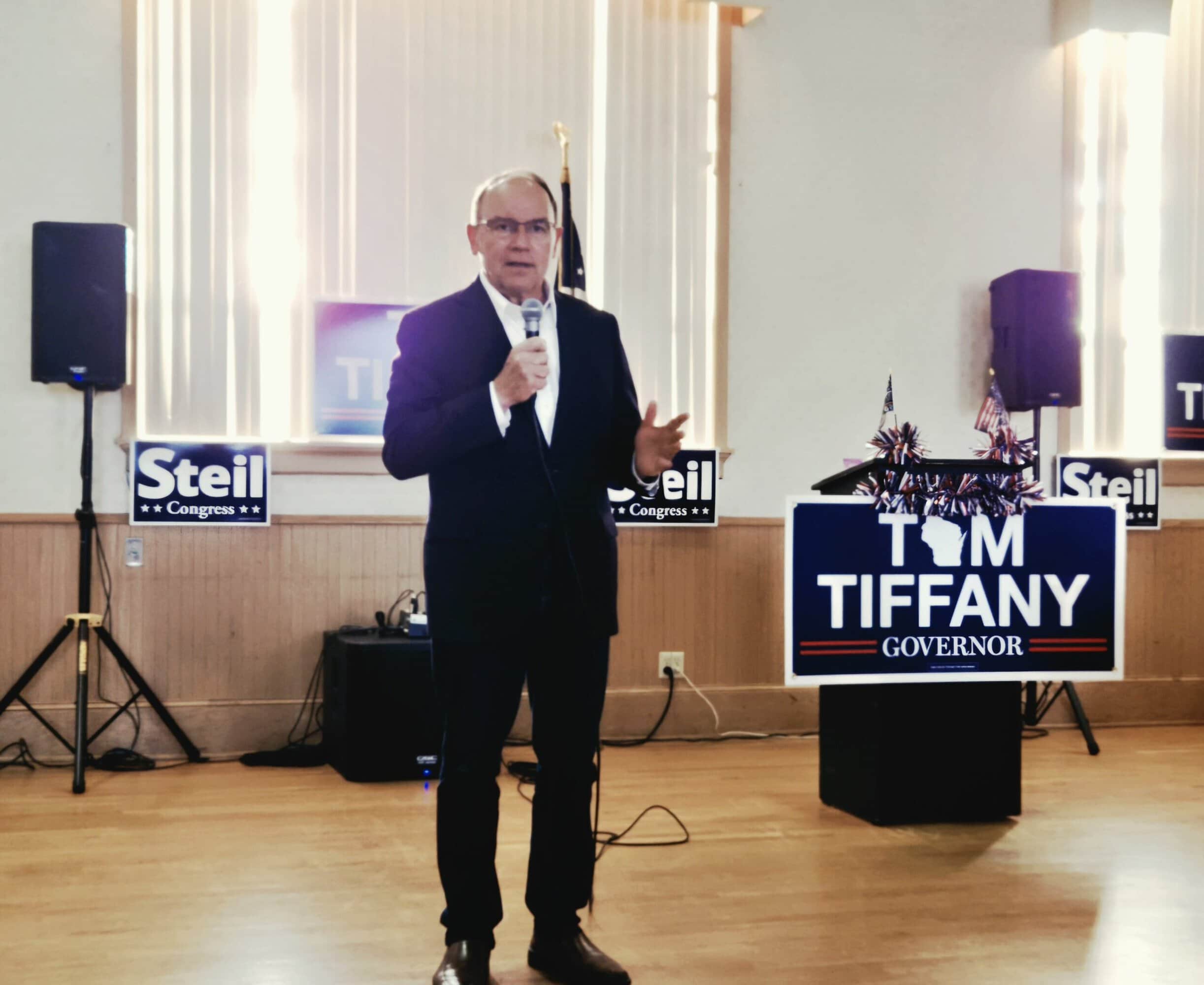
Republican gubernatorial nominee Tom Tiffany rolled out a sweeping energy plan aimed at lowering utility costs, protecting reliable power generation and changing the direction of Wisconsin’s Public Service Commission.
The proposal comes as Wisconsin ratepayers face another round of potentially significant utility increases.
Since Gov. Tony Evers’ appointees gained control of the PSC, the commission has approved roughly $2.2 billion in rate increases — about 71% of what major utilities requested. During a comparable six-year period under former Gov. Scott Walker’s appointees, the commission approved about $300 million, or roughly 25% of requests.
Meanwhile, We Energies and Wisconsin Public Service are seeking hundreds of millions more in increases for 2027 and 2028. We Energies’ proposal could increase a typical residential electric bill by more than 14% by the end of 2028.
“For too long, Wisconsin’s energy policy has focused on government mandates instead of what should come first for ratepayers: affordability and reliability,” Tiffany said. “Families should not be forced to pay higher utility bills to satisfy government mandates.”
Tiffany’s plan would halt what he describes as the premature closure of reliable baseload power plants, push Wisconsin toward new nuclear generation and direct his PSC appointees to prioritize affordability and grid reliability.
The plan also takes aim at the profits utilities are authorized to earn. Wisconsin Electric, Wisconsin Public Service and Wisconsin Gas currently have an authorized return on equity of 9.8%. Tiffany says his administration would scrutinize those rates and seek to reduce the costs ultimately passed along to customers.
Tiffany is also proposing a cooling-off period that would prevent PSC commissioners from immediately taking jobs with investor-owned utilities or transmission companies after leaving the commission.
Another major piece of the plan focuses on Wisconsin farmland. Tiffany says the state should prioritize existing infrastructure and transmission corridors while giving local communities a greater voice over large wind, solar, data center and transmission projects.
The proposal sets up a sharp energy-policy contrast with Democratic nominee David Crowley.
Crowley signed Milwaukee County’s Climate Action 2050 plan, which commits county operations to reaching net-zero carbon emissions by 2050. County officials have estimated the additional cost of implementing the plan at roughly $441 million over 25 years.
As the Heartland Post has previously reported, Crowley has also backed continued adherence to the Paris climate framework, proposed carbon scoring for major state projects and called for a “Green New Deal for public schools.” He has also said new data centers should bring enough new clean energy onto the grid to cover their massive power demands.
Crowley’s climate agenda has also earned him support from major national environmental organizations, including the NRDC Action Fund, whose parent organization has maintained extensive operations and partnerships in China.
Tiffany is betting that rising utility bills will make the competing approaches to energy a major affordability issue in the final stretch of the governor’s race.
“As governor, I will change the direction of the Public Service Commission and appoint commissioners who put affordability and reliability first,” Tiffany said. “Wisconsin needs an energy policy that puts the people paying the bills first.”
