


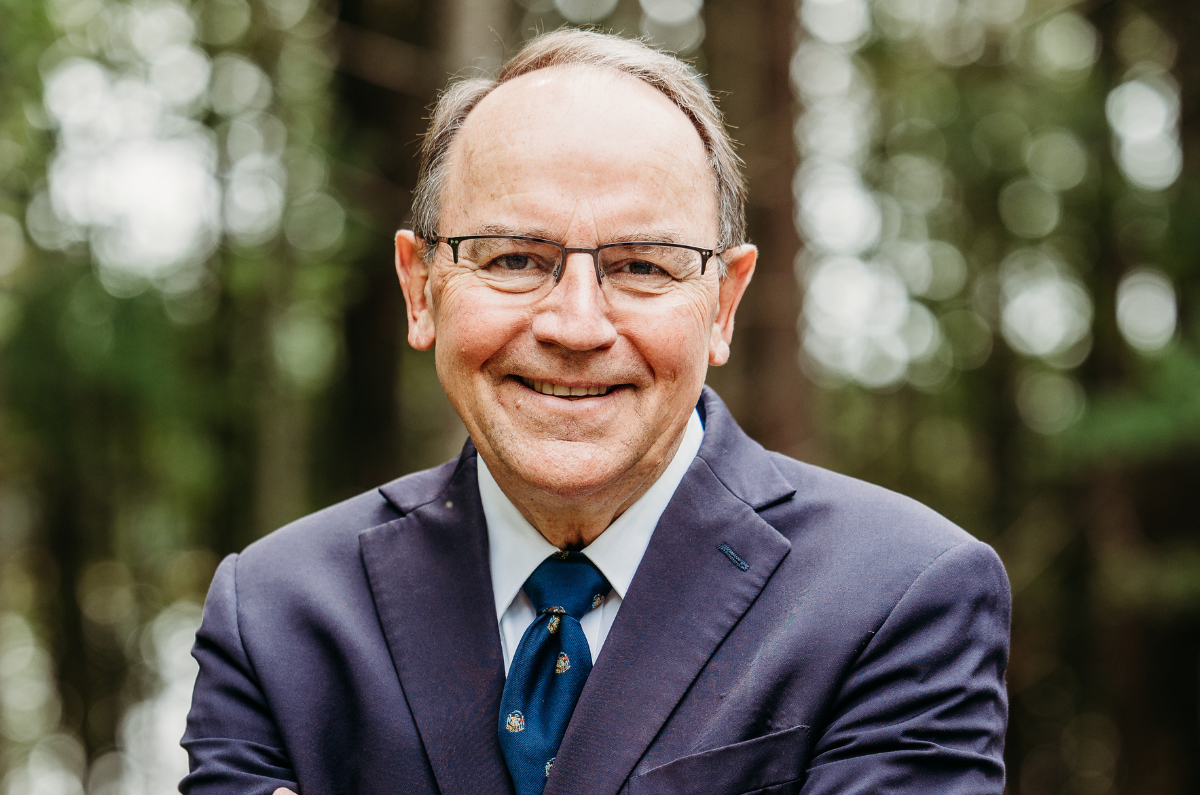
Republican gubernatorial candidate Tom Tiffany has a huge advantage over his Democrat opponents–the lack of a competitive primary. Dan O’Donnell explains.
In the brutal arena of Wisconsin politics, where every dollar counts and every misstep gets amplified statewide, Tom Tiffany just caught the biggest break imaginable: a completely clear path to the Republican nomination for governor. No primary opponent. No intra-party bloodletting. No exhausting debates that force candidates to out-conservative each other until they’re hoarse.
While the Democrats begin to tear each other apart in what will likely be a race to the left, Tiffany can sit back, conserve his ammunition, and aim straight at the general election. It’s the kind of structural advantage that often proves decisive come November.
Primaries are expensive, divisive, and time-consuming. Look no further than the last one Republicans had: Tim Michels and Rebecca Kleefisch tore each other apart so venomously that Michels was both politically bloodied and financially tapped when the general election campaign began.
In truth, though, Governor Evers had been running a general election campaign all year. With no primary opponent, he was free to tout his accomplishments (inasmuch as there were any) and blast both Kleefisch and Michels to ensure either would be weakened if they got through the primary.
Tiffany can now do that as well. Assuming no one else jumps into the race—looking at you, Tommy Thompson—Tiffany can continue to raise money from national donors, build his statewide campaign infrastructure, and run ads like his debut, an incredibly well-received ode to his homegrown Wisconsin folksiness.
That million-dollar ad buy (the first of the gubernatorial cycle) gives him a huge head start on his Democrat opponents, who are just starting to do Tiffany’s dirty work for him by attacking one another.
Lt. Gov. Sara Rodriguez, running a distant third in the primary behind the two socialists Mandela Barnes and Francesca Hong, told the Marquette University College Democrats last week that she didn’t think either could win a general election—the most common line of attack self-described “moderate” Dems use against far left-wing opponents who are more aligned with the party’s base.
“I love Francesca,” Rodriguez said when asked who she would support were she herself not running. “She sat with me, right? She was my seatmate [in the Assembly]. I love her dearly. She’s smart. She’s amazing. I love what she does. I worry a little bit about her for the general.”
Without any prompting, Rodriguez then turned her fire toward Barnes.
“Mandela, I worry a little bit about the general as well, because he lost that Senate race, and those things are still there.”
Barnes, of course, infamously lost to Sen. Ron Johnson in 2022 despite the Democratic Party of Wisconsin convincing his two biggest primary rivals, Sarah Godlewski and Alex Lasry, to drop out of the race while early voting was taking place.
Democrats realized too late that they needed to clear the field for a clearly weak candidate so that an underperformance (or possibly a surprise loss) wouldn’t hurt the party in the general election.
It didn’t work; Barnes lost by a percentage point on the same ballot that Evers won by three. The biggest reason for Barnes’ underperformance is that Rodriguez is completely right about him being unelectable, but a significant contributing factor was that Evers did not have to worry about a primary and could instead run a general election campaign for eleven months instead of less than three.
Wisconsin’s extremely late primary date is a massive disadvantage for any candidate who comes out of a contested primary (so much so that it has been ruefully dubbed “incumbent protection” by more than a few frustrated challengers). Whomever makes it out of the Dem primary this year will have just a few scant weeks to introduce themselves to a wider audience and moderate their positions (if possible) to appeal to a wider electorate.
Tiffany, meanwhile, will have had four uninterrupted months of building his voter base, consolidating Republican donor money, and running largely unchallenged messaging through his advertising. He doesn’t need to run to the extreme right or fend off friendly fire from an upstart challenger.
He can simply retrace Evers’ path to victory. It won’t be easy in what figures to be a big Democrat year, but the way the two parties’ primaries are laid out right now could not possibly be a bigger advantage for Tiffany.
