


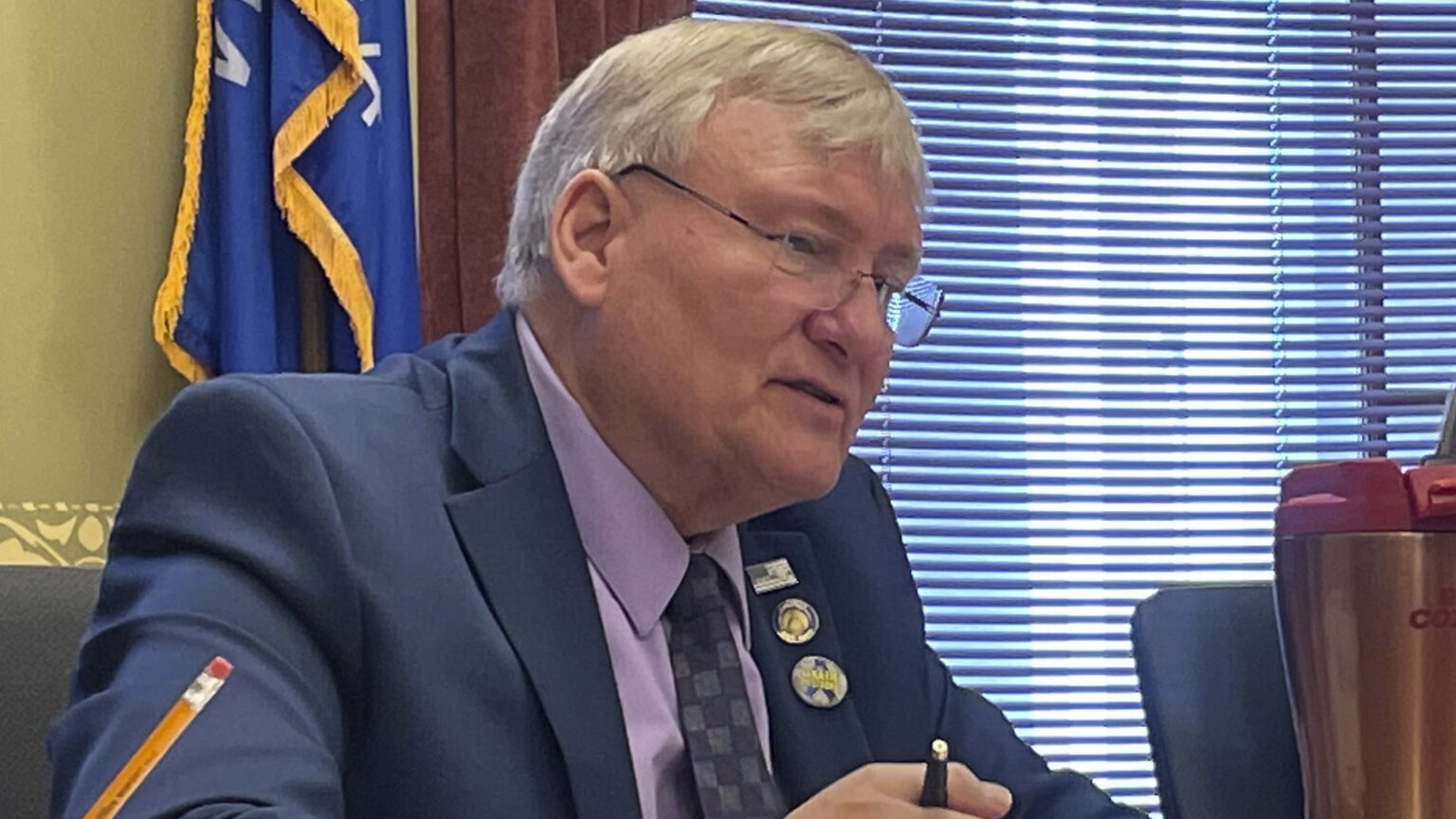
State Senator Van Wanggaard says Gov. Tony Evers stacked his commutation board with a glaring conflict of interest. He’s put a University of Wisconsin Law School clinic director in charge of deciding whether convicted killers should walk free, all while that very same program is busy lobbying for their release.
Jonathan Scharrer, a UW Law clinical professor and director of the Restorative Justice Project at the Frank J. Remington Center, is one of Evers’ handpicked nine for the Commutation Advisory Board. At their debut hearing, twelve inmates lined up for a shot at early release. Four of them—every one a convicted killer—showed up with glowing endorsements from the Remington Center, Scharrer’s own shop. Scharrer’s name is on the center’s letterhead.
Wanggaard, a Racine Republican and former Racine police officer, called the arrangement what it looks like.
“It is a rigged system,” he said. “Board members are considering applications their close colleagues are urging. The supposed ‘consideration’ of releasing killers early seems like a guarantee now.”
After reviewing about 1,800 pages turned over by the governor’s office, Wanggaard said the conflict was sitting in plain sight. “As we combed through the documents, we realized the Law School’s Remington Center wrote a letter in support of 4 of the 12 applicants. Jonathan Scharrer is listed on the Remington Center’s letterhead. He is also a member of Governor Evers’ Commutation Board. If that’s not a conflict of interest, I don’t know what is.”
The Remington Center is batting for four applicants, and every one of them is a convicted murderer. Daniel Cerney was convicted of two counts of first-degree intentional homicide in Monroe County for killing William Leis and Leis’ 85-year-old mother; Cerney was 17 at the time. Mighty Howell was convicted of intentional homicide and attempted armed robbery in 1993 as a teenager. Michael Maldonado was convicted in a 1995 murder-for-hire case. Sabir Wilcher was sentenced to life in prison in 1995 for first-degree intentional homicide while armed.
Evers dusted off Wisconsin’s commutation process with a pair of executive orders, giving new life to a system that had been wisely left dormant. The advisory board reviews the pleas, but the governor holds the pen that can turn a life sentence into a political favor.
According to reporting on the hearings, Scharrer recused himself from only one of the four Remington-backed cases. He remained in a position to weigh the others. Wanggaard’s office is still seeking records on nearly 800 of the remaining applicants after the first document dump.
Wisconsin voters have watched Milwaukee and Madison turn criminal justice into a revolving door, where catch-and-release is the rule, not the exception. Now, we’re being asked to accept commutations for convicted killers—apparently the next logical step in the progressive “let criminals walk” experiment. At bare minimum, the public deserves a board that isn’t staffed by the very people lobbying to spring the inmates. Anything less is a mockery of justice.
A board member whose own program is pushing for inmates’ release isn’t a neutral arbiter. If Evers cared about public trust, he would have barred advocates from the panel or demanded full recusals whenever their fingerprints were on a case. He did neither. Wanggaard is right: this is a rigged game to let killers walk free, plain and simple.
