



Recent wildfires in Canada have driven heavy smoke into Wisconsin, triggering a statewide air quality advisory from the Department of Natural Resources. As of July 17, 2026, hazardous conditions persist in many areas, even as winds begin to shift, improving air quality for much of the state.
This episode stands out as among the worst in recent years. Many places are seeing the worst air quality on record. Milwaukee’s AQI surged above 500 (with readings like 598 at 16th St. Health Center on Thursday), shattering previous records and exceeding the EPA’s hazardous threshold of 300. Other extreme readings included Kenosha’s Chiwaukee Prairie (peaking at 617), Waukesha (612), Green Bay (~576–600), Potawatomi (676), and northern sites exceeding 800 near Superior. Madison hovered around 400+, with Appleton at 449 and ongoing hazardous levels (e.g., 405 in Outagamie County early Friday).
While Wisconsin has seen an average of 9 days of unhealthy smoke per year since 2020 (up from fewer than 1 day annually between 2010 and 2020), current readings in several counties have reached hazardous levels, exceeding many prior events in intensity and geographic spread. The advisory, originally set to lift at noon Friday, is bringing gradual improvement from southwest to northeast, though smoke may linger longer in eastern and northern areas.
Wisconsin Democrats are expected to attribute the smoke primarily to climate change, but U.S. Rep. and Republican gubernatorial candidate Tom Tiffany has focused on actionable steps to address the root causes of severe wildfires. In his July 15, 2026 thread on X, Tiffany noted the air quality advisory and stated: “While dry conditions certainly play a role, decades of fuel buildup in overgrown forests have made these fires more severe.”
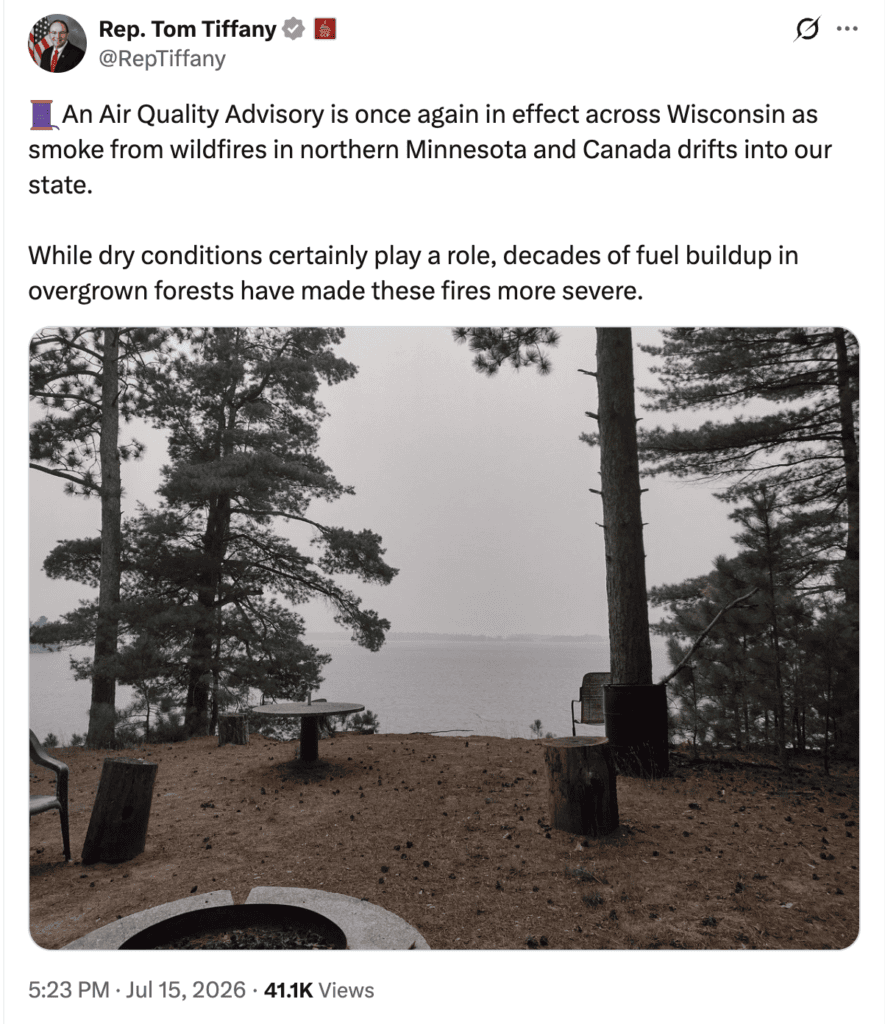
He emphasized solutions: “We cannot prevent every wildfire, but we can reduce their severity through responsible, science-based forest management. Healthy forests are good for our environment, our economy, and public health.” Tiffany pointed to policies that limit active management and allow dangerous fuel accumulation as a key factor in both the U.S. and Canada.
Health officials continue to urge residents to limit outdoor activity, especially those with respiratory or heart conditions, and monitor local AQI via AirNow or the Wisconsin DNR. Conditions are expected to improve further as winds clear the smoke, but ongoing wildfires mean vigilance remains important.
