


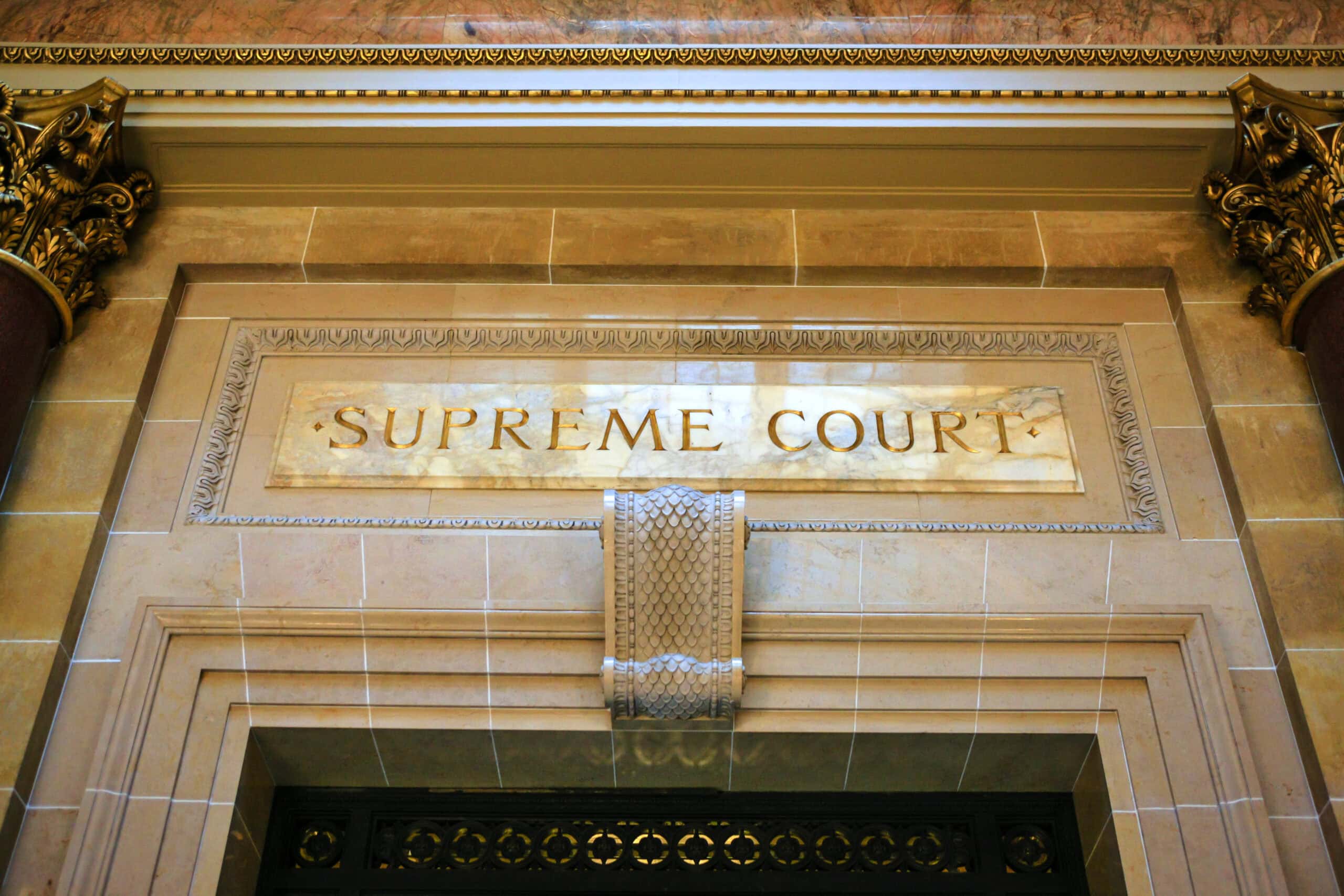
The Wisconsin Supreme Court on Thursday declared unconstitutional a state program that provided need-based grants to minority undergraduate students at private colleges and technical schools, ruling it violates the Equal Protection Clause of the Fourteenth Amendment by classifying recipients according to race, national origin, ancestry or immigration status.
In a majority opinion written by Justice Annette Ziegler, the court affirmed a published decision of the Court of Appeals and enjoined the Higher Educational Aids Board from administering the Minority Undergraduate Retention Grant Program created under Wis. Stat. § 39.44. The program distributed taxpayer-funded grants of up to $2,500 per academic year to eligible students who are Black American, American Indian, Hispanic or from certain Southeast Asian backgrounds admitted to the U.S. after 1975.
A group of taxpayers challenged the program as an illegal expenditure of public funds that discriminates against students not belonging to the specified groups.
The Court applied strict scrutiny review and concluded the race-based eligibility criteria cannot survive. The decision followed the U.S. Supreme Court’s 2023 ruling in Students for Fair Admissions, Inc. v. President & Fellows of Harvard College, which rejected race-based admissions preferences in higher education.
“At the heart of the Equal Protection Clause is the principle that race-, national origin-, ancestry-, or alienage-based discrimination is unconstitutional except in the most extraordinary instances,” Ziegler wrote in the Wisconsin Supreme Court’s decision. “The Constitution requires that every person ‘must be treated based on his or her experiences as an individual — not on the basis of race.'”
The majority emphasized that racial classifications are “odious to the Constitution” and must satisfy strict scrutiny: furthering a compelling governmental interest and being narrowly tailored to achieve it.
“No State has any authority under the [Equal Protection Clause] to use race as a factor in affording educational opportunities among its citizens,” the Court concluded
The grant program, enacted in 1985 and expanded in 1987, limited eligibility to specific groups to promote retention and graduation. The Supreme Court rejected arguments that the grants served compelling interests in equalizing opportunities or improving retention for groups with higher attrition rates. It found insufficient evidence in the legislative record demonstrating disproportionate dropout rates at private and technical colleges specifically tied to race in a way that justified racial classifications.
“Distinctions between citizens solely because of their ancestry are by their very nature odious to a free people whose institutions are founded upon the doctrine of equality,” the Court concluded.
Justice Janet Protasiewicz joined the Court’s three conservatives–Ziegler, Rebecca Bradley, and Brian Hagedorn in the majority opinion. Chief Justice Jill Karofsky filed a concurring opinion, joined by fellow liberal Justices Rebecca Dallet and Susan Crawford, agreeing the program fails under current U.S. Supreme Court precedent while expressing reservations doing away with racial preferences in grant programs.
The Court’s ruling means the state must cease awarding new grants under the race-based criteria. The decision aligns Wisconsin law with the post-SFFA federal constitutional standard prohibiting racial preferences in educational funding.
