


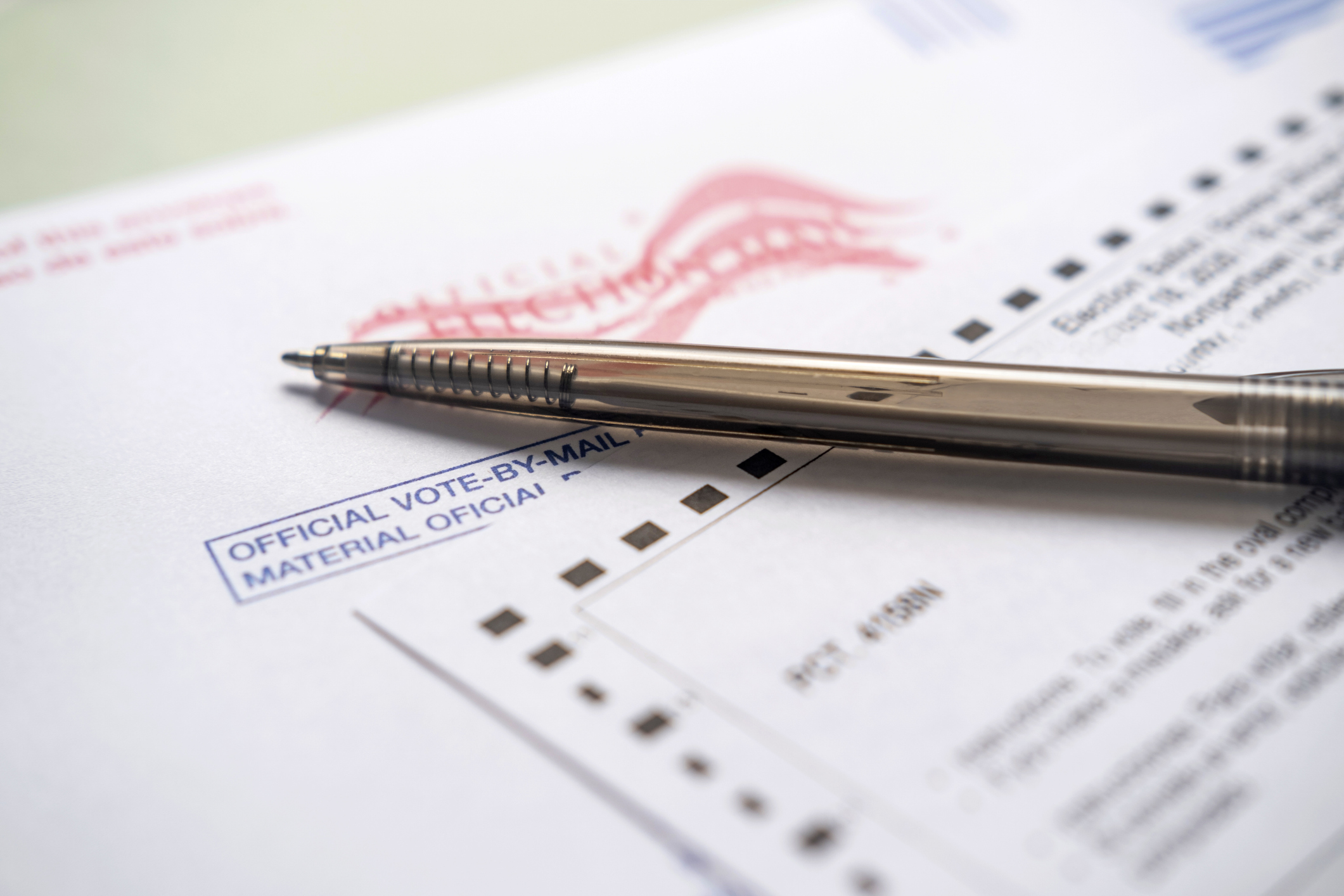
Voters are heading to the polls next month to decide who will be their governor for the next four years. But they will also be deciding something with consequences that could extend far beyond the next governor’s term: whether Wisconsin’s future governors should have the power to unilaterally increase taxes with the stroke of a pen, as Tony Evers did three years ago when he issued his infamous 400-year veto.
In 2023, the Wisconsin Legislature passed the state’s biennial budget, which provided school revenue-limit increases for the “2023-24 school year and the 2024-25 school year.” Governor Evers then exercised his veto authority in a rather absurd way. By striking a few digits and a dash from that provision, Evers extended the revenue increases through the year 2425. If you do the math, Governor Evers put Wisconsin taxpayers on the hook for increased revenue limits for a whopping 402 years into the future. Talk about a legacy.
It is quite ironic for a governor who comes from the self-proclaimed “No Kings” party to single-handedly burden Wisconsin property owners with increased taxes for 402 years. After all, the American colonists rebelled against King George III for similar abuses only 250 years ago. And while those British taxes were undoubtedly egregious, at least they passed through Parliament. Here in Wisconsin, apparently, one person gets to decide the fate of Wisconsin taxpayers for four centuries, without legislative input.
Thankfully, there’s an easy fix to stop this from happening again—a constitutional amendment. Wisconsin governors have long wielded one of the most powerful partial-veto pens in the country. And when governors have stretched that power too far, Wisconsin voters have stepped in—amending the Constitution in 1990 to end the “Vanna White” veto and again in 2008 to end the “Frankenstein” veto.
Property Taxes Are Heating Up Due to Evers’ 400-Year Veto
Not only is a 400-year veto a jarring use of power, but it is also burning a hole in Wisconsinites’ pocketbooks at a time when most voters say the cost of living tops the list of their concerns heading into the November election.
As explained in a Wisconsin Institute for Law and Liberty (WILL) Report, the tax burden created by Evers’ veto stacks up every year. In the 2023-24 school year, the veto let school districts raise an extra $325 per student. This school year, that figure is $1,300 per student, and next year it will be $1,625. The veto did not create a one-time or flat cost. Instead, it created a hike on every Wisconsin property owner’s tax bill that has the potential to snowball for 400 years.
In order for property owners to understand how the 400-year veto drives up their taxes, WILL created a property tax calculator that allows a user to input their home value and school district to see what the impact of the veto could be now and into the future.
No matter how you cut it, the 400-year veto is driving up costs for every Wisconsin property owner.
The Constitutional Amendment Ballot Question
Thankfully, there’s an easy fix to stop this from happening again—a constitutional amendment. Wisconsin governors have long wielded one of the most powerful partial-veto pens in the country. And when governors have stretched that power too far, Wisconsin voters have stepped in—amending the Constitution in 1990 to end the “Vanna White” veto and again in 2008 to end the “Frankenstein” veto.
This November, voters will have a chance to do so again by amending the Wisconsin Constitution to prohibit all future governors from using a partial veto to create, increase, or authorize any tax or fee. It’s a simple concept: taxes and fees should be debated in the open on the legislative floor, not created by a single pen behind closed doors.
The ballot will ask every voter a question: “Shall section 10 (1) (c) of article V of the Constitution be amended to prohibit the governor, in exercising his or her partial veto authority, from creating or increasing or authorizing the creation or increase of any tax or fee?”
If voters want transparency, taxation with representation, and reasonable checks on executive authority, the answer to the question is “YES.”
