


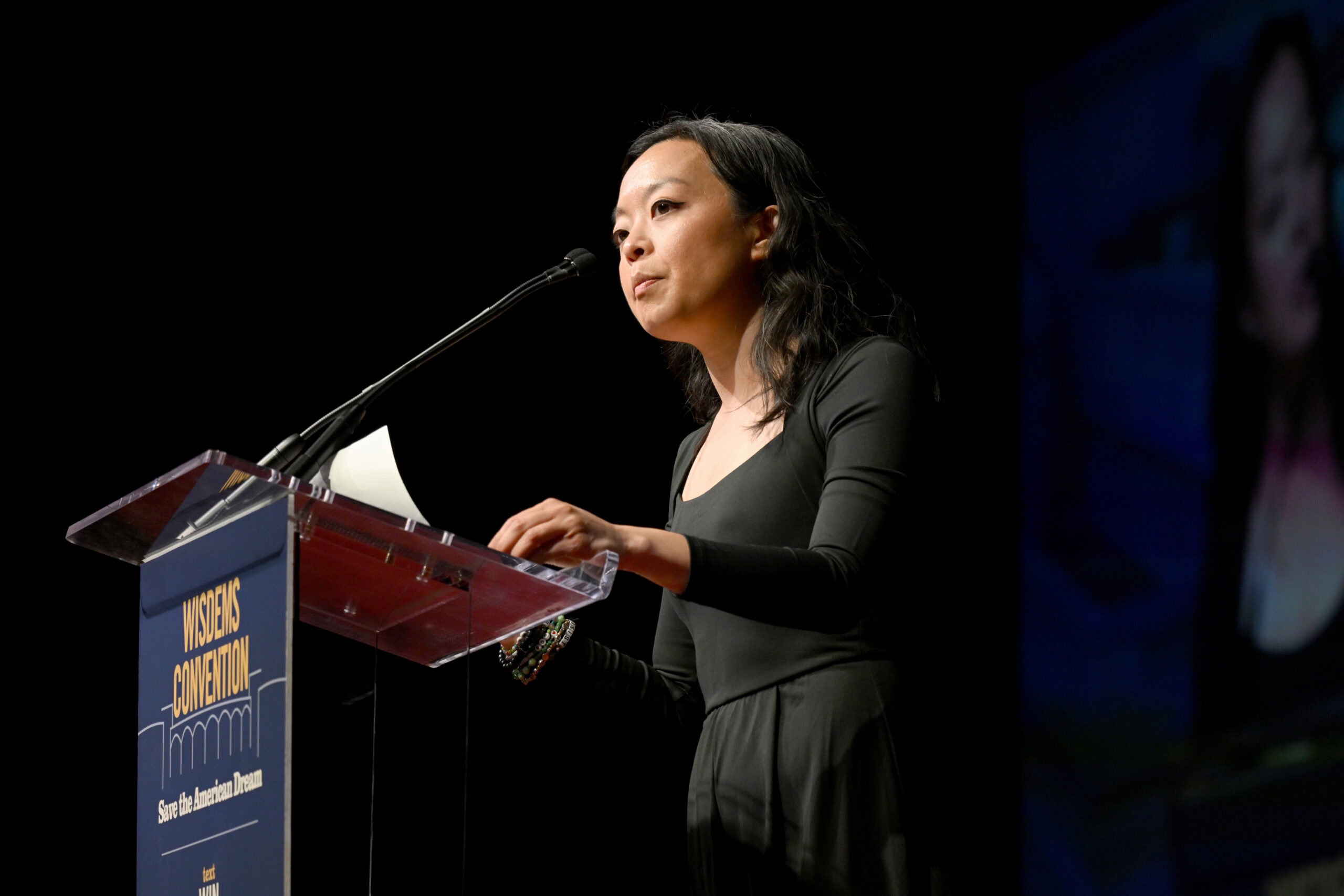
Tonight’s debate is almost certainly the Democratic Party of Wisconsin’s last realistic shot to stop Francesca Hong from locking up the gubernatorial nomination.
With the August 11 primary just two weeks away, a crowded field, and Hong holding a clear lead in all recent polling, the non-socialist candidates need a decisive performance to consolidate anti-Hong votes. If they fail, the party risks not only handing the general election to Republican Tom Tiffany but effectively ceding control of its future direction to the Democratic Socialists of America (DSA).
Hong, the Madison state representative and DSA member, has surged as the unexpected frontrunner. Marquette Law School’s July poll put her at 26% among likely Democratic primary voters, well ahead of Mandela Barnes in second place at 15%.
Sara Rodriguez’s exit amid a campaign finance scandal and David Crowley’s late re-entry with Tony Evers’ endorsement have not stopped or even slowed Hong’s momentum. Frantic efforts by the Democratic Party to jump from one “safer” candidate to another have looked increasingly desperate and served only to solidify the belief among the far left that Hong is running away with the primary.
The wider belief, though, is that she will be blown out in a general election because her candidacy makes the race a referendum on socialism itself.
Head-to-head polling has shown her trailing Tiffany and since Republicans typically do not poll well this far from an election, it is likely he would beat her by 6-10 points and potentially cost Democrats victories in the State Assembly and Senate as well.
Hong’s radical record, which includes repeated calls to abolish the police, fantasies of a world without prisons, support for open borders and unlimited illegal immigration, seizure and redistribution of private property, offers Republicans a ready-made contrast in a state Trump carried twice and that remains closely divided.
That general-election vulnerability is real and should terrify any Democrat who cares about actually winning elections.
But the greater long-term threat is institutional. A Hong primary victory would signal that the DSA wing has seized the commanding heights of the Wisconsin Democratic Party. This is not a marginal protest candidate from a solidly blue district; it is a self-identified democratic socialist leading a statewide race in a genuine battleground, backed by local DSA chapters and national hard-left networks.
Party leaders have scrambled (endorsing Crowley, watching Rodriguez collapse, hoping Barnes can consolidate) precisely because they understand the implications. Favorable views of democratic socialists among Democratic respondents in recent polling underscore how far the activist base has shifted. If Hong wins the nomination, the message is clear: the old liberal, incremental, Evers-style approach is finished, and the party’s base has moved in a dangerously radical direction.
Tonight’s debate gives the remaining non-DSA candidates one last high-visibility opportunity to force Hong to defend her most extreme positions, peel away undecided voters, and prevent the primary from becoming a coronation. If they fail, Hong will cruise to the nomination (which she may do anyway).
