


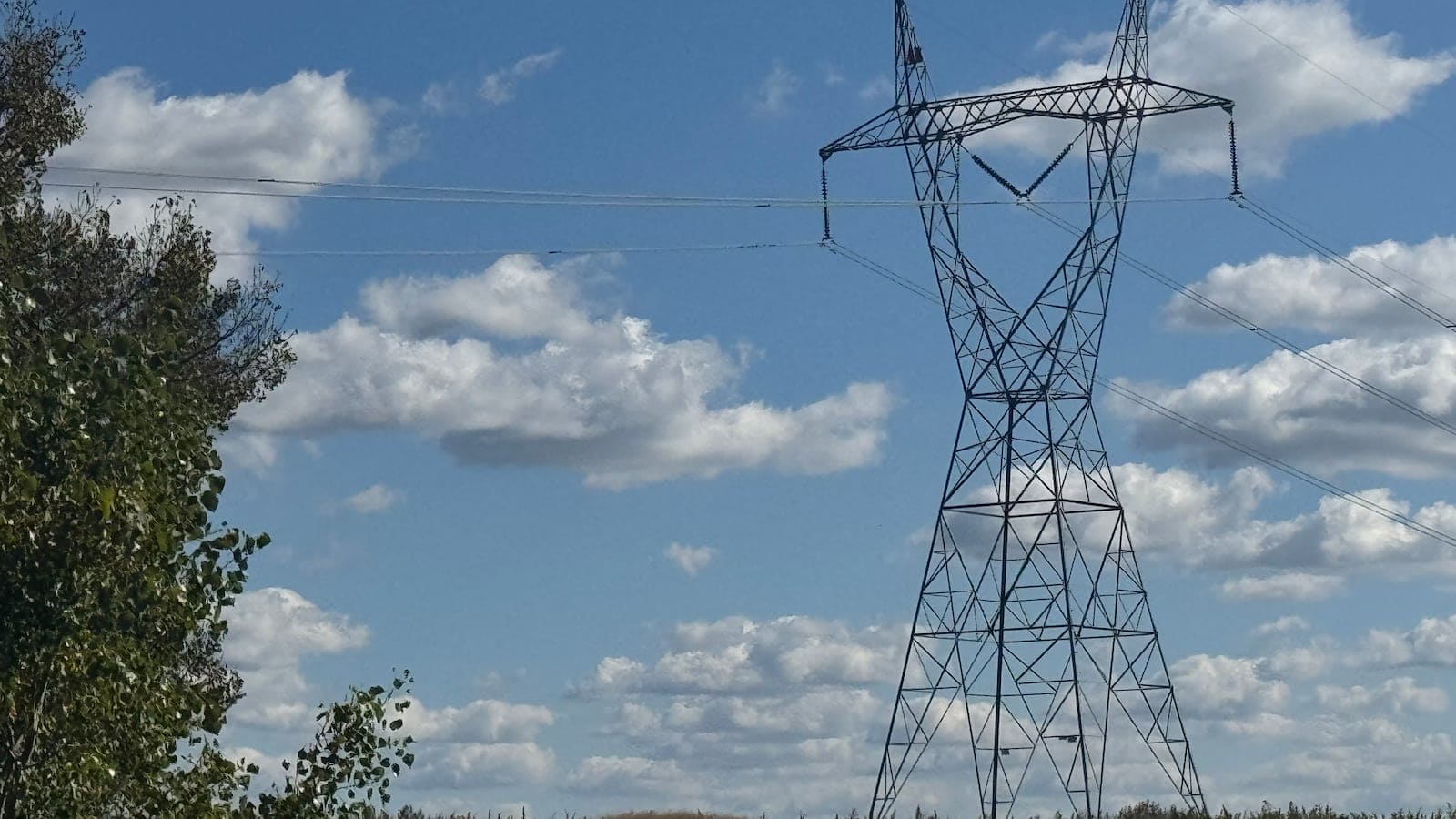
Across southern Wisconsin, landowners are being shown possible routes for one of the largest transmission projects in state history.
The proposed Bell Center–Columbia–Sugar Creek–Illinois/Wisconsin State Line project, known as BECI, would run roughly 190 miles across southern Wisconsin. The 765-kilovolt line, the first in Wisconsin, would begin near Bell Center in Crawford County, pass through Columbia and Walworth counties, and continue toward Illinois. It is part of a much larger regional transmission plan approved by the Midcontinent Independent System Operator, or MISO.
Landowners are right to ask hard questions. Is the line necessary? Are there less damaging alternatives? Who will pay? Will rural communities have a meaningful voice?
Nothing about BECI should receive a rubber stamp; the process needs to play out with the public informed.
But some politicians and environmental activists should not be surprised. How else did they expect electricity generated by wind and solar projects spread across thousands of rural acres to reach cities, factories, and other areas where demand is highest?
All of this traces back to Gov. Evers’ 2022 plan to make Wisconsin carbon free by 2050. Forcing Wisconsin to reject cost-effective and reliable coal and natural gas and replacing that with fields of solar panels and wind turbines as far as the eye can see comes with a steep cost. Higher electricity bills to heat and cool our homes and a massive build out of the infrastructure needed to deliver it around the state and nation.
MISO’s transmission plan was developed around a future grid containing enormous amounts of new wind, solar, and other generation. Some groups celebrated the plan because it would support at least 6.6 gigawatts of new Wisconsin wind and solar power while providing greater access to wind energy from Minnesota and the Dakotas.
Across the Midwest, wind and solar projects occupy vast stretches of rural land, often far from the cities, factories, manufacturing corridors, and other major users that consume the power. A high-capacity transmission superhighway such as BECI is designed to move that electricity to meet the regional grid where demand is concentrated.
Electricity does not magically move from one to the other. Generation located hundreds of miles from customers requires transmission to carry it.
For years, Democratic policymakers and environmental organizations pushed subsidies, mandates, and political goals intended to accelerate the transition away from traditional power plants and toward wind and solar. Utilities responded to those incentives. That should surprise no one. Money is made by building new.
Customers are still paying for retired plants that produce no electricity while also funding new generation. According to a Wisconsin Watch investigation, Wisconsin homes and businesses owe nearly $1 billion on plants that have closed or are scheduled to close, covering those costs along with utility profits years after the plants stop generating power.
Now some members of the same political coalition that pushed the transition are in disbelief at the towers, easements, and effects on rural land that come with it.
Concerns about property rights and environmental harm may be valid. But those concerns cannot be separated from the policies that made the transmission line necessary.
Policymakers cannot subsidize generation far from customers, accelerate the retirement of dispatchable plants, and then object when hundreds of miles of transmission are proposed to connect the grid.
It is not just the policy to push to net-zero that is tied to this line. Wisconsin utilities spent several legislative sessions pushing a right-of-first-refusal law, commonly called ROFR. That legislation would not have stopped BECI or changed the substations it connects.
ROFR would have changed who received the right to develop, finance, own, and profit from the project. It would have awarded this billion-dollar project to a utility with no bidding, no competition.
The winning bid was approximately $1.006 billion, according to MISO’s selection report. MISO’s own benchmark estimate for the same measure was approximately $1.446 billion, meaning the winning bid came in roughly 30 percent lower. MISO also credited the winning design with requiring a narrower right-of-way than any competing proposal.
That is what competition does. It forces companies to compete on price, financing, and design instead of relying on a government-granted entitlement.
Why do I bring this up?
In an interview, Wisconsin Senate Democrat Minority Leader Dianne Hesselbein was asked what she regretted from last session the most. Her reply: failing to pass ROFR.
Think about that regret.
Wisconsin families are paying some of the highest electric rates in the Midwest, a gap that has held for two decades. They are still paying for power plants that no longer generate electricity. Utilities are planning billions of dollars in new generation and transmission spending.
Yet the regret Hesselbein named from that session was guaranteeing incumbent utilities the automatic right to build billion-dollar transmission projects without competition.
Wisconsin does not have to support BECI to call out that hypocrisy.
The project should face rigorous review. The developer should have to justify the cost, examine alternatives, minimize damage, and treat landowners fairly.
But there should be no political amnesia. The politicians and activists who demanded more remote wind and solar should acknowledge the transmission their policies require. Utilities seeking billion-dollar projects should be forced to compete for them.
Policies have consequences. It’s time elected officials acknowledge the consequences they cause.
