


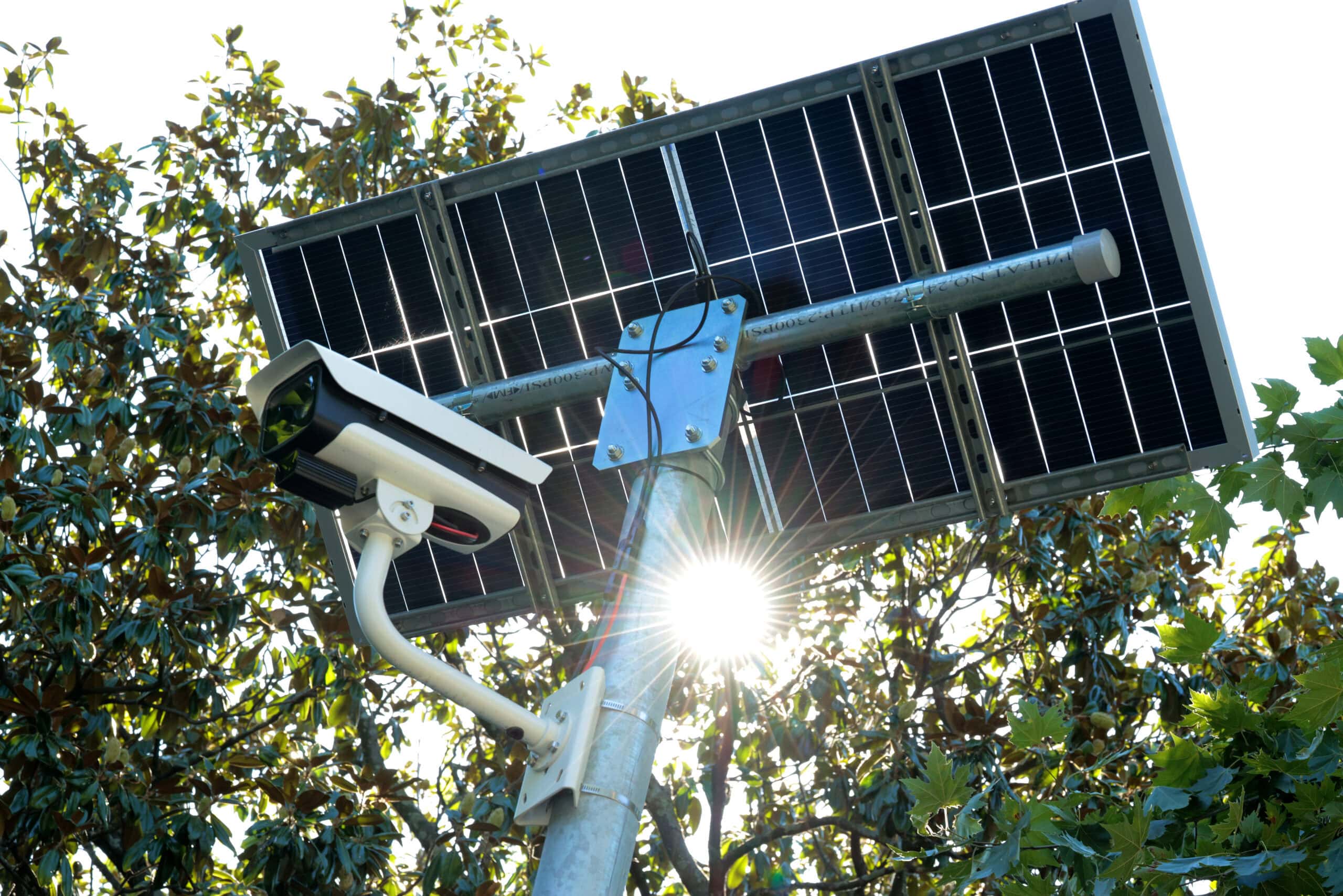
Five Fond du Lac County law enforcement agencies announced Friday that they are ending use of Flock Safety cameras immediately after learning that search data from their systems, including records tied to active investigations, had been released to the public by agencies in other states. Covers are going over the camera lenses and the searches are turned off. The decision lands one day after Sheboygan’s mayor described a Flock salesman offering to sell the city five years of traffic data the city says it never knew existed, and two days before Sheboygan City Council is scheduled to vote on cutting their contract. Winnebago is the latest county exit in a Wisconsin retreat from the company that now stretches from Dane County to the lakeshore.
What Fond du Lac found
The joint statement was signed by Fond du Lac County Sheriff Ryan Waldschmidt and the police chiefs of Fond du Lac, North Fond du Lac, Ripon, and Waupun: Aaron Goldstein, Pete Vergos, Bill Wallner, and Jeremy Rasch. They said agencies in other states answered open-records requests by releasing Flock search data that originated in Fond du Lac County. That dump made the material available nationwide. Wisconsin law treats records of active investigations as exempt from public disclosure. The local agencies say they never authorized the release.
“The loss of control over our own investigative data, combined with concerns over how quickly Flock’s technology has expanded beyond traditional plate-reading systems, has led Fond du Lac County law enforcement agencies to conclude that continuing the program at this time is not appropriate,” the statement said.
Officials still trust how their own officers used the tool; what they no longer trust is what happens after the data leaves the county. “Once our data leaves our respective agencies, we cannot guarantee how it’s handled elsewhere. That is not a risk we’re willing to accept without stronger safeguards in place.”
Fond du Lac Police’s public Flock transparency portal, last updated in late August, listed 14 cameras with a 30-day retention period, and a long roster of agencies granted access to its data — a sharing list that is the feature, and the vulnerability, of Flock’s network model. The portal also showed nearly 300,000 unique vehicles detected in a 30-day window. That is the scale of what other states could theoretically pull into an open-records response.
The agencies said the cameras had helped track dangerous suspects and find missing people. They also said they will reconsider ALPRs only if other jurisdictions can be held to clear rules on how shared data is stored, accessed, and disclosed. Flock Safety cameras in Sheboygan covered up by city
Winnebago County shut it down the same day
WBAY later reported that Winnebago County agencies issued a parallel decision the same afternoon, for the same reason: out-of-state records releases of Flock search data without local consent. “Those decisions were made without our knowledge or consent,” the sheriff’s office said.
Winnebago’s group included the sheriff’s office and the police departments of Fox Crossing, Menasha, Neenah, UW-Oshkosh, and Winneconne. Oshkosh PD had already canceled earlier this year. Omro never had a contract. Winnebago is reviewing whether any of its own investigations were exposed and says it is evaluating how to keep working “without compromising the privacy of Winnebago County motorists.”
That matters for Neenah in particular. On Tuesday, Neenah Police Chief Aaron Olson had recommended ending the city’s Flock contract after months of resident pushback. Friday’s countywide halt effectively answers that question for every participating Winnebago agency at once.
Why an out-of-state records request can empty a Wisconsin case file
Flock’s product is a network. Local cameras feed into a searchable cloud. Agencies opt into sharing with other departments the way users accept friend requests. Flock’s pitch has always been that the customer owns the data and controls who sees it, but the Fond du Lac and Winnebago statements describe a different outcome. Once a partner agency in another state has the search history, that partner’s public-records law — not Wisconsin’s — can decide what gets published.
Active-investigation exemptions that protect a Fond du Lac case file at home do not automatically travel with the data. If an officer in another state searched Fond du Lac cameras and that search log is a public record there, the Wisconsin exemption can be bypassed without anyone in Fond du Lac signing off. That is the “loss of control” the chiefs described. It is a built-in feature of the multi-state ALPR networks.
The problem with Flock in Sheboygan that was reported this week ran in the opposite direction. Flock tried to sell the city five years of speed and movement data from cameras. Sheboygan thought were only reading license plates and deleting the records after a few weeks. Turns out the company retained years worth of data. It was a different screw-up, but overall the same issue.
Wisconsin’s growing exit list
Wisconsin was an early dense Flock market. A 2025 Wisconsin Examiner tally put Flock in at least 221 agencies statewide. The reversal of contracts has been faster than the company anticipated.
Already out or on the way out:
Dane County — Board voted 32–1 in April to defund; contract ended May 31. Deputies bagged 26 cameras after Flock did not remove them on time.
Oshkosh — Council rescinded a renewal in April after the police chief said a Flock representative made false statements about system capabilities.
Appleton — Mayor Jake Woodford terminated use effective June 30; cameras were to be disabled then removed by July 31.
Sturgeon Bay, Verona, Fitchburg, Kaukauna, Grand Chute, UW–Madison — canceled, rejected, or allowed contracts to lapse. Grand Chute switched to Axon.
Sheboygan — 15 cameras bagged last week; council vote to terminate set for September 8, after a salesman offered five years of traffic-speed and movement data the city says it was never told about.
Kenosha — Ending Flock a year early and moving to Axon Outpost cameras under a larger $14.6 million technology contract; also on the September 8 agenda.
Fond du Lac County — Sheriff plus Fond du Lac, North Fond du Lac, Ripon, and Waupun PDs: off as of September 4.
Winnebago County cluster — Sheriff plus Fox Crossing, Menasha, Neenah, UW-Oshkosh, and Winneconne: off as of September 4.
Racine County — Sheriff ordered the immediate removal of all Flock Safety automated license plate reader (ALPR) cameras September 8.
Milwaukee has not canceled but has restricted Flock to supervisors, limited it to serious crimes, and stopped sharing data with neighboring jurisdictions after officer-misuse cases. Brookfield and others are reviewing before renewal. FOX6 has reported at least 148 alleged officer-misuse cases nationwide, including 11 in Wisconsin.
Flock’s response to customer concerns this summer was a recommended 7-day retention instead of 30, add “Evidence Mode,” require case codes, lock out suspicious accounts, and let cities filter which offense types other agencies can see. Those changes do not solve an out-of-state records law that treats another department’s search log as public, and they do not explain a five-year traffic-data sales pitch in Sheboygan.
Racine County Sheriff Sheriff Christopher Schmaling ordered the immediate removal of all Flock Safety automated license plate reader (ALPR) cameras but noted they are not giving up on automated license plate technology entirely, as it remains highly useful for tracking stolen vehicles, finding missing persons, and executing felony warrants. The county has retained outside legal counsel to navigate contract termination terms and conditions, and plans to explore alternative camera systems.
Fond du Lac’s statement says search access ended Friday September 4. Covers are going on every lens so the cameras stop capturing images. That is the same physical workaround Dane County and Sheboygan used when contracts ended faster than Flock removed hardware. The agencies left a door cracked. They will “reconsider use of these tools again if there are clear safeguards.” That is not a pledge to return to Flock. It is a pledge that any future ALPR vendor will be judged on whether Wisconsin can still control a Wisconsin investigation after the data hits a national network. Related article:
