


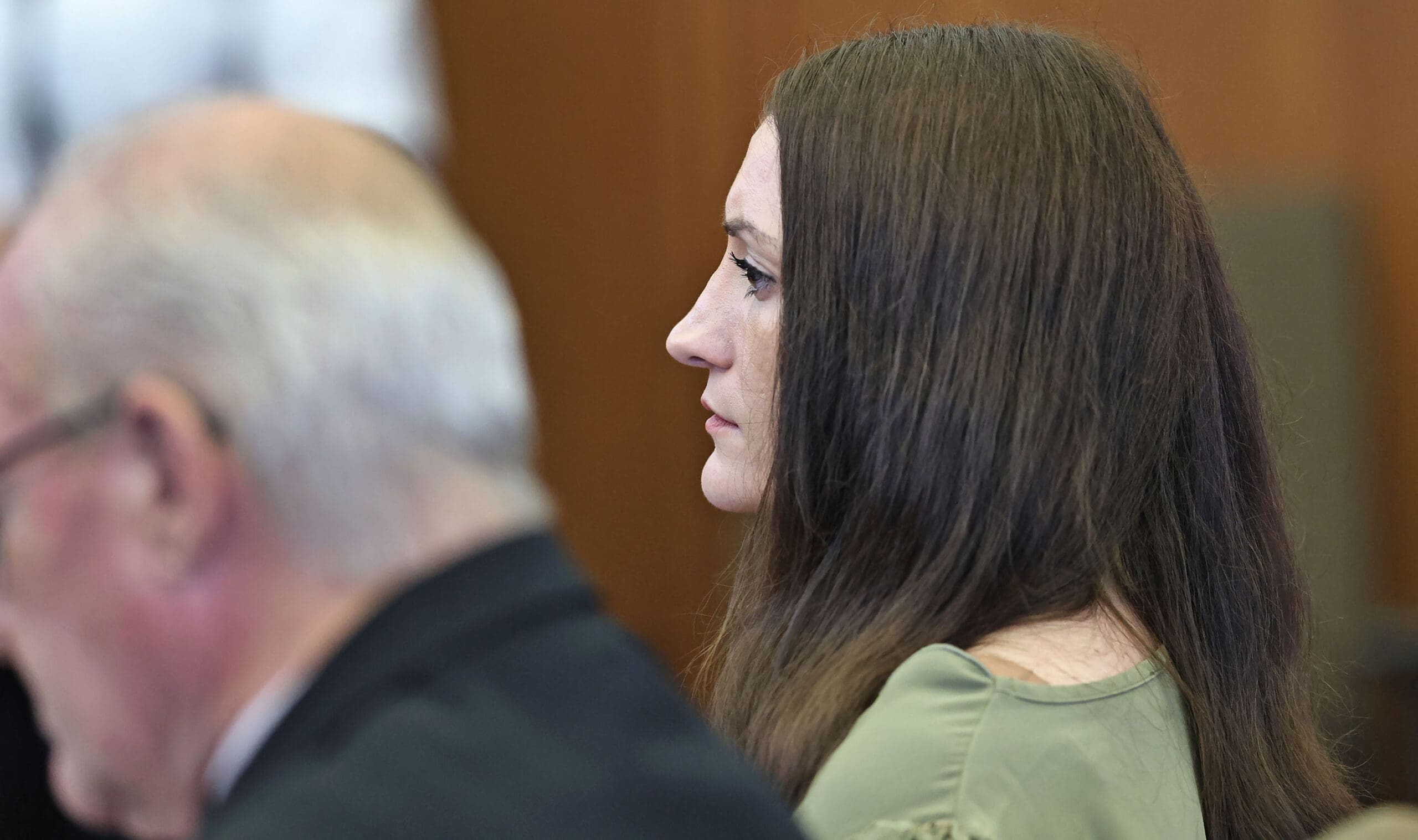
For weeks, the nation’s attention was fixed on a Massachusetts trial court as Lindsay Clancy faced criminal charges over the alleged murder of her three young children. After weeks of evidence and arguments, the jury advised the judge on Friday morning they could not reach a unanimous decision on a verdict. The judge declared a mistrial, meaning the prosecution, if they choose, must re-try Clancy from the beginning. They would need to seat a new jury and present their case all over again. Or they could decide not to re-try the case, and Clancy would walk.
Reports about the jury deliberations indicate 11 of the 12 members of the jury supported the “NGI” verdict, that Clancy was not guilty by reason of lack of criminal responsibility. The Massachusetts version of an “insanity” verdict. A single holdout on the jury wanted a guilty verdict.
I offer this background not as a “true crime” story about the Clancy case and the lawyers and the judge and the jurors, but as commentary on where we are in 2026 in the American justice system. In a word, the state of our system is dismal.
Local juries have a hard time accepting verbal testimony as evidence. They want video evidence or forensic reconstructions or DNA evidence. This has been dubbed the “CSI effect” after the popular courtroom tv drama.
Juries can be biased or manipulated. John Grisham popularized the theme in several novels. The OJ Simpson jury famously returned a ‘not guilty’ verdict after a persuasive case with highly incriminating evidence was presented. Most observers believe race was the leading factor in the jury nullifying the state’s case against Simpson.
A personal favorite came from Rush Limbaugh in his 1988 list of “Undeniable Truths”: “Women should not be allowed on juries where the accused is a stud.” The statement is part provocative jab at the feminist left and part underlying truth. We all have our biases. In the vernacular of 2026, we all have unconscious bias.
What does all this mean for the American justice system…for the right of trial by a jury of one’s peers, that has been a bedrock of the justice system since the nation’s founding? Who among us would want our own liberty at stake, to be decided by a jury of Fran Hong or Kamala Harris voters? What about a jury hearing allegations of domestic violence against a white male, when perhaps half the jury panel are watching The View or MSnow in their spare time? Half of that jury panel may also be supporting Lindsay Clancy, rationalizing her actions or excusing them because of her mental health or her medications?
Our jury system is in trouble. But perhaps any failure of a random group of 12 of our peers is revealing deeper cultural problems. It’s not necessarily the dozens of pink-shirted supporters gathered outside a Massachusetts courtroom to support Clancy that worries me. It’s that those “peers” are legion.
