


On the night of September 12, Leonard “Lenny” Boltz Pearson had about ten seconds before making the emergency landing in Lake Wausau. The Wisconsin pilot who is a retired Air Force major and airline transport pilot was bringing U.S. Rep. Tom Tiffany home from a Lincoln Day dinner in La Crosse County when their 1959 Beechcraft K35 Bonanza lost power on final approach to the Wausau Downtown Airport. Boltz told Tiffany to yank the seatbelt tight, then used those seconds to ensure the landing gear was lifted and prepared for a nighttime landing on the lake. Putting a land airplane onto dark water is one of the least forgiving maneuvers in flying. The fact that both men climbed off the sinking Bonanza and lived is the work of a skilled pilot.
Federal Aviation Administration records show he has held an airline transport pilot certificate since 2008, which is the highest civilian pilot rating. He also holds flight engineer and mechanic certificates, meaning he is licensed not only to fly transport-category aircraft but he understands how to work on them. An airline transport pilot certificate requires more training and testing than a private or commercial license. A mechanic certificate is a separate trade.
The single-engine Beechcraft is registered to him — the fixed-wing, K35 Bonanza is a four-seat, retractable-gear airplane with a distinctive V-tail. It has a fuel-injected Continental engine meaning it is a fast, complex machine by general-aviation standards, not a trainer and not a float plane.
Tiffany’s campaign has said Boltz is one of the volunteer pilots who have flown the congressman across all 72 Wisconsin counties. Tiffany has said he has flown with Boltz many times before and has full confidence in him. Campaign-finance reports show at least a dozen of those flights logged as in-kind contributions.
Politically, Boltz is a familiar name in northern Wisconsin Republican circles. He has been Langlade County GOP chairman (and earlier vice chair) and a consistent donor going back to the Scott Walker years. The Heartland Post has yet to speak with Boltz — it is standard protocol for a pilot who is a party to an FAA and NTSB investigation to not do interviews with the media.
Wausau Downtown Airport manager John Chmiel, who later went out by boat to photograph the wreck for investigators, said “he did every single thing right.”
Flying magazine reported the same from aviation experts: Boltz completed the required steps, including pulling the gear up in the few seconds he had. Tiffany said Boltz remained calm throughout the entire process. “It took some real expertise to be able to land that plane as he did,” Tiffany said. “I just take that to the skill of the pilot.”
Ten seconds, then the crash
The flight had been uneventful until final approach. The power failed and Boltz tried to restart to no avail. He warned Tiffany they were going down. Then about ten seconds later they hit Lake Wausau at what Tiffany estimated as 70 to 80 miles per hour — “a fast-moving car crash,” he said. Tiffany’s head struck the dashboard; he needed 12 stitches above the right eye and Boltz needed four. Thankfully neither had additional injuries and both were released the same night.
The 911 call went out at 8:49 p.m and a Wausau Fire Department airboat had them at about 9:05 p.m. In between, the two men climbed onto the airframe as it settled, stood on a wing and the tail, then swam 100 to 150 feet to a sandbar when the airplane began to go under. Tiffany lost his phone in the lake. Boltz still had his. They waited in water shallow enough to stand until the airboat arrived. Battalion Chief Kraig Kruzan later said it was only the second airplane rescue of his 25-year career, and the first on Lake Wausau.
Weather was not an issue this evening — clear skies, light winds and good visibility. The problem was the time of day. The landing happened more than an hour after sunset, so both the lake and shoreline were pitch black.
Why a water landing is so hard
Ditching a landplane is not the same as landing a seaplane. A Bonanza is made to land on pavement. Water does not work the same way. The usual landing setup can wreck the airplane.
Aviation doctrine for a retractable-gear single-engine airplane is gear up unless the flight manual says otherwise. Gear left down on water acts like a plow. The airplane can trip, cartwheel, or invert. Tiffany said Boltz “was savvy enough and quick enough” to retract the gear. Chmiel agreed and said retracting the gear gave him a better chance of staying upright. That single decision is widely credited with keeping the airplane from flipping.
Other problems to consider in an emergency landing:
Judging height over glassy water. Depth perception collapses on a dark, smooth surface, so a pilot cannot tell how high he is. Over water, pilots are taught to “drag it in” rather than flare from a guessed altitude and stall in.
No power, no go-around. Boltz was already on final approach — there was no second try.
Night. Lights on shore can look like a horizon. The lake itself gives almost no visual texture.
Speed and attitude. The airplane has to arrive nose-high and slow without stalling, then hold that attitude through the first skip. Hit too flat or too fast and the nose can dig.
Sinking. Even a well-executed ditching does not leave a dry cabin. Intact wings and tanks can keep a light airplane floating for minutes, not hours. Exit timing is part of the procedure.
Chmiel noted one helpful factor in this scenario — there were fewer obstacles on Lake Wausau than a highway or a tree line. The rest is pure skill. Unlike a missed approach, ditching cannot be practiced in the actual airplane, so the pilot either has the procedure memorized or does not.
The combination of transport-pilot training, military background, and full understanding of the plane mechanisms is exactly the reason Tom Tiffany and Lenny Boltz are alive today.
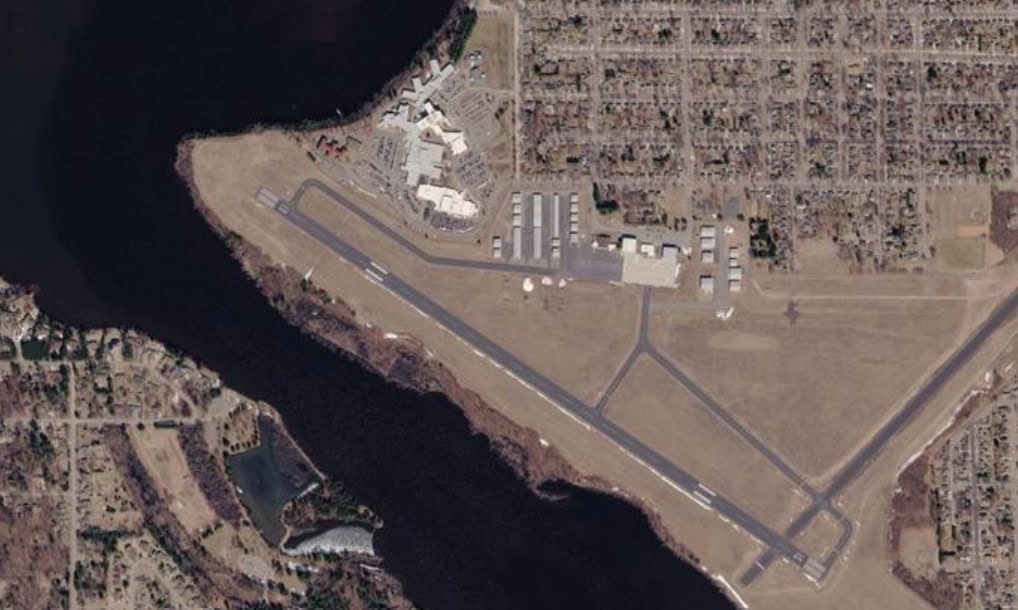
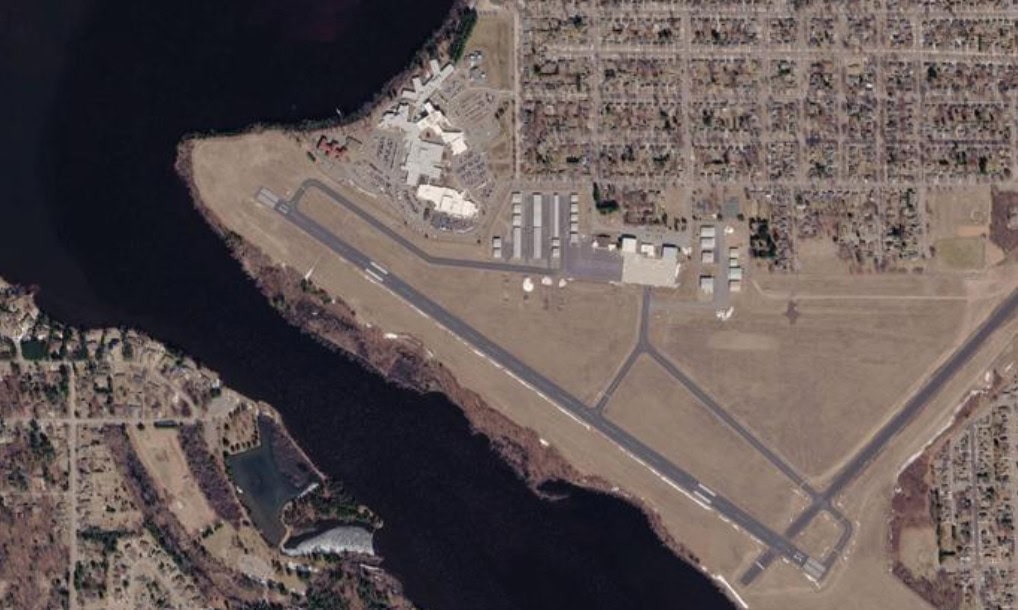
The Wausau Downtown Airport itself sits on a peninsula in the Wisconsin River system. Lake Wausau is immediately off the approach. When the engine quit, the water was the only open surface left.
Logistics of a lake landing
Dispatchers knew the two men planned to swim, then lost contact as the plane began to sink. Rescue crews found them on a sandbar and took both to Aspirus Wausau Hospital. Tiffany’s campaign said CT scans showed no concussion and that he would watch for symptoms. The next day he met with the Wausau Fire Department and held an emotional firehouse press conference. He thanked Boltz and the first responders.
The plane settled with its tail and part of the cabin still above water. A no-wake buoy went in, and boaters were told to stay clear. The wreck had to stay intact so investigators could examine the engine, propeller, fuel system, and controls. That is why it sat in the lake over the weekend instead of being pulled out in the dark. Sheriff’s deputies, the Wisconsin Department of Natural Resources, and State Patrol were on scene the night of the landing.
On Monday, two days after the landing, Jerry’s Towing led the recovery. Terminal manager Mark Bradfish was on scene. Divers wrapped cables and straps around the wings, fuselage, and tail. Crews used inflatable lifting bags and boats to float the Bonanza, then steel cables to pull it toward shore near Everest Park. A crane lifted the white-and-red airframe out of the water.
After it drained, a tow truck hauled it through Wausau with a police escort. A rotator was used to get past obstacles near Sturgeon Eddy. The Marathon County Sheriff’s Office, the DNR, city crews, and Wausau Downtown Airport staff also took part. The plane was taken to the airport. The FAA and NTSB were already investigating. Cases like this commonly take 12 to 24 months.
Tiffany said he will fly again. He also said the gravity of the night caught up with him the next day. The cause of the power loss has not been made public. The investigation will take its time before investigators can provide a thorough review of what specifically happened to the engine. The Heartland Post will continue to follow this story.
