


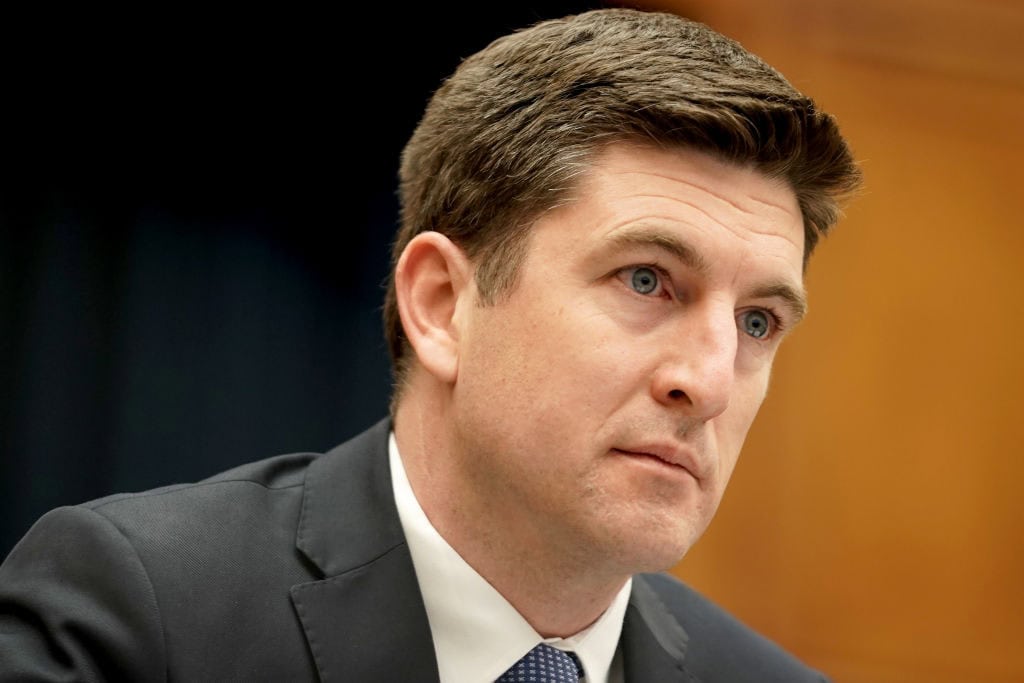
House Republicans on Wednesday released a new joint report accusing ActBlue, the main online fundraising pipeline for Democratic campaigns, of weakening fraud controls even after detecting large-scale fraud, including schemes with foreign sources. Wisconsin Rep. Bryan Steil, chairman of the Committee on House Administration, co-authored the report with Judiciary Chairman Jim Jordan, R-Ohio, and Oversight Chairman James Comer, R-Ky.
Steil opened the ActBlue probe in October 2023 after reports the platform processed contributions without requiring a card verification value. On Wednesday, he posted the committee’s latest findings: passport “verification” only checked the number of characters; fraud analysts were told to “give the donor the benefit of the doubt”; one donation was approved because the donor had a Twitter account “despite ‘all signs’ pointing to Canada”; and internal files showed fraud plus possible whistleblower retaliation.
The report quotes ActBlue’s own staff language. The platform “decided to take ‘a more lenient approach’ to fraud prevention in 2024,” weakening policies at least twice even though internal assessments predicted more fraudulent gifts. Training told the fraud team to “look for reasons to accept contributions” rather than screen for red flags required by federal rules. Meeting notes cited by Steil’s committee in June went further: “Remember that we want to look for reasons to accept contributions… Do not reject contributions for a single suspicious characteristic. Look for the forest and not the trees.” Another memo said, “if an otherwise legitimate donor uses a fake name, we would want to accept their donation.”
ActBlue had already flagged at least 22 significant fraud campaigns in recent years, several from foreign countries. Steil’s June hearing remarks put nine of those campaigns in that category. Federal law bars foreign nationals from donating in U.S. elections. House Judiciary Republicans said Wednesday the new production shows analysts were told to ignore foreign indicators and give donors the benefit of the doubt. “Accepting foreign donations in U.S. elections is ILLEGAL,” the committee wrote.
The report uses examples that landed on Steil’s desk. CEO Regina Wallace-Jones wrote Steil, saying that gifts from people with addresses outside the United States required a passport number. Republicans say the check only confirmed the field had enough characters, not that the number was a valid U.S. passport. Internal notes praised a “great accept” even though “Donor sometimes has an IP in Hong Kong.” A supervisor argued a rejected donation “should have been accepted,” writing, “It is a foreign contribution,” then listing matching name, email, IP, and prior donations, plus an Arkansas state code the system treated as “wonky” for foreign donors. Another donation “set off a lot of” alarms; staff still urged the benefit of the doubt.
