



With an important campaign finance reporting deadline fast approaching, Milwaukee County Executive and Democratic gubernatorial candidate David Crowley appears to be pulling out every stop to keep pace in the fundraising race.
One fundraising email features Crowley’s 9-year-old daughter, Ava, asking supporters to send money to her father’s campaign.
The email states, in part, “My dad said that people like you would step up to help him meet his very important goal so we can win this race.” It goes on to say, “He needs your help more than ever, and he needs it fast.”
The obvious question is: why is a 9-year-old child being used as the messenger for campaign fundraising pressure?
Children should be allowed to be children. They should not be placed front and center in political fundraising appeals tied to campaign deadlines, financial targets, and election anxieties. Whether intended or not, the message attempts to tug at voters’ emotions rather than persuading them on issues, policies, or leadership.
If your campaign is strong enough, why lean on a child to help hit a fundraising quota?
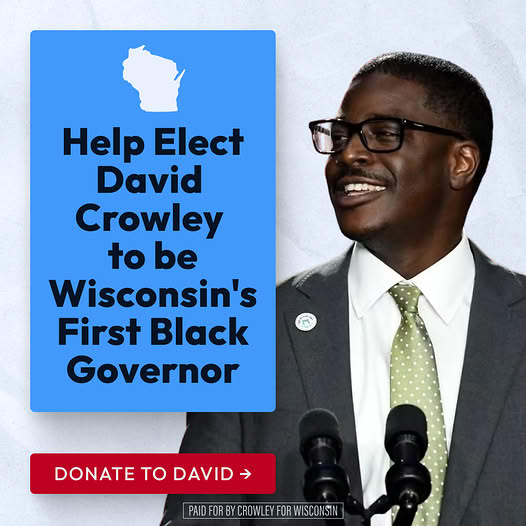
Then comes another fundraising appeal asking supporters to donate so Wisconsin can elect its “first Black governor.”
That message is particularly striking because Crowley has spent much of his gubernatorial campaign emphasizing that he wants to represent all Wisconsinites. He has repeatedly presented himself as a candidate focused on uniting people rather than dividing them into demographic groups.
Yet when fundraising pressure intensifies, identity politics suddenly returns to center stage.
If race was not supposed to be the focus of the campaign, why is it now being highlighted as a fundraising hook?
There is no question that electing Wisconsin’s first Black governor would be historically significant. But voters should ask themselves whether they are being asked to support a candidate because of his vision for the state or because of his race.
These fundraising appeals reveal a campaign that appears increasingly willing to use emotion, symbolism, and personal identity to drive donations as financial reporting deadlines approach. Instead of making the case based solely on accomplishments, ideas, and solutions, the campaign seems to be reaching for whatever message it believes will loosen wallets the fastest.
When campaigns become desperate for cash, voters often get a revealing glimpse of their priorities. These appeals may be one of those moments.
