



When asked recently about her practice of signing onto bills months after the legislative session ended or signed into law, as exclusively reported by The Heartland Post, Rep. Jenna Jacobson’s response was a classic political deflection. She stated there are “no rules” about when you can add your name as a co-sponsor, she said. Her staff was busy with other priorities. And besides, “I wasn’t the only legislator to do that.”
A legislator who claims to represent her district but can’t simply take responsibility for a mistake when caught deserves additional scrutiny.
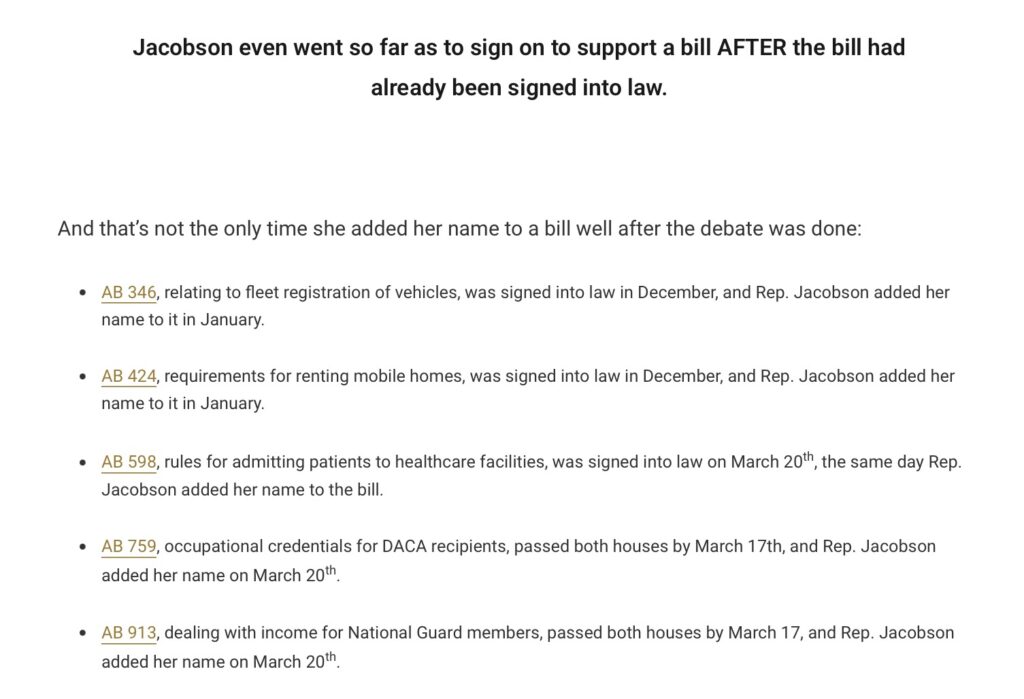
Let’s start with the “no rules” argument. Legally, she’s correct. Wisconsin’s legislative process doesn’t forbid a lawmaker from retroactively claiming credit for bills she played no role in passing, but rules don’t regulate integrity or honesty. What they should reveal, though, is that when a politician rushes to hide behind “it’s technically legal,” she’s already conceded the real argument: this is something she knows looks bad and lacks the integrity we should expect of our elected officials.
If there were legitimate legislative reasons to sign onto bills months after the session ended or after they were already signed into law, Jacobson would have explained them. Instead, she offered another excuse about her staffer being busy. Think about what that admission means. She had someone assigned to manage her legislative portfolio. That person was allegedly busy. So they didn’t bother adding her name to bills she supposedly cared about. And when the legislative session ended and there was no risk of political blowback, no floor votes to cast, no constituent questions to answer, no political cost to bear, suddenly the time appeared.
The question for Jacobson’s constituents is simple: if she’s willing to deceive you about her legislative record during an election year, what can she be trusted with?
This isn’t an oversight. This is a strategy.
Finally, Rep. Jacobson offered the classic “I wasn’t the only legislator to do that” defense which is perhaps the most revealing. Should a legislator who offers this excuse be trusted to always stand up to do the right thing for her constituents?
Jacobson’s three excuses might all be technically true, but they all point to a larger integrity and honesty problem with how she handles pressure.
Her constituents deserve to know that when she waves around her list of legislative accomplishments this fall, most of them are credits she earned retroactively. That the bills on her record include ones she didn’t fight for and certainly didn’t help pass. That she chose to prioritize campaign optics over actual engagement in the legislative process.
This is what it looks like when politicians treat their constituents as customers to be marketed to rather than people to be served. When the record matters more to an elected official than the actual work. When “no rules” becomes a substitute for principle.
The question for Jacobson’s constituents is simple: if she’s willing to deceive you about her legislative record during an election year, what can she be trusted with?
