


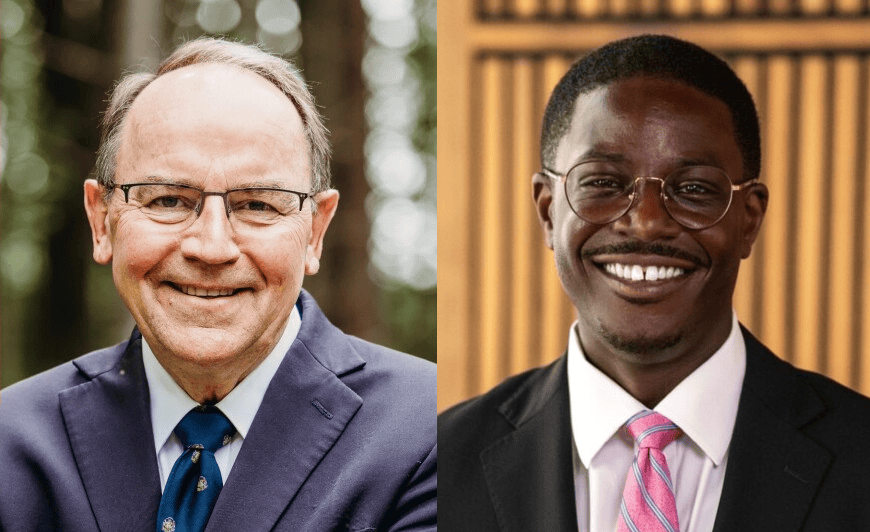
There is no way to spin the just-released Marquette University Law School poll: It’s bad for Republican gubernatorial candidate Tom Tiffany. He is now trailing Democrat David Crowley 51%-44% among likely voters and 47%-44% among all registered voters.
The usual caveats apply, of course—this poll was in the field a week ago (before Crowley’s truly disastrous debate performance), it sampled only 668 likely voters, and Republican voters are notoriously difficult for pollsters to reach—but the bottom line is that trailing by seven points with less than a week until Election Day is not where a candidate wants to be.
Moreover, Marquette seems to have cracked the code of reluctant Republican poll respondents, as it has been largely accurate in each of its final polls before prior statewide elections. Its final 2022 gubernatorial poll showed a tie race between Governor Evers and challenger Tim Michels (48%-48%) a little more than a week before Evers won by a 51.1%-47.8% margin.
In the US Senate race, Senator Ron Johnson led 50%-48% in the final Marquette poll before winning 50.4%-49.4%. In 2022, Marquette actually undersampled Democrats by a percentage point in the Senate race and three in the gubernatorial.
Its final 2024 presidential poll showed Kamala Harris leading President Trump 50%-49% a little more than a week before Trump won Wisconsin by a 49.6%-48.7% margin, and its Senate poll showed Senator Tammy Baldwin leading Republican Eric Hovde 51%-48% before she won by less than a point (49.4%-48.5%).
Bottom line? There wasn’t much of a polling miss, even when Trump was on the ballot two years ago. There certainly could be this year, but relying on that is grasping at the most elusive of straws.
Based on candidate behavior and most other polls (both public and internal) in this race—as well as the tightness of pretty much every midterm and presidential election in Wisconsin—it certainly does seem like the 47%-44% registered voter number is closer to where the Tiffany-Crowley race actually is, but the best public pollster in Wisconsin is showing a clear Crowley lead with just a few days to go.
That’s not good, but it’s also not insurmountable. Republicans have been doing exceptionally well in early voting, so much so that their counties represent a noticeably bigger share of the electorate as of this writing than they did in 2022. However, it is impossible to model an electorate based on early vote returns because Wisconsin does not have its voters register by party.
Observers can surmise who is voting early based on where the ballots are coming from. Waukesha and Washington Counties turning in much bigger percentages than they did four years ago is a highly encouraging sign for two of the most important Republican counties in the state, but it is entirely possible that a big percentage of the votes that have come in are amongst those counties’ Democrats.
Tiffany has run a nearly flawless campaign, but the national environment may prove to be incredibly difficult to overcome. President Trump is very unpopular in Wisconsin (just 37% approval in the latest Marquette poll), and midterms almost always turn into a referendum on the president and, by extension, his party.
Not only that, because the opposition party’s voters are still angry about the results of the last election and how the country has been governed ever since, they are far more motivated to vote in bigger numbers. The president’s voters, meanwhile, are largely content with the way the country has been run and those who aren’t have a tendency to stay home.
This year, those voters are furious about high prices that they blame on the Iran War, which is widely opposed here in Wisconsin (22% in the Marquette poll said it was worth the cost while 76% say it was not). That depresses turnout among Republicans who voted for Trump but are disappointed or enraged by the war and increases turnout among Democrats who have a rallying point for their opposition to him.
Democrats are always going to vote Democrat, but Republicans who are disillusioned by Republicans they voted into office tend to sit out subsequent elections. That spells doom in midterms.
Will it this year? That remains to be seen, and ultimately voters, not pollsters, will decide it.
