


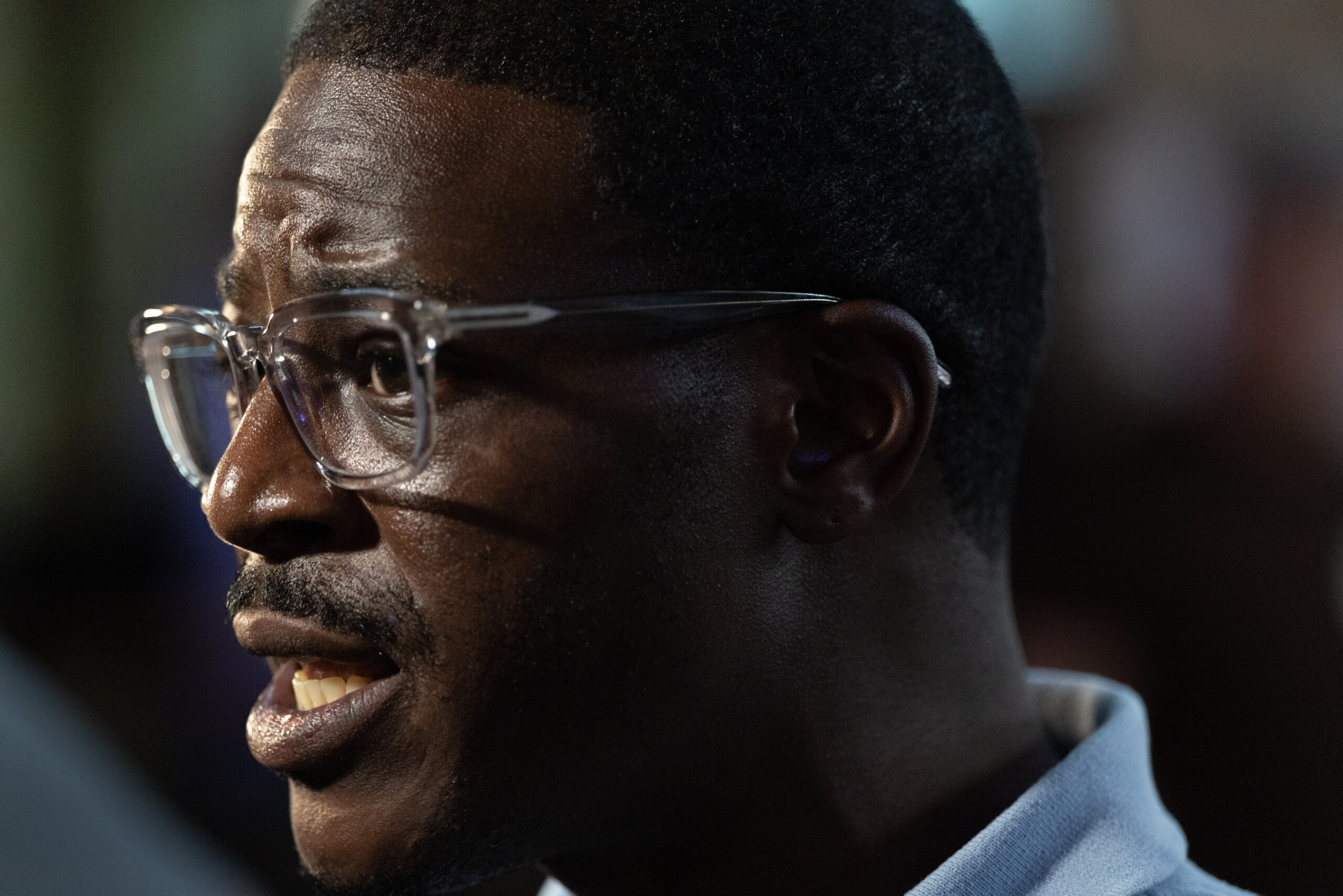
David Crowley wants a promotion. Before Tuesday, Wisconsin voters should take a close look at the job he already has.
Crowley has run Milwaukee County, the state’s largest county government, since May 2020. His campaign presents this experience as evidence he can govern Wisconsin. The record shows higher taxes and diminishing services, and a budget hole that never closes.
The Tax That Wasn’t ‘a Burden’
In 2023, Crowley achieved a key objective in Madison. Act 12, a bipartisan local funding law, permitted Milwaukee County to raise its sales tax from 0.5% to 0.9%. The county board approved the increase in July 2023, and Crowley signed it, resulting in the highest county sales tax in Wisconsin.
The day the board voted, Crowley posted: “Time to celebrate with Chairwoman Marcelia Nicholson and the Milwaukee County board for their hard work and passing the Sales Tax vote.”
In December, WISN’s Matt Smith asked Crowley if the tax increase would be a burden for residents. Crowley replied, “No, I don’t think it will be a burden. We’re talking less than a half percent.”
The new tax revenue was intended to provide financial stability. By 2025, all proceeds were allocated to legacy pension costs. Despite this, the county faced a $50.8 million structural deficit in its 2027 budget, only a year after closing a $46 million gap.
Property taxpayers did not receive a lasting reduction. Crowley claims credit for “the largest property tax cut” in county history, but the levy increased each year from 2020 to 2025 except in 2023, when the county received new sales tax revenue. The 2026 budget raised the levy by 3.5%, and Crowley’s 2027 plan proposes an additional 2.55% increase.
His defenders note the levy grew more slowly than the statewide average. However, slower growth still represents an increase, and it was implemented alongside a new sales tax.
Asked about county taxes at the October 21 debate, Crowley said he was proud of his bipartisan record, including the deal that raised the sales tax.
Paying More, Getting Less
Crowley’s recommended 2026 budget ended county funding for First Step, a 63-bed detox center that treated over 1,800 patients the previous year. The $2.9 million contract was not renewed, and the center’s operator filed a layoff notice with the state.
The bus system took a $9.3 million service cut in 2026. Transit officials proposed a 25% cut for 2027. Crowley’s election-year answer is a one-time $12.1 million withdrawal from the county’s rainy day fund, plus a proposed paid parking pilot along the lakefront to maintain pools and splash pads. The sheriff requested an additional $10 million, including $8 million for overtime, but Crowley’s budget provides only for inflationary increases.
Basic management also suffered. The county’s health insurance contract for 5,168 employees and retirees expired at the end of 2025, but supervisors were not informed until January 29. Crowley subsequently dismissed the benefits director. His Democratic primary opponent, Lt. Gov. Sara Rodriguez, called it a “breakdown in leadership.”
Syringes at the Door, No Detox Bed
While the detox center lost county funding, the harm reduction program continued. Milwaukee County states it partnered with Vivent Health Depot “to deliver free harm reduction products to residential homes.”
The Heartland Post reported that the county’s “safe use kits” include syringes, tourniquets, and cookers. In a county video, Crowley stated, “We do not check legal status for health and human services.” The county delivers supplies directly to recipients but has not provided data on how many individuals enter treatment.
If the government can deliver syringe kits but cannot maintain a detox center, its priorities are out of whack.
‘I’m an Accomplice’
When asked how he would make Wisconsin more immigrant-friendly, Crowley said, “I’m not an ally, I’m an accomplice.” He also says he supports deporting immigrants convicted of crimes, though his policies complicate enforcement.
The Milwaukee County Sheriff’s Office has not honored ICE detainers since 2018. Crowley has stated he does not see “any scenario where we would want to partner with ICE” and does not want that policy. At the debate, he said local law enforcement should not enter detainer agreements and that ICE agents should be banned from wearing masks.
As a legislator in 2018, Crowley worked with Voces de la Frontera and Rep. JoCasta Zamarripa to draft a bill giving driver’s licenses to immigrants here illegally. Zamarripa is now the Democratic nominee for secretary of state and calls those licenses her top priority.
Tiffany would require local, county, and state law enforcement to coordinate with ICE.
No Numbers, No Answers
During the debate, Crowley did not specify how he would change the tax code. When asked if he would add a new bracket for high earners, he stated the state needs “a fair and taxable system that works for all income earners.” When debate moderator Matt Smith requested a specific number or percentage, Crowley did not provide details.
He also did not say whether he would sign an abortion bill with no gestational limit. “I don’t believe a law like that would ever actually reach my desk,” he said. Afterward, he skipped the post-debate press availability.
When asked about tolls, Crowley said, “I think we should be open.” During the debate, Tiffany stated he was firmly opposed to tolls.
Data centers show the pattern best. In the primary, Crowley said Wisconsin could become an AI and data hub “for the entire globe.” Over the summer, he stated he did not “believe Wisconsin should automatically roll back all data center tax incentives.” On October 11 in Eau Claire, he said, “Data centers need to earn their way.” Three days later, as polls showed voters turning against data centers, he said he would “absolutely” sign a repeal of the sales tax break. Tiffany has supported repeal for several months.
Dirk McGirk
Then there’s “Dirt McGirk.” In July, NBC News uncovered a Twitter account registered to Crowley’s email address that ran from 2010 to 2014 and was full of crude posts about women, race, and gay people. One post introduced the account as “DC aka David.” Another read, “I don’t even call the Police Pigs…..i call them Cow…..its a beef thing.” Crowley’s campaign admitted the account was his, along with his post about his paternity history. His explanation was that 10 to 12 other people shared the login and wrote the ugly stuff. Asked about it later, he complained that critics “had to dig up 16 year old” tweets to tear him down. A man who wants to run Wisconsin’s state government can’t keep track of who was posting under his own name.
What a Crowley budget Would Bring to Madison
Crowley has told voters what he wants. “As governor, I will repeal Act 10 in full,” he said in July. In Eau Claire, he said he would seek to repeal right-to-work and open BadgerCare as a buy-in option.
He also wants Tony Evers’ veto pen. Crowley, endorsed by Evers, said he would “absolutely not” . That is the power Evers used for his 400-year school revenue increase.
On school choice, Crowley states the voucher program should not expand. He justifies maintaining the program: “As of this moment, we are not in a position to push all of these children towards any of our public schools.”
And the man who says billionaires are buying this race for Tiffany is running on their money too. The state Democratic Party received $5.5 million from California billionaire Reid Hoffman in one reporting period and sent $9.9 million to Crowley over four weeks. Tiffany also has major donors, led by Diane Hendricks from Beloit. However, Tiffany is not running against billionaires.
An unnamed senior Democratic political advisor has signed an affidavit alleging that Crowley’s exit from the primary came with a price. The Lakeland Times says it reviewed and verified the affidavit. The advisor told the paper that Crowley’s campaign “made it clear that David [Crowley] would not endorse the lieutenant governor unless $250,000 was promised for his next run for county exec or for future political activities, and that his wife, Ericka Crowley, would have a paid position within a Rodriguez administration.” The advisor also alleges that Rodriguez “directed staff to enter into negotiations” during roughly a month of talks in June. The Daily Wire reported a similar account from an unnamed Democratic operative on October 23. Crowley dropped out July 8 and endorsed Rodriguez the next day, saying, “Nobody called me or anything like that to ask me to step out of the race.” His campaign denies the allegation: “These claims are not true, and this never happened,” spokesperson Philip Shulman said. State filings through September 23 show no transfer from Rodriguez’s campaign to Crowley’s.
The Tiffany Alternative
Tom Tiffany grew up on a dairy farm, spent decades working as a dam tender on the Willow Flowage, and served in the state Assembly and Senate before winning his congressional seat in 2020.
His plan is simple: cut income taxes by 10% for families earning less than $150,000, end state taxes on tips and overtime, return the roughly $3 billion surplus to taxpayers instead of spending it, and reverse the 400-year property tax increase.
Democrats think they caught him on tape. Tiffany was recorded telling a voter about eliminating the income tax: “I will not be able to do it in the first budget, but, after that, we sure hope to be able to get it done.” But a candidate who hopes to take less of your paycheck someday is a strange scandal. Tiffany has pledged not to raise taxes.
Many groups that help keep Wisconsin safe have chosen a side. The Wisconsin Fraternal Order of Police, which represents over 3,700 officers, has endorsed Tiffany. The Milwaukee Deputy Sheriffs’ Association, representing deputies in Crowley’s own county, also supports him. The Wisconsin Farm Bureau’s Volunteers for Agriculture back him as well.
The Numbers That Matter
The final Marquette Law School Poll, released Wednesday, has Crowley at 51% and Tiffany at 44% among likely voters. Among all registered voters, it is 47% to 44%. Both leads are within the margin of error, and Marquette says the race tightens if turnout grows.
More voters view Crowley unfavorably than favorably, 44% to 37%. Tiffany is also underwater, so this race comes down to issues. Cost of living is the top issue by far, at 48%. Voters pick Tiffany over Crowley on reducing taxes, 42% to 17%. Tiffany’s tax cut has 83% support, including 80% of Democrats. A majority, 52%, say Evers’ 400-year veto means tax increases every year for centuries.
Milwaukee County taxpayers already know what a Crowley budget means: they are asked to pay more each year and get less in return. On November 3, the rest of Wisconsin will decide if they want the same deal.
