


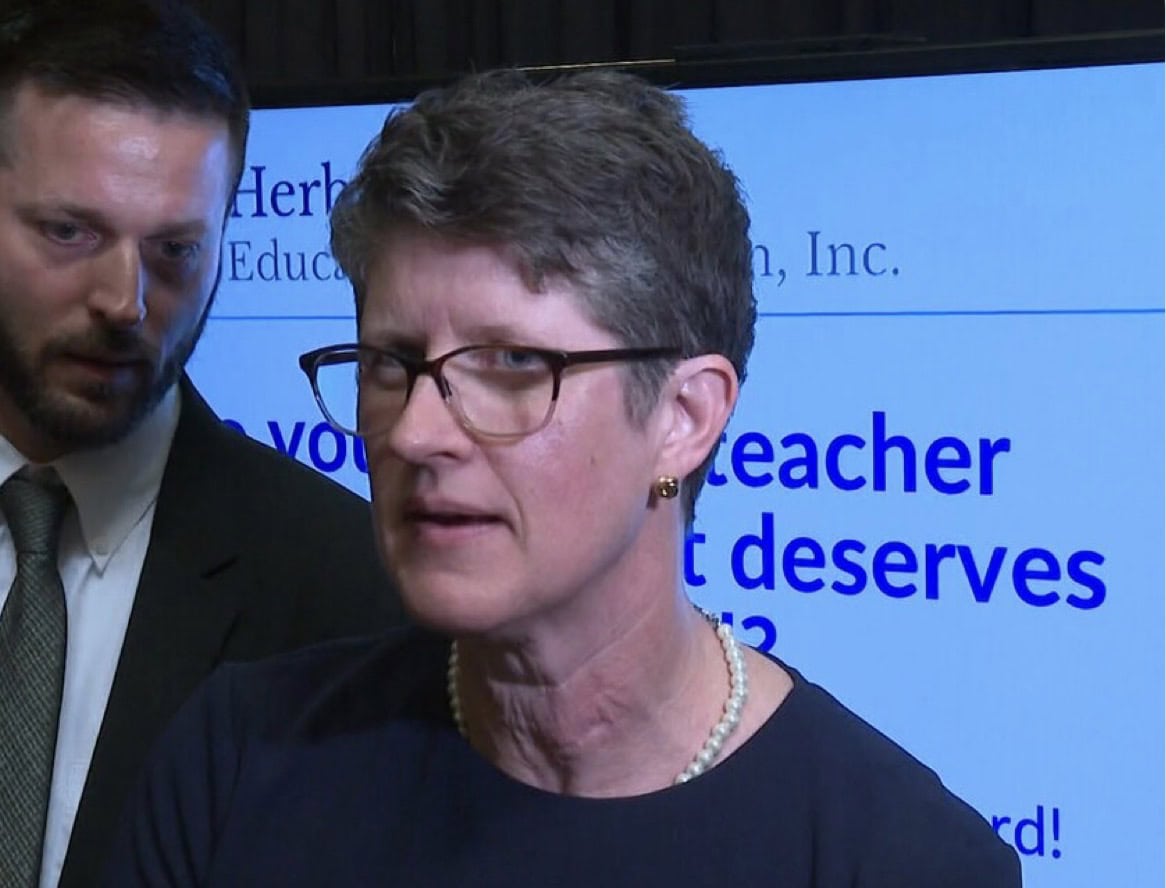
A nonpartisan Legislative Audit Bureau review of how the Wisconsin Department of Public Instruction handles state tests and school report cards under State Superintendent Jill Underly found the agency lacked written rules for changing performance categories and cut scores, held key meetings without public notice, omitted items required by state law from report cards, and applied a score floor ensuring no school or district’s achievement score dropped from the prior year.
The audit, Report 26-18, was released the same week DPI issued 2025-26 report cards showing 95 percent of public districts and 85 percent of scored public schools met, exceeded, or significantly exceeded expectations. DPI’s Forward Exam results show roughly half of students are proficient or above in English language arts and math.
In 2024, DPI renamed categories. “Proficient” and “Basic,” previously defined by college content-readiness, became “Meeting,” “Approaching,” and “Developing.” The stated goal of the review, in DPI’s words, was to “ensure they reflect an asset-based, growth mindset.” Educators recommended new cut scores. DPI modified them, raising one-third and lowering one-third of the recommended scores. The 2024 Forward workshop cost about $372,500 to $375,000 and involved 32 hand-picked superintendents at a Wisconsin Dells resort, according to the audit and legislative statements.
The audit found DPI “did not have written policies governing changes to student performance level categories or assessment cut scores.” It “did not solicit feedback broadly from educators or members of the public” and “was unable to provide documentation of the feedback it received or how it used the feedback.” The 2024 cut-score meetings were not publicly noticed or conducted as open meetings. DPI cited confidential test questions. The audit stated there is “no provision in state statutes that nullifies open meetings law based on the content discussed.” A related lawsuit is pending.
After the test changes, DPI floored each school’s 2023-24 achievement score at its prior-year score. The result, per the audit: “no school or school district’s student achievement score for school year 2023-2024 decreased from the previous year, regardless of performance.” DPI expected to substitute the prior year’s score for 63.8 percent of schools in English and 44.1 percent in math. Even under the new cut scores, dozens of schools were projected to drop. DPI said it did not assess whether those reflected real declines.
The audit concluded DPI “did not comply with statutes” by leaving required items off report cards. Gap closure, required by law, was replaced in 2021 with “target group outcomes,” which measured a specific group of students rather than gap closure. Also missing were community service hours and the number of AP courses offered and AP credits earned. DPI “did not produce school performance reports as required by statutes,” omitting early literacy results added by Act 20 and each district’s method of reading instruction and textbook series.
From July 2023 through December 2025, DPI paid three vendors $32.5 million: Data Recognition Corp. $19.1 million, ACT $12.6 million, and Education Analytics $0.8 million.
In a statement, Underly said the audit “offers nothing new,” makes “factually incorrect assertions,” “goes beyond the scope of its review,” and “reads like a continuation of last legislative session’s partisan political theater.” She said the audit’s cut-score points “are all incorrect,” that DPI runs report cards “in strict compliance” with the law, and that she will ask lawmakers to “remove this defunct statute.” The auditors noted lawmakers last changed the statute in 2023 via Act 20. Underly has also said the report cards “don’t really tell us much” and that critics should “take it up with the legislature.”
Sen. Eric Wimberger, who co-chairs the Joint Legislative Audit Committee that authorized the review, said DPI “circumvented statutes, lowered cut scores so that otherwise failing schools appear to be on track, refused to maintain records or make reports of their actions, and cooked the books monitoring achievement gaps.” He described the report cards as “an untrustworthy sham.” Rep. Robert Wittke said accountability is not optional and that uncomfortable findings should not be dismissed as politics.
The audit makes eight recommendations. DPI is due to report back to the Legislature’s audit committee by March 30, 2027. It also suggests lawmakers consider modifying statutes to specify the process DPI must use to set cut scores.
