


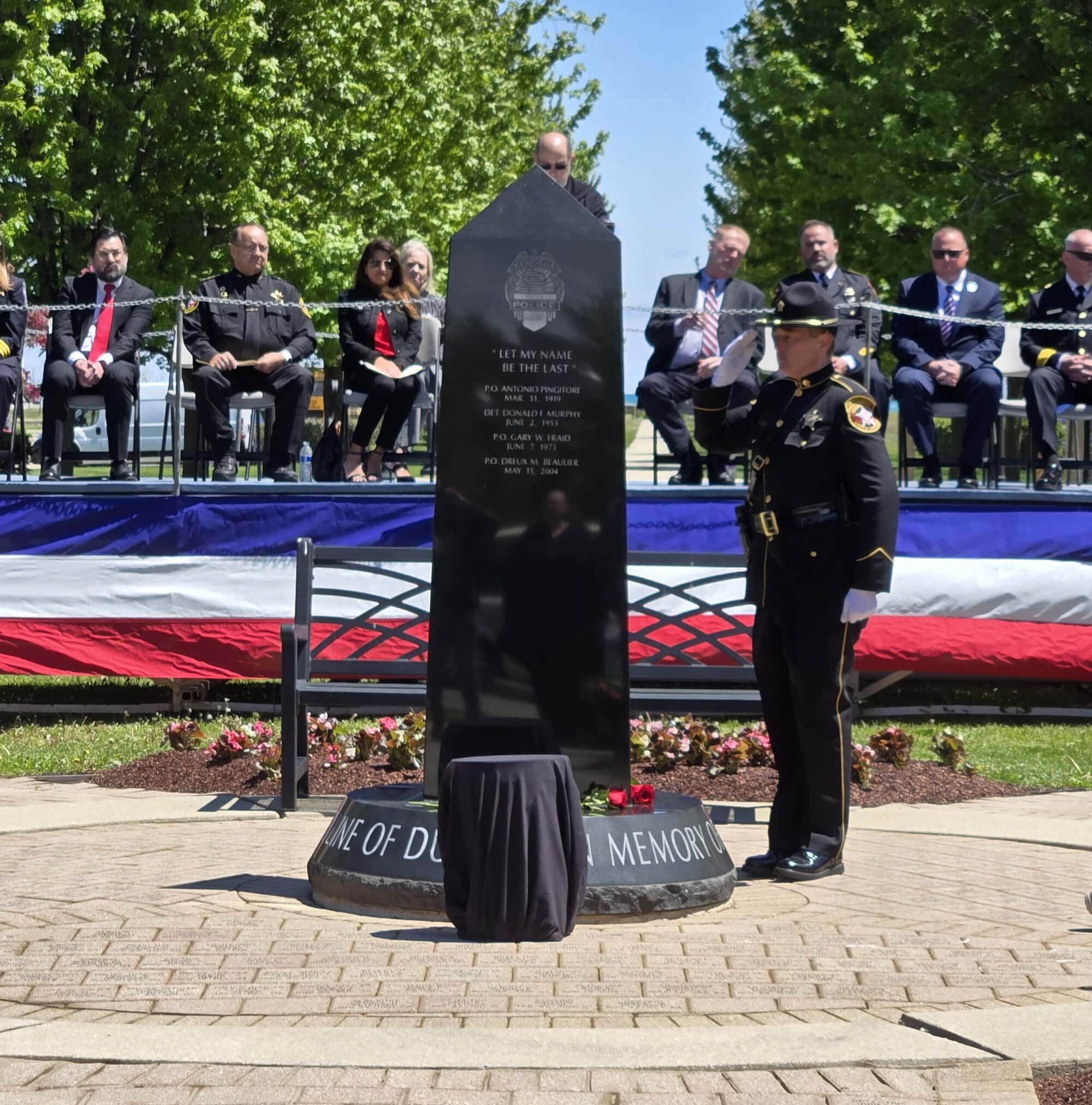
National Police Week, observed each May since 1962, honors the sacrifices of law enforcement officers who have died in the line of duty. Established by a joint resolution of Congress and proclaimed by President John F. Kennedy, the week includes Peace Officers Memorial Day on May 15 and serves as a time to recognize the bravery, service, and ultimate sacrifice of those who protect our communities.
On Wednesday, May 13, 2026, the Kenosha Police Department, Kenosha County Sheriff’s Office, and Pleasant Prairie Police Department gathered in downtown Kenosha at the Kenosha Police Memorial to remember officers who have fallen. The memorial stands as a solemn tribute, built specifically to ensure their sacrifices will never be forgotten.
This year’s observances also included remembrance of Milwaukee Police Officer Kendall Corder, who was ambushed and killed in the line of duty on June 29, 2025. Officer Corder, 32, and his partner responded to a domestic violence call that escalated into shots fired. They were met with rifle fire from a hidden suspect in an alley. Corder succumbed to multiple gunshot wounds three days later. His name was among those honored in Kenosha, and at the Greater Milwaukee Law Enforcement Memorial Ceremony on May 6, 2026, and he will be remembered nationally during Police Week.
Nationally, data from the Officer Down Memorial Page (ODMP) and the National Law Enforcement Officers Memorial Fund (NLEOMF) show that approximately 850 to 950 law enforcement officers have died in the line of duty from traumatic causes since 2020 alone. These fatalities include officers killed by gunfire, vehicle crashes, and other duty-related incidents during a period marked by heightened risks and increased violence in many communities.
In Wisconsin, law enforcement agencies have also experienced a rise in officer fatalities in recent years, particularly following the unrest and crime increases that emerged in the aftermath of 2020. Several names have been added to the Wisconsin Law Enforcement Memorial, which now honors nearly 295 fallen officers statewide. The memorial continues to serve as a lasting tribute to officers who made the ultimate sacrifice in the line of duty.
The event in Kenosha also highlighted the critical need for mental health awareness within police agencies. Law enforcement officers face unique and unrelenting pressures that can take a profound toll. Police officers experience roughly 54% higher rates of suicide compared to non-police professions. A study reported that, as of 2025, 60% of officers believe peers would not disclose mental health struggles, and 75% believe others would avoid reporting issues to supervisors. These statistics reflect the urgent need for improved mental health resources and a cultural shift in policing that prioritizes wellness.
Kenosha City Administrator John Morrissey addressed the human cost of the job:
“Police officers and deputies are expected to move from crisis to crisis without pause – in a single shift they may comfort a child experiencing abuse, respond to a fatal overdose, investigate domestic violence, notify a family of a death, then immediately answer another call as if nothing happened moments before. They absorb trauma that most people thankfully will never experience in a lifetime, and yet, despite those stresses, they are expected to remain calm, professional, compassionate, and decisive in every moment. That burden doesn’t simply disappear at the end of a shift.”
He continued:
“For too long, police officers were expected to carry that weight in silence, but we have learned that ignoring stress and trauma does not make it disappear, it only deepens that damage. The culture of policing is changing, and it must continue to change. Strength is no longer measured by silence. True strength is having the courage to seek help before the tragedy occurs. That is why our officer wellness must remain one of our highest priorities.”
“One of the most difficult truths facing law enforcement today is the reality of officer suicide. We cannot continue to ask our officers to witness humanity at its worst without ensuring they have the support needed to process what they experienced.”
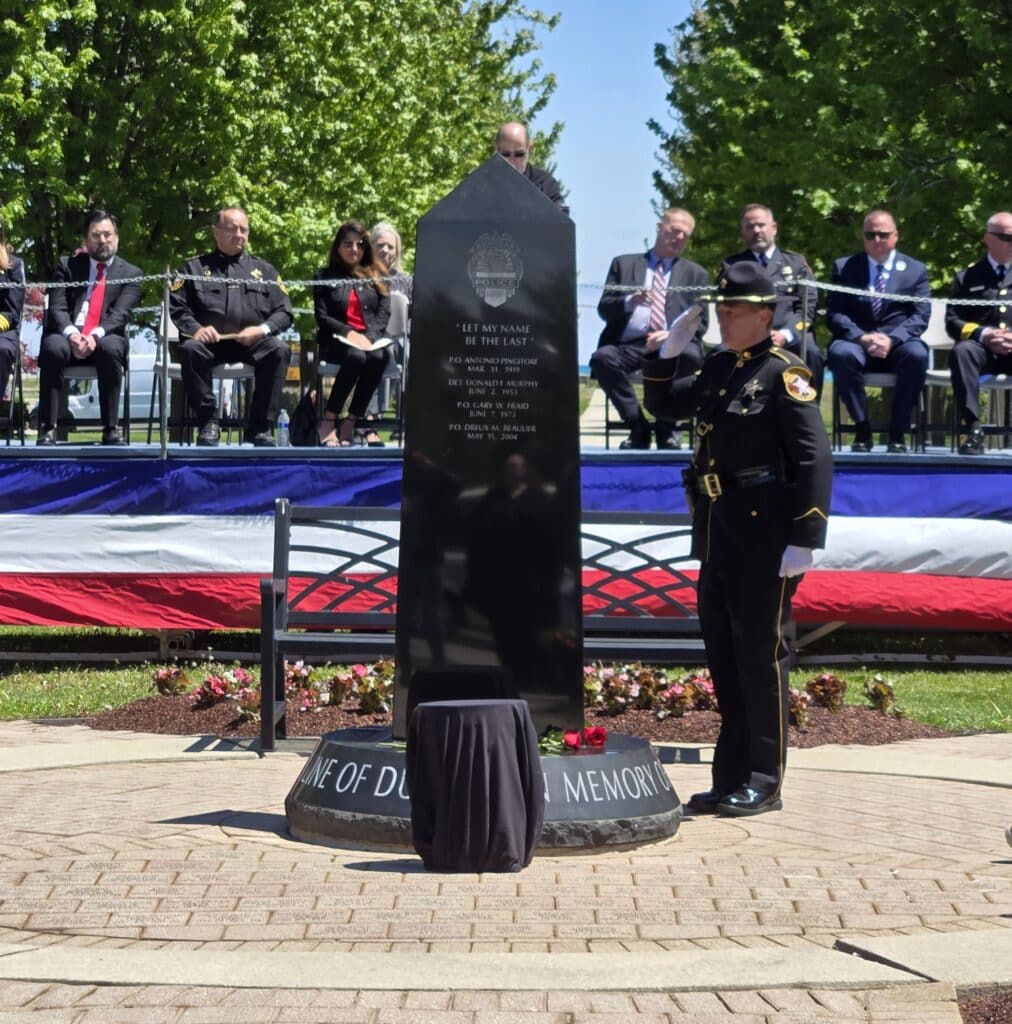
Kenosha Police Chief Patrick Patton humanized the officers behind the badge:
“To many people, law enforcement are superheroes. We seem to be larger than life, we seem unflappable in the face of danger. But perception is not always the same as reality. We are not superheroes; we are not perfect. We experience the same fear that any other person does, because behind each one of these badges is a human being – someone with hopes, dreams, families, and stories.”
“There’s a tough exterior we often associate with police work, but the job brings forward undeniable vulnerability and humanity. Each day we put on these uniforms not because we seek glory or recognition but because we have passion in a career that allows us to make a difference.”
Kenosha County Sheriff David Zoerner echoed the call to service and remembrance:
“Police officers are individuals who answer the calling greater than themselves and stood between danger for you and for strangers in the communities they swore to protect. These officers do not seek recognition, they simply show up day after day, night after night, willing to serve others.”
“As law enforcement officers, we understand the weight of our profession. We understand the long nights, the missed holidays, the very difficult call of service, and the responsibility that comes with wearing that badge. Behind every fallen officer is a family that sacrificed right alongside them. Your loved ones will never be forgotten. Their service matters; their legacy lives on. We will honor you; we will carry your memory forward with honor. God Bless the families of the fallen.”
“I ask our community to continue to stand beside us, to support us, and support the officers that continue to do this work every single day.”
The gathering in Kenosha served as a powerful reminder to “pull together as a community” and build stronger relationships between law enforcement and the community. As the nation observes Police Week, events like this one highlight both the profound sacrifices made by officers and the growing recognition that supporting their mental health is essential to sustaining the profession and safeguarding public trust.
