


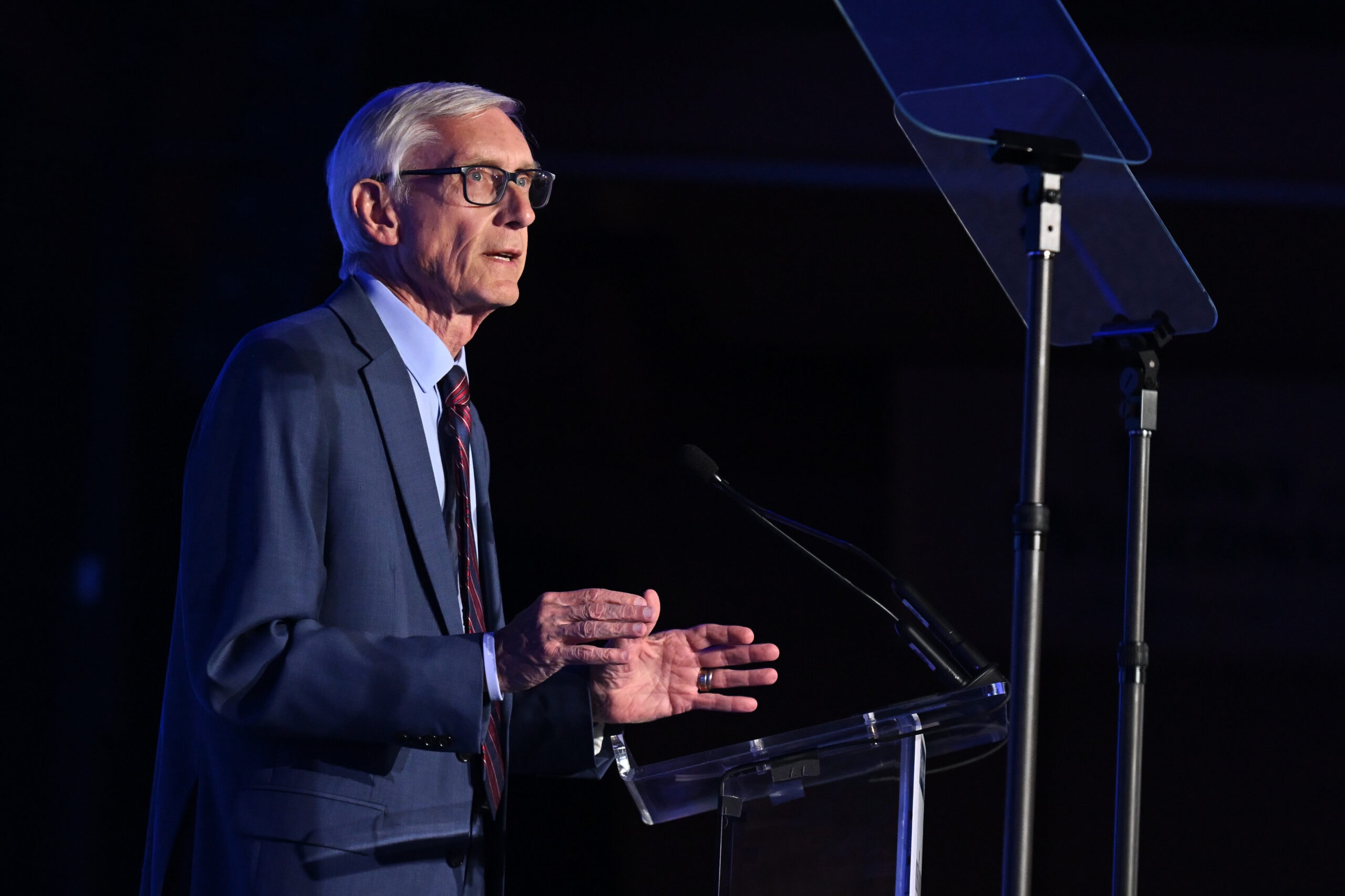
Governor Tony Evers on Friday ripped into Senate Democrats for unanimously voting against the budget surplus agreement he reached with Republican legislative leaders, sinking the bill in a dramatic vote Wednesday night.
In an interview with Matt Smith of “Upfront” Friday afternoon, Evers blamed those Democrats for “impacting children right now” with their vote to kill the agreement, which he believes will hurt their electoral chances this November.
“As the Democratic governor, how could you not get any Democrats in the Senate to vote yes with you?” Smith asked.
“Because they believe that somehow putting money back into people’s pockets that are struggling financially across the state, apparently they don’t believe that that’s an issue,” Evers answered. “They’re gonna say, ‘Well, we’re going to fix it next time when all these wonderful things happen after Evers is gone and we’ll get a new governor and we’ll have Democrats all over the place.’ That’s fine, that’s a wish list and who knows whether that’s gonna happen.”
Evers then tore into the Senators for their refusal to help children in the state right now.
“They’re impacting kids right now,” he said. “They’re impacting children right now.”
When asked whether this would negatively impact Democrats in November, Evers indicated that it would.
“I think so,” he told Smith. “I don’t know how you can say to a superintendent or school board member–I heard it yesterday, I heard it this morning, I heard it today–how can you say [to them] ‘I didn’t want you to have that money?’ What’s the answer? I just think they put themselves in an untenable position. They’re going to have to work real hard to get those votes.”
82% of all Democrats in the Legislature voted against the agreement–all 15 Democrat Senators and all but 10 Assembly members–while 96% of Republicans voted for it.
The Democratic leaders of both houses of the Legislature came out strongly against the deal almost as soon as it was announced, with Senate Minority Leader Diane Hesselbein even going so far as to say “As far as I’m concerned, there is no deal.”
That sent a strong signal to Democrats to oppose the measure, as did the near-universal opposition to the deal from the Democratic gubernatorial candidates.
