



For years, Wisconsin Democrats have campaigned as a coalition united against Republicans. But in Milwaukee, where Democrats dominate local politics and general elections are often little more than formalities, the real battles are increasingly happening within the party itself.
This election cycle, four Democratic state representatives from Milwaukee face primary challenges in districts that are virtually guaranteed to remain in Democratic hands regardless of who wins. The contests are not about whether Democrats will hold these seats, but rather which kinds of Democrats will hold them and where their allegiances will lie.
Taken together, the races suggest an ongoing struggle between establishment Democrats seeking party discipline and elected officials who have, for various reasons, broken ranks with leadership, activist groups, or influential factions within the party.
Sylvia Ortiz-Velez – 8th Assembly District
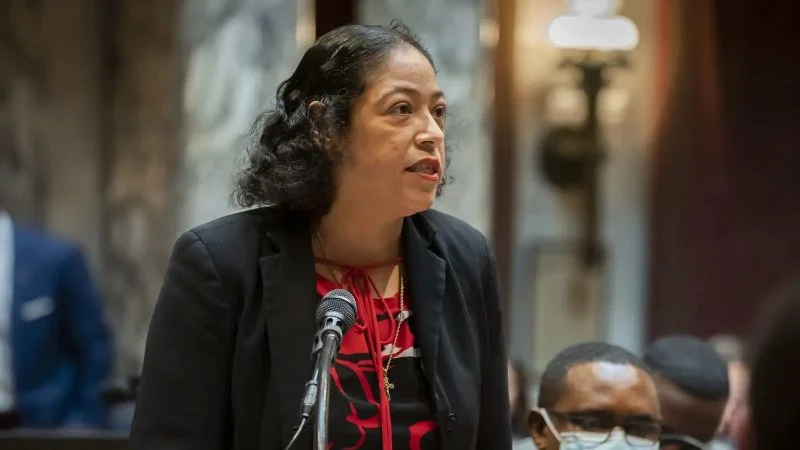
State Rep. Sylvia Ortiz-Velez, who represents Milwaukee’s South Side in the 8th Assembly District, is facing a challenge from Ismael Luna, a community advocate and nonprofit professional. Ortiz-Velez has developed a reputation as something of a maverick within the Democratic caucus, bucking party leadership and joining Republicans on several high-profile votes.
The roots of Ortiz-Velez’s rift with Democratic leadership can be traced back to Wisconsin’s redistricting fight. While Democratic leaders pursued their preferred strategy, Ortiz-Velez publicly expressed support for a Republican-backed Iowa-style redistricting system. The move reportedly enraged Democratic leadership and sparked a confrontation with Assembly Minority Leader Greta Neubauer, which resulted in Ortiz-Velez being sent home from the Capitol and not being able to vote on final passage.
Ortiz-Velez’s deteriorating relationship with Democratic leadership eventually spilled into a very public feud with fellow Milwaukee Democrat Priscilla Prado. The dispute centered on competing Hispanic Heritage Month resolutions and accusations that Ortiz-Velez had been excluded from discussions involving legislation affecting Milwaukee’s Latino community. What began as an internal caucus disagreement quickly escalated into public accusations, investigations, and open hostility between Democratic lawmakers, ultimately culminating in Ortiz-Velez’s decision to leave the Assembly Democratic Caucus in 2025.
Shortly afterward, Ortiz-Velez had her keycard access to the Wisconsin State Capitol revoked over allegations that she made threatening comments during a private conversation. Ortiz-Velez denied making any threats and suggested the real reason for the action was her planned testimony against Milwaukee County Executive and gubernatorial candidate David Crowley regarding his use of emergency powers during the COVID-19 pandemic.
The controversy escalated further when prosecutors charged Ortiz-Velez with disorderly conduct over allegations that she threatened to reveal “negative things” about Prado in response to her handling of the Hispanic Heritage Month resolution. Ortiz-Velez later entered a no-contest plea to the charge, an issue that is expected to become a focal point of her Democratic primary campaign against Luna.
Supporters of Ortiz-Velez argue that the primary challenge is the latest chapter in a years-long effort by Democratic insiders to punish a lawmaker who repeatedly defied party leadership. Ortiz-Velez, meanwhile, maintains that voters in the 8th Assembly District want an independent representative who is willing to challenge party bosses when necessary.
Priscilla Prado – 9th Assembly District
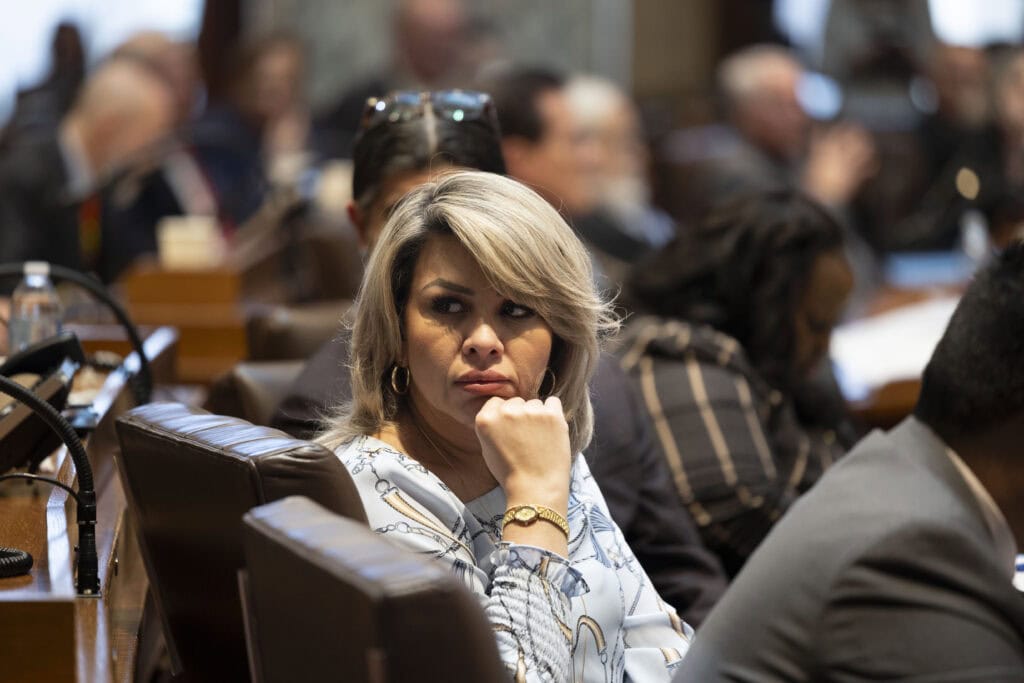
Freshman State Rep. Priscilla Prado is already facing a primary challenge after just one term in office.
Prado, who represents the 9th Assembly District on Milwaukee’s South Side, is being challenged by Milwaukee Public Schools Board Member Mimi Reza. The race pits two Democratic officeholders against one another in a heavily Democratic district.
Reza’s entry into the race follows the aforementioned highly publicized feud between Ortiz-Velez and Prado. Ortiz-Velez publicly praised Reza’s entry into the race, calling her a “wonderful person.” Reza was first elected to the Milwaukee Public School Board in April of 2025, representing a district on Milwaukee’s south side. Reza was the lone member of the Milwaukee Public School Board to vote against their recent $1.6 billion budget.
The challenge serves as another example of the growing political infighting within Milwaukee’s Democratic establishment, where disagreements that once played out behind closed doors are increasingly being settled through primary elections.
Russell Goodwin – 12th Assembly District
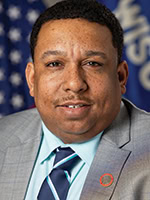
State Rep. Russell Goodwin, another freshman legislator, faces perhaps the clearest ideological challenge of the four races.
Goodwin, a reverend who represents the 12th Assembly District covering portions of Milwaukee, Brown Deer, and Wauwatosa, is being challenged by Jordan Roman, a progressive activist who has already secured the endorsement of Citizen Action of Wisconsin, one of the state’s most influential left-wing political organizations.
Goodwin became a target of progressive activists after becoming the only Democratic lawmaker to break party lines and join Republicans in voting for legislation that would bar biological males from competing in girls’ sports. The vote drew sharp criticism from Democratic leadership, which subsequently requested that Goodwin take a leave of absence for the remainder of the floor period.
As a result, Goodwin did not return to the floor for votes on additional legislation related to transgender athletes, including a proposal barring biological males from competing in women’s collegiate sports and a bill prohibiting chemical gender transition procedures for minors.
Goodwin’s break with Democratic leadership highlighted growing divisions within the party on cultural and social issues. His subsequent primary challenge from a progressive-backed opponent suggests that, in Milwaukee’s safely Democratic districts, lawmakers who depart from party orthodoxy may find themselves facing political consequences from within their own ranks.
Ryan Clancy – 19th Assembly District
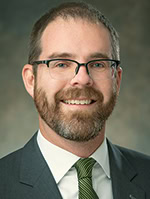
Among the four incumbents, State Rep. Ryan Clancy is perhaps the most recognizable—and controversial.
The self-described Democratic Socialist represents Milwaukee’s 19th Assembly District, which includes the East Side, Third Ward, and Bay View. He has become one of the Legislature’s most outspoken critics of law enforcement and Israel.
Clancy is being challenged by Bridget Maniaci, a small business owner and former Milwaukee alderman.
This is not the first time Democrats have attempted to remove Clancy. In 2024, he faced a primary challenger backed by prominent Democratic figures including Milwaukee Mayor Cavalier Johnson, Milwaukee County Executive David Crowley, and Wisconsin Elections Commissioner Ann Jacobs. Much of that opposition stemmed from Clancy’s outspoken support for Palestine.
Despite the establishment-backed effort, Clancy prevailed with 54.8 percent of the vote.
Unlike some of the other incumbents facing primary challenges, Clancy’s vulnerability is not rooted in frequent disputes with Democratic leadership. Rather, many establishment Democrats view him as a political liability whose far-left positions can distract from the party’s broader message and provide Republicans with easy attack material. Throughout his time in office, Clancy has championed a number of controversial proposals, including legislation that would eliminate life sentences for convicted murderers and cap prison terms for Class A felonies at 25 years.
For Democratic leaders eyeing a potential Assembly majority in the coming years, Clancy represents a different kind of challenge. With margins expected to remain razor-thin, party leaders cannot afford a caucus that is fractured from either direction. Just as they seek to discourage defections from the center, many establishment Democrats appear equally concerned about lawmakers on the socialist left pushing proposals that could complicate the party’s efforts to maintain message discipline and appeal to swing voters statewide.
The Bigger Picture
Collectively, these four races reveal a Democratic caucus increasingly divided by ideological disagreements, personal feuds, and disputes over party discipline. In Milwaukee’s safe Democratic districts, the most consequential political battles are no longer between Democrats and Republicans, but between competing factions of the Democratic Party itself.
With Democrats hoping to compete for an Assembly majority, the message is clear: before they can defeat Republicans, they first need to bring their own caucus to heel. The primaries are set for August 11th.
