


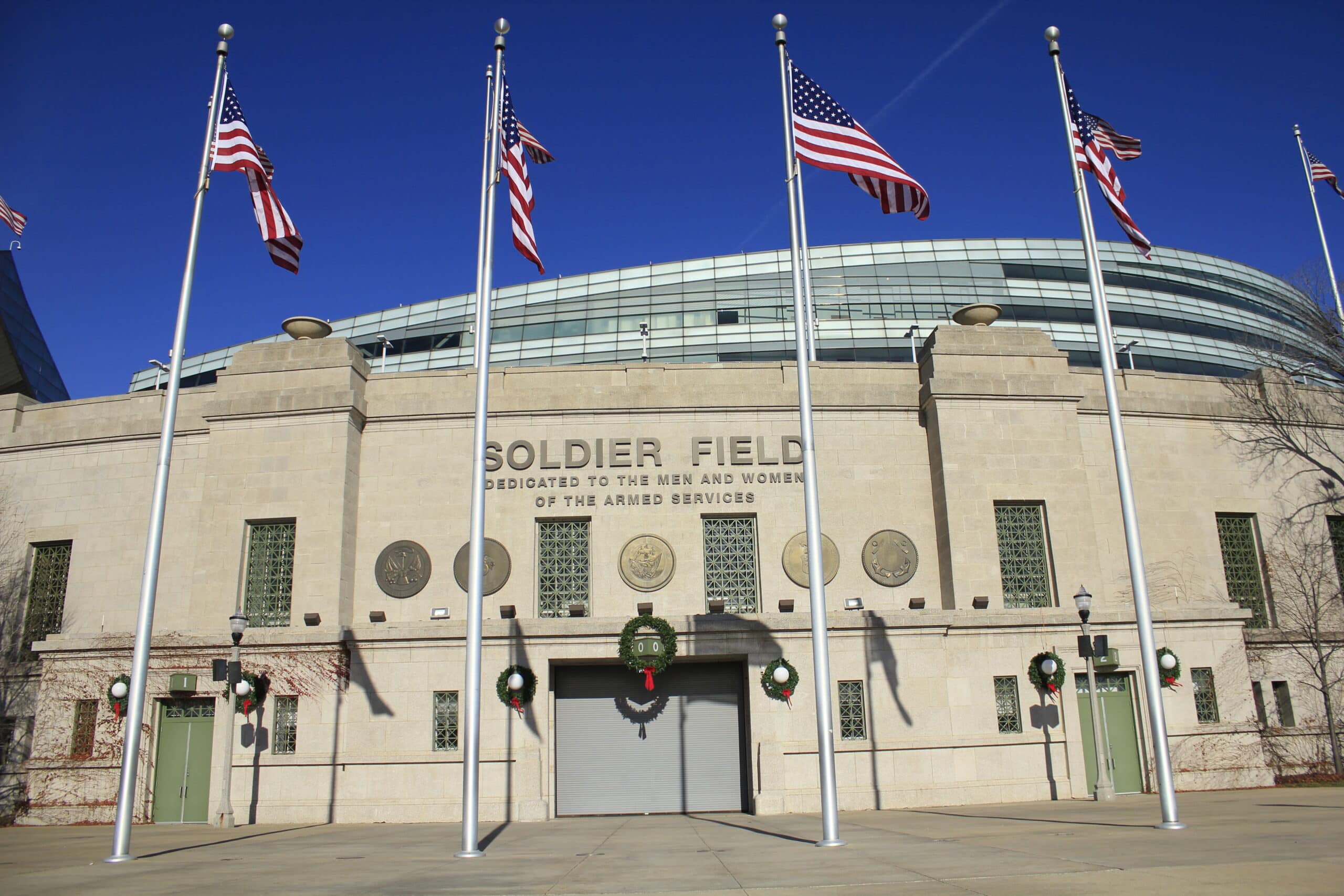
The Chicago Bears have been a part of the city’s identity since 1921 and has remained one of the state’s most iconic and recognizable institutions. On Thursday, the McCaskey family and Bears leadership voted to advance a new world-class stadium project in Hammond, Indiana, marking the first time the board has endorsed any specific stadium site and setting the stage for the franchise to play home games outside Illinois for the first time in over a century. Perhaps this is a bluff, but maybe not?
Illinois is a failed state many times over without any signs of recovery in the years ahead. Too many of its so-called leaders have dismissed legitimate concerns of residents, employers, and investors alike, particularly since the lockdowns and riots of 2020. As confidence erodes, people flee taking their assets and tax revenue with them. The Bears’ potential departure is a massive blow for the Windy City. Millions of dollars in economic activity are tied to game days. Tourism, hospitality, restaurants, retail, (extortionary parking fees), and any related development will move roughly 17 miles away; just a few miles over the state line.
The Bears are not leaving Chicago because they’ve stopped caring about the city and its fans. Indiana presented a more attractive offer than Illinois ever could. The city and state are financially hamstrung and teetering on the brink of financial collapse. This move should concern every Illinois policymaker, but it won’t, as they are essentially dead from the neck up, as my Chicago friend likes to say, and it’s reflected in their policymaking capabilities (or lack thereof). Governor JB Pritzker, Mayor Brandon Johnson, and other city leaders have adopted a collective “don’t let the door hit you on the way out” mentality towards anyone who has the temerity to leave for greener pastures.
The move will greatly benefit the Bears by giving the team full autonomy over their property. The NFL Franchise does not own Soldier Field; the Chicago Park District owns the property and generates revenue by leasing it to the Bears. The lease costs the team about $6.48 million annually and is set to expire in 2033. However, if the team breaks the lease early to relocate, they will face a penalty of nearly $90 million, but it’s likely worth it.
There are several upsides to relocating. The Chicago Park District makes the vast majority (roughly 80%) of its total Soldier Field revenue from non-Bears events. NFL players have complained about the quality of the grass for years, which the upkeep is the responsibility of the Park District. The team is now talking about switching over to a covered dome and artificial turf allowing for mixed-use entertainment. Moving out of the property, which sits on the museum campus, relieves notorious game-day bottlenecks allowing for better parking and tailgating opportunities. Indiana has offered a substantial tax incentive package, reportedly exceeding $1 billion. This alone would be worth the move.
The tax environment is at the center of the negotiations. Beyond seeking ~$855 million in infrastructure support, the Bears have also pursued tax incentives to offset construction and long-term operating costs. Construction materials are subject to sales tax in both Illinois and Indiana, but the difference in tax rates is significant. Indiana’s statewide sales tax stands at 7%, while Chicago’s combined sales tax has climbed to 10.5% — the highest among major cities in America. Even Arlington Heights, often viewed as Illinois’ most viable alternative, carries a combined sales tax rate of roughly 10%. When billions of dollars in construction costs are involved, those differences add up quickly.
On average, Illinois residents pay more than $8,300 annually in state and local taxes — roughly 18.5% above the national average. Thanks to Governor JB Pritzker (aka the next President of the United States according to him and only him), Illinois has earned the top spot for the highest property tax rate in the country, often greatly exceeding those in any other state. Additionally, Chicago imposes commercial property tax rates that are roughly double the average found in other major U.S. cities, creating a substantial financial burden for large-scale developments. Even if Illinois lawmakers were willing to offer property tax relief, (yes I’m laughing as I write this), the gap between Illinois and neighboring Indiana would be impossible to overcome. Combined with higher labor costs, mandatory labor union requirements and regulatory hurdles + the state’s tax structure makes Illinois extremely unattractive to major investment projects. The Bears’ willingness to explore options across the border reflects the same economic calculations being made by businesses and families throughout the state.
The irony is that Chicago taxpayers are still paying for the last major Soldier Field renovation. The 2003 project was intended to be financed through hotel tax revenue, but those projections fell short following the pandemic. Since 2022, the city has spent nearly $52 million covering debt obligations, while approximately $356 million in outstanding debt remains. When interest costs are included, taxpayers could ultimately pay roughly $534 million. In effect, Chicago residents could continue paying for the stadium renovation through 2033 while watching the franchise play its home games in Indiana.
Exacerbating the debt problem — Illinois has maintained the worst funded pension system in the nation. Pension obligations consume an ever-growing share of state and local budgets, crowding out any room for spending on infrastructure, economic development, and public safety. In Cook County, approximately 75% of police and fire property tax collections now go toward pension obligations rather than actual public safety services.
Illinois carries approximately $143.5 billion in unfunded state pension liabilities for its five major statewide systems. When you include all levels of government — local municipalities, counties, and the police/firefighter fund — the total unfunded state and local pension debt reaches roughly $218 billion. This massive gap leaves the state’s pension systems at a funded ratio of roughly 47% to 49%, meaning there’s only 48 cents on hand for every $1 promised to public workers.
The hilarity continues — Chicago received two additional credit rating downgrades in late February 2026, with ratings agencies citing the city’s high sales tax rate, the massive $1.2 billion budget shortfall, the inability to complete structural budget reforms, 3 years of consecutive operating deficits and high fixed-cost burdens. In a nutshell, Chicago is a financial disaster.
Economic growth requires competitiveness. It requires a fiscally disciplined style of governance, reasonable taxes and policies that encourage investment instead of driving it away. Above all else, it requires public safety, which is inextricably linked to every quality-of-life metric. (Unless you’ve been living under a rock, it’s no secret Chicago has a crime problem — still ranked #1 in the country for total number of homicides 13 years and running). The city is about to lose another important symbol of economic vitality at a time when it’s already hemorrhaging businesses and residents while simultaneously failing to attract new businesses and talent. When a century-old franchise chooses Indiana over Illinois, it reinforces what us Illinois Ex-Pats have known for years — Illinois has become one of the least attractive states for investment — residential, business or otherwise. It’s no longer worth the fight. It’s time for flight.
Businesses notice. Investors notice. Taxpayers notice. And they are leaving in droves.
The state bird should be changed to a U-Haul truck. IRS migration data showed Illinois leads the nation in income loss. The state experienced a net loss of nearly 56,000 residents and approximately $6 billion in adjusted gross income in 2023 alone.
Business departures have accelerated as well. Since 2020, the number of companies relocating out of Illinois has tripled. In 2023 alone, 218 businesses left the state, making it one of the worst years on record. Some of the most recognizable names in American businesses have joined the post-2020 exodus:
- Boeing moved it’s global HQ from Chicago to Arlington, Virginia in 2022.
- Citadel relocated its HQ to Miami in 2022
- Tyson Foods relocated hundreds of corporate jobs to Springdale, Arkansas in 2022.
- Caterpillar moved its HQ to Irving, Texas in 2022.
- Morton Salt relocated its HQ (after more than a century in Chicago) to Overland Park, Kansas in 2026.
Together, these companies represent thousands of high paying corporate jobs, reduced economic activity, increased office vacancies (a record high of 28.6%), diminished local spending and significant erosion of Illinois’ tax base. The Citadel departure alone may be the most costly. Founder Ken Griffin single-handedly contributed more than $100 million annually in Illinois income taxes. Citadel employees collectively generated over $1 billion in state income tax revenue during the decade preceding the move.
The Bears are Following Suit:
The Bears did not arrive at this decision overnight. For years, the franchise explored several options to remain in Illinois to no avail. Team leadership pursued Soldier Field renovation plans and proposed a massive mix-use development surrounding the former Arlington International Racecourse property in Arlington Heights (Charlie Kirk’s hometown). The Bears even bought the 326-acre property for $197.2 million on February 15, 2023. The project envisioned nearly $5 billion in investment, thousands of construction jobs, permanent employment opportunities, restaurants, retail space, entertainment venues, and long-term economic growth for the region. However, despite owning the land, the team cautioned that it did not guarantee development. After a lengthy property tax and financing dispute with local school districts and the state, the project stalled.
Political uncertainty, infrastructure disputes, sky-high taxes, and a lack of clear support from state and local leaders ultimately proved impossible to overcome. Whether one supports every detail of Indiana’s proposal is beside the point. Choosing to move is painfully obvious: Indiana wanted the Bears. Illinois did not.
For Wisconsin, this should serve as a cautionary tale. Illinois is the quintessential example of what reckless spending, annual property tax increases, and Dems controlling the purse strings does to the fiscal health of a state. Democrat candidates running for Wisconsin Governor — Sara Rodriguez, Mandela Barnes, and especially Francesca Hong — all support implementing an Illinois style of governance in Wisconsin. This article provides an obvious roadmap of where we’re headed if we elect one of these candidates in November.
I fled Chicagoland 10 years ago to seek asylum in Wisconsin. Trust me, you do not want to buy what these fraudsters are selling. Sara, Mandela and Francesca look exactly like the Dems in Illinois. This style of governance is a metastatic cancer that will guarantee irreparable damage. Wisconsin is at the precipice of turning into Illinois, and we’re more than halfway there with Evers’ 400-year property tax increase, high income tax rates, insanely high pension and 401(k) taxes, 165,000 regulations on the books, and a Liberal Supreme Court to uphold these policies when contested.
We’re at a pivotal crossroads — a decision that will forever change the landscape of our beautiful state. We have five months to determine the future we envision for Wisconsin. If we get this wrong in November, plan on spending the next decade attempting to claw it back. Time is finite — is that really how you want to spend the next 10+ years? As I previously said, people and businesses will get to a point where they no longer believe it’s worth the fight, and the flight begins. Spend your time wisely these next 5 months. Do your part. Get involved. Make something happen — don’t sit around and wait for the downfall, only to ask “how did this happen?” You were warned. (For similar stories, check out my other articles on Heartland Post).
