



From family farms and dairy barns to Aldo Leopold’s conservation ethic, Wisconsin helped shape both America’s food supply and its stewardship of the land.
As America prepares to celebrate its 250th birthday, Wisconsin’s contribution to the nation extends far beyond politics, industry, and innovation. For generations, Wisconsinites helped answer one of the most fundamental challenges facing any nation — how to feed a growing population while preserving the natural resources that make prosperity possible.
From Frontier to Breadbasket
When settlers arrived in Wisconsin during the nineteenth century, they encountered vast forests, fertile prairies, abundant waterways, and rich soils. Immigrants from Germany, Scandinavia, Poland, Ireland, and other nations brought farming traditions that helped transform the region into one of America’s agricultural powerhouses.
Early farmers initially focused on wheat production, helping feed a rapidly expanding nation. By the late nineteenth century, however, Wisconsin farmers adapted to changing markets and conditions by embracing dairy farming. That shift would forever change the state’s identity and economy.
America’s Dairyland
Few states are more closely associated with agriculture than Wisconsin.
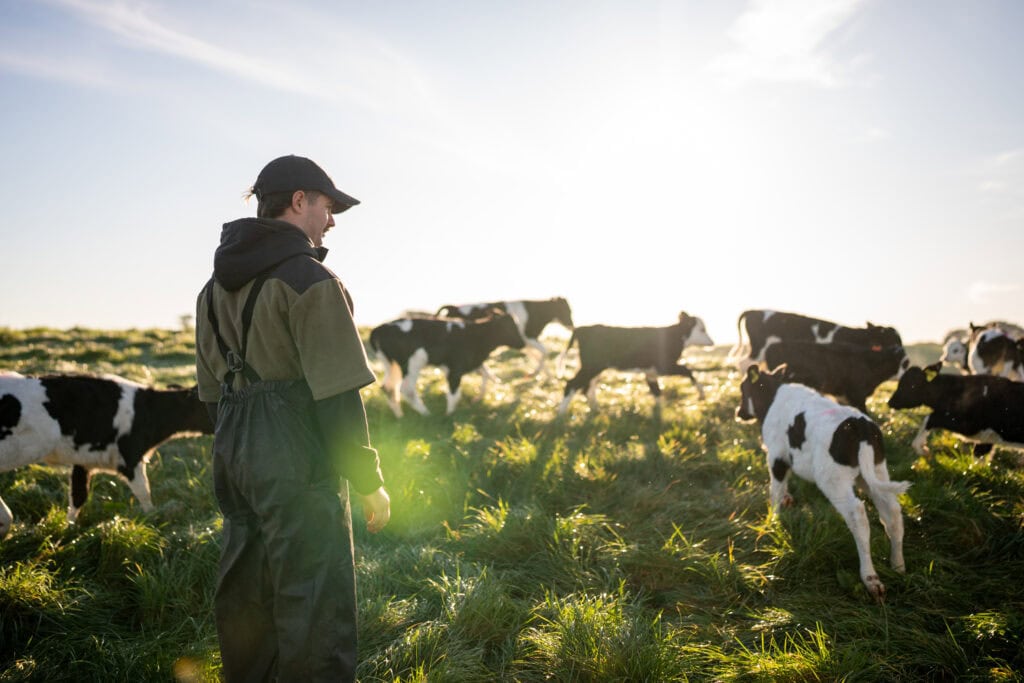
Today, Wisconsin is home to thousands of dairy farms and more than one million dairy cows. The state produces roughly one-quarter of America’s cheese and remains one of the nation’s leading dairy producers. Generations of farm families built a reputation for quality, innovation, and hard work that helped make Wisconsin cheese, butter, and dairy products household staples across the country.
Wisconsin’s agricultural success was never solely about production. It was also about innovation.
Researchers at the University of Wisconsin helped revolutionize dairy science through advancements such as the Babcock Test, developed by Stephen Babcock in 1890. The test provided a reliable way to measure butterfat content in milk, improving fairness for farmers and consistency for consumers. Agricultural research, extension programs, and cooperative education helped spread new ideas from university laboratories to farm fields throughout the state and nation.
More Than Milk and Cheese
Although dairy remains Wisconsin’s signature industry, the state’s agricultural contributions extend far beyond the milk barn.
Wisconsin is the nation’s leading producer of cranberries and ginseng, and a major producer of potatoes, sweet corn, and green beans. Wisconsin farms also produce significant quantities of soybeans, corn, beef, poultry, and specialty crops.
Together, these industries helped supply American households, schools, grocery stores, restaurants, and food manufacturers with the products needed to feed our nation.
The Family Farm Tradition
Agriculture helped shape not only Wisconsin’s economy but also its culture.
For generations, family farms served as the backbone of rural communities. The daily rhythm of farm life -milking cows before sunrise, planting crops, repairing equipment, harvesting fields, and caring for livestock-instilled values of responsibility, self-reliance, and perseverance.
These farms became more than businesses. They became places where skills, traditions, and stewardship were passed from one generation to the next.
Even as technology transformed agriculture, Wisconsin farmers continued adapting while maintaining a deep connection to the land that sustains them. Their resilience and commitment to innovation helped ensure that American agriculture remained among the most productive in the world.
Aldo Leopold and America’s Conservation Ethic
No discussion of Wisconsin’s impact on America would be complete without Aldo Leopold.
Often called the father of modern wildlife ecology and conservation, Leopold spent much of his career in Wisconsin and developed ideas that transformed how Americans think about the natural world.
His influential 1949 book, A Sand County Almanac, introduced the concept of a “land ethic” — the belief that humans are part of an interconnected ecological community and have a responsibility to care for the land, water, plants, and animals around them.
Leopold argued that conservation was not simply about protecting wilderness. It was about recognizing that healthy ecosystems, productive farms, thriving wildlife populations, and strong communities are all connected.
Leopold’s vision helped shape conservation efforts in Wisconsin.
The state became a leader in soil conservation, watershed management, wildlife restoration, forestry, and outdoor recreation. Conservation partnerships among farmers, landowners, universities, local governments, and nonprofit organizations helped demonstrate that economic prosperity and environmental stewardship can work hand in hand — a model that continues to influence conservation and sustainable agriculture throughout the United States.
Why It Matters for America 250
America’s success depends on the ability to feed its people and manage the land that sustains our nation. Wisconsin’s contribution to that part of the story may not always be recognized, but for 250 years it has been among the most essential.
As the United States celebrates 250 years of independence, Wisconsin’s agricultural and conservation legacy reminds us that the American experiment depends not only on freedom and opportunity, but also on the dedication of our farmers, ranchers, researchers, and conservationists who steward our land, protect our waters, strengthen our rural communities, and help feed America. Their enduring commitment to hard work, innovation, and stewardship remains one of Wisconsin’s greatest gifts to the nation, and one that will continue to feed America for generations to come.
Happy Birthday, America!
