


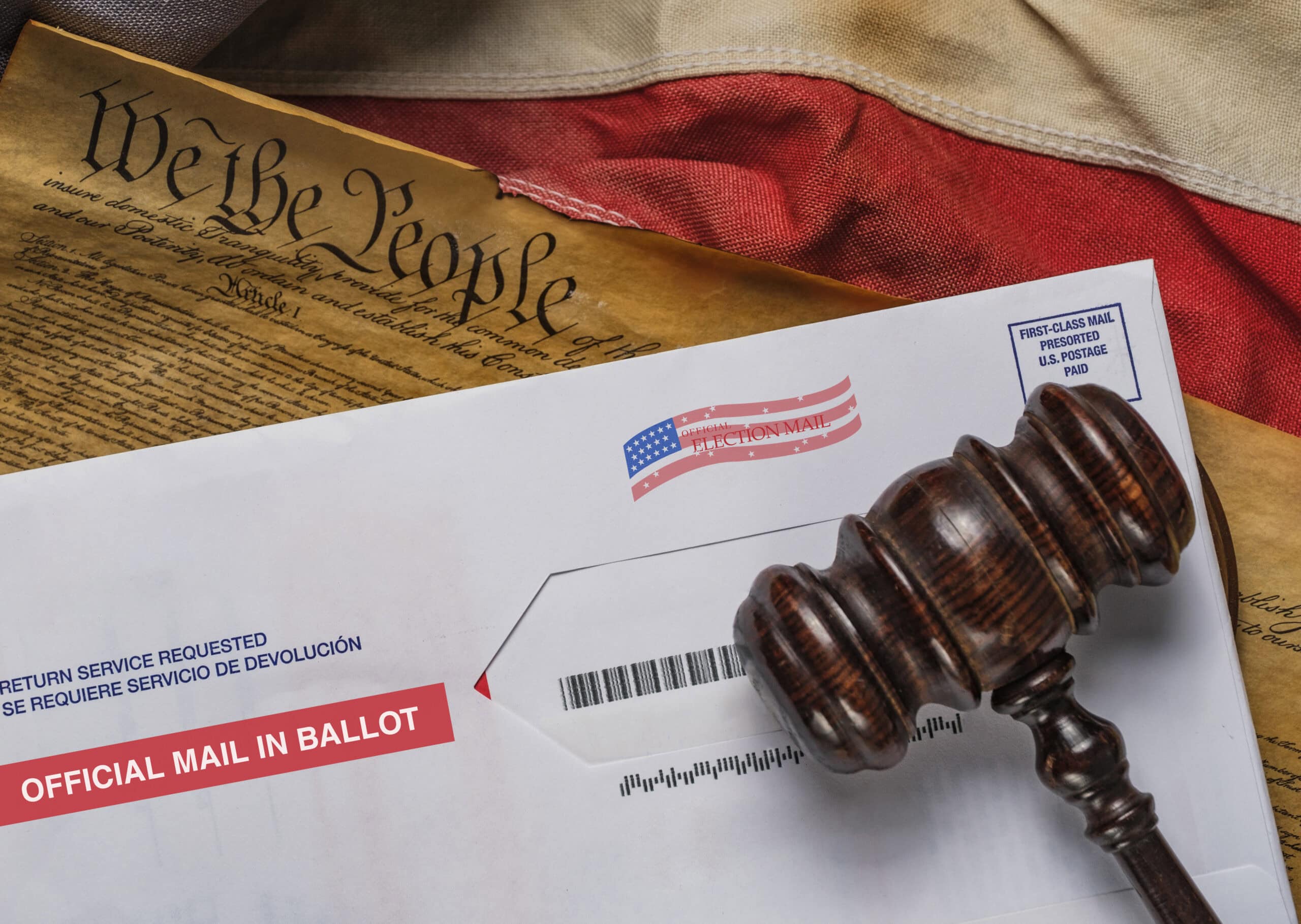
In a stunning blow to common sense and the rule of law, the U.S. Supreme Court today effectively blessed the chaotic practice of counting mail-in ballots days after Election Day. This ruling twists federal statutes and ignores the clear intent of Congress to preserve a single, decisive Election Day. This is not just constitutionally and morally wrong; it’s a gift to those who thrive on electoral uncertainty and, sadly, outright fraud.
For generations, Americans understood Election Day as just that: the day on which elections are conducted. Voters vote, ballot counters count ballots, a winner is declared, and America goes to bed (sometimes very late) knowing the results. Since 2020, however, elections in blue states have taken days if not weeks to decide because of a seemingly endless stream of late-arriving ballots from heaven-knows-where and always overwhelmingly benefiting one political party and harming the other.
Los Angeles’ mayoral election is only the most recent example of this insanity, but it’s hardly the most egregious. In 2024, California’s 13th Congressional District election was not called until December 4th–a day shy of one MONTH after Election Day. In a surprise to absolutely no one, Democrat Adam Gray narrowly defeated Republican incumbent John Duarte on the strength of mail-in ballots that arrived long after November 5th.
The Supreme Court’s decision today makes more results like this inevitable, as it permits radical extensions of “grace periods” for mail-in ballots across the country, allowing those postmarked by Election Day to be counted if they arrive later—sometimes days or even a week after. Mississippi’s law was the test case, but the ripple effects hit battlegrounds everywhere. Democrats and their allies cheer this as “access,” but conservatives know better: it’s an invitation to abuse.
And it’s also fundamentally wrong in its interpretation of both the Constitution and federal law. The Presidential Election Day Act of 1845, codified at 3 U.S.C. § 1, declares that presidential electors “shall be appointed, in each State, on the Tuesday next after the first Monday in November.”
Congress reinforced this in 2 U.S.C. § 7 for House elections: “The Tuesday next after the 1st Monday in November, in every even numbered year, is established as the day for the election.” These aren’t suggestions. They establish a uniform national Election Day for federal offices.
The plain text demands that the election occurs on that day—meaning ballots must be cast and received by then. Allowing post-Election Day arrivals effectively extends Election Day unilaterally by state legislatures, directly preempted by federal supremacy under the Elections Clause (U.S. Const. Art. I, § 4). Mississippi’s five-day grace period, and similar rules in nearly a dozen other states, cannot override this clear congressional command.
Longstanding Supreme Court backs this up unequivocally, as the Court has long recognized the rigidity of Election Day. In Foster v. Love, the Court struck down Louisiana’s open primary system that effectively pushed federal elections beyond the federally prescribed Tuesday, holding that states “may not alter” the congressional choice of Election Day. Federal statutes, the Court concluded, “set the date” for elections and states “cannot change it” through creative timing.
Earlier, in United States v. Classic and related cases interpreting the Elections Clause, the Court affirmed Congress’s power to set uniform rules to prevent the very fragmentation of election rules that is now commonplace.
Even in Bush v. Gore, the Court recognized the need for clear, uniform standards to avoid post-election manipulation. Today’s decision flies in the face of this line of authority by allowing states to treat Election Day as a starting line rather than a finish line.
The practical consequences of today’s ruling are disastrous. Late ballots create windows for fraud, harvesting, and endless litigation. Postmarks can be forged or backdated. Chains of custody break down. In battleground states, suspicious late surges of ballots defy statistical norms and routinely alter outcomes (again, always in favor of one party). This ruling doesn’t protect voters; it protects a system vulnerable to abuse, disproportionately harming the honest majority who vote on time.
Election Night should bring clarity, not weeks of lawfare as lawyers fight over signature matches, postmark disputes, and chain-of-custody questions for ballots that arrived suspiciously late. The Supreme Court had a chance to slam the door shut on this nonsense and reaffirm that federal law demands ballots be received by Election Day. Instead, it punted to state experiments that prioritize convenience over security.
Conservatives have long argued that expanded mail voting, without ironclad safeguards, is a recipe for fraud—not because every ballot is fake, but because the system is ripe for it. Unguarded, unsecured drop boxes filled with ballots for which there is no chain of custody whatsoever are bad enough. Adding in days of post-Election counting multiplies the opportunity for abuse.
This ruling is the worst sort of judicial activism precisely because it is dressed up as pragmatism. Justices who claim to be originalists somehow found wiggle room in laws dating back to the 1840s that were meant to standardize Election Day nationwide. The result is a patchwork of regulation that makes the uniform administration of federal elections impossible.
The Supreme Court had a chance to restore faith in American elections, but instead sided with the forces who manipulate and openly break electoral rules for naked partisan gain.
