


The government has a habit of creating programs that sound compassionate but in end deepen the very problems they claim to want to solve.
Milwaukee’s Bridge Project is the latest example of a taxpayer and nonprofit funded initiative that financially rewards low income, single mothers while ignoring the long term consequences of single parenting.
For decades, welfare destabilized family structures and created generational government dependency.
Milwaukee is now doubling down with a new scheme that pays young mothers for having children outside of marriage. Instead of promoting stability, responsibility, and two‑parent homes, the city is sending the message that bad choices come with monthly payouts.
This isn’t lifting families out of poverty. It’s cementing them into it.
The Bridge Project began in New York and in 2024, expanded into Milwaukee. According to reporting by Alyssa N. Salcedo in the Milwaukee Journal Sentinel, the program gives untraceable, no‑strings‑attached payments to mothers 18 and older during pregnancy and the first 1,000 days of their child’s life.
A program that provides expecting mothers with cash during pregnancy and the first 1,000 days of their baby’s life – no strings attached.
According to the website, “Cash makes babies healthier—leading to higher birth weights, longer pregnancies, and 2.5 more months of breastfeeding—giving babies a vital head start.”
Milwaukee allocated $350,000 of taxpayer money to support the program. The city is also looking to expand the program using even more taxpayer dollars. Milwaukee did not report where they are pulling this money from.
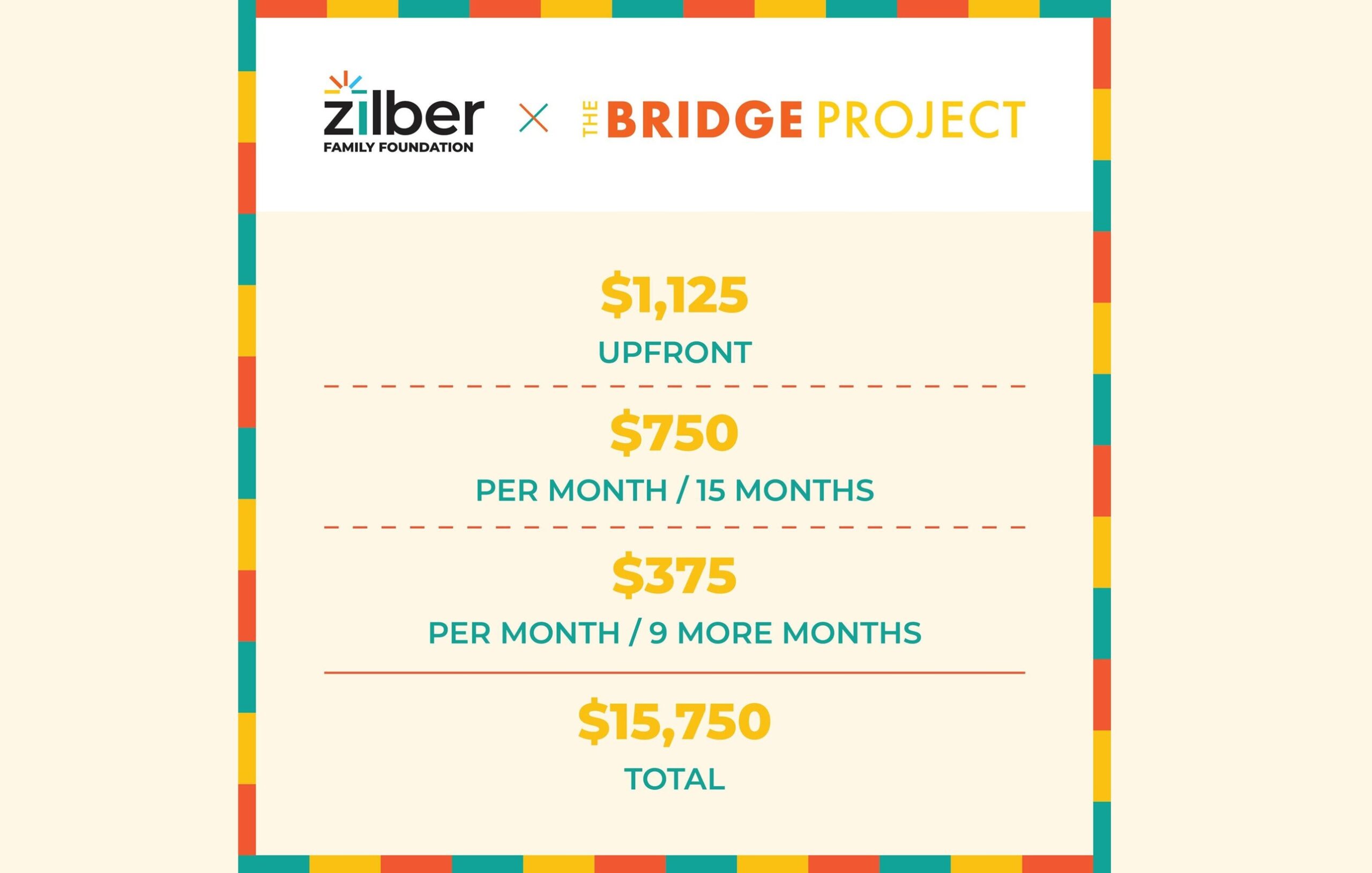
The program gives a $1,125 prenatal stipend, then $750 per month for 15 months, and $375 per month for 9 months. The mothers get a total of 3 years of payments with absolutely no accountability. In the Journal Sentinel article, one of the mother’s in the program took her five children (all under the age of 14), and her mother to Disney World with some of her payout. The program also hosts events such as baby showers and Chuck E. Cheese pizza parties.
The Bridge Project is built on the belief that low income mothers “know what’s best for their families.” But the program completely ignores the reality that children thrive most in stable, two‑parent households emotionally, academically, and economically. There should not be incentivizing of single motherhood, especially with taxpayer dollars.
Instead of encouraging family formation, marriage, or father involvement, Milwaukee is endorsing the idea that single motherhood is a lifestyle the city will financially support.
Why are we normalizing and subsidizing choices that statistically lead to poverty? Why are we telling young women that creating children outside of marriage is financially advantageous? Why are fathers being erased from the equation entirely? Why is taxpayer money being used to reinforce generational cycles instead of breaking them? Programs like this do not solve poverty. These types of programs create generational dependency.
If Milwaukee truly wants to help low income families rise out of poverty, the path is clear. We should strengthen two‑parent households, encourage marriage and father involvement, invest in job training and education, reform welfare and weed out fraud, and support programs that build family stability.
The Bridge Project sends the opposite message that men are not needed, and the government will fill the gap. Look at the devastation that welfare has created.
The Bridge Project is not a bridge, it is a detour. It is a temporary patch that only deepens issues encouraging the very family breakdown that keeps children struggling.
If we keep rewarding single motherhood, we will keep getting more of it. If we keep sidelining fathers, we will keep raising children without them. And if we keep pouring taxpayer money into programs that ignore the root causes of poverty, we will keep repeating the same generational cycles that have held families back for decades.
Our children deserve a future shaped by stability, responsibility, and opportunity, not another round of “no‑strings‑attached” experiments that treat broken homes as an acceptable norm.
